Weird outdoor & roadside things to do in Denver
Weird outdoor and roadside things to do in Denver — 34 of them, from Prismatic Electric Fountain (Ferril Lake), Old Elitch Carousel Dome (with floor labyrinth) and BOWS — Patrick Marold Steel Arch Installation. Folk-art environments, unexplained monuments and roadside oddities worth pulling over for, all outdoors and mostly free. They spread across City Park, Berkeley / Tennyson Street, Hilltop, Platt Park / South Pearl Street and 25 more areas, so two or three can make a whole afternoon. 28 of them cost nothing. Every entry is hand-vetted against real sources — not scraped off a top-ten list or averaged out of crowd ratings.
-
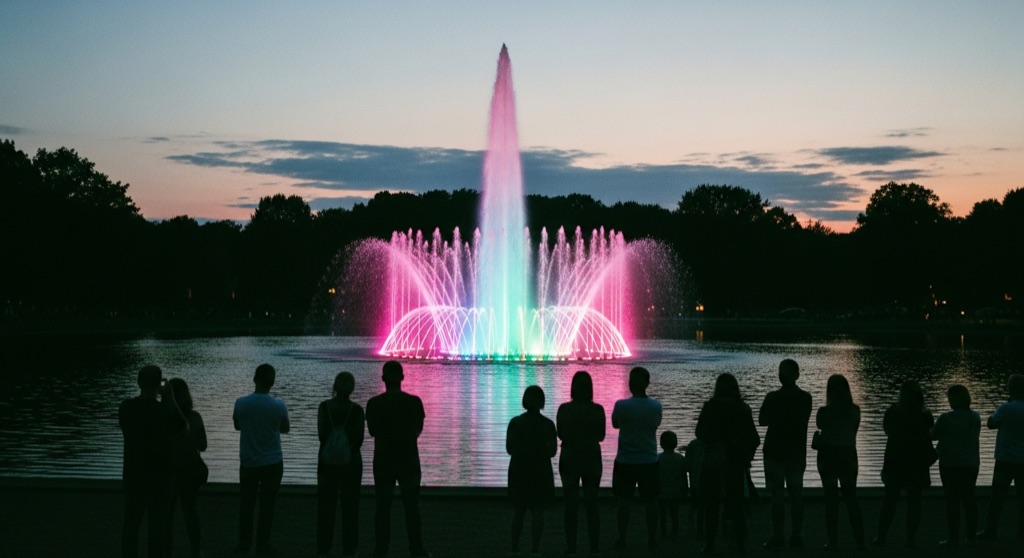 Prismatic Electric Fountain (Ferril Lake)
By day it reads as a plain fountain in the middle of Ferril Lake. Come back after dusk and it becomes a different animal: 2,000-plus nozzles throw a central geyser up to 90 feet while 112 individually-controlled RGB LED fixtures saturate the plumes in shifting pinks, blues and greens. It dates to 1908 and was the first major fountain in North America to light tall water with high-power LEDs. Almost nobody plans an evening around it, which is exactly why you should.
Prismatic Electric Fountain (Ferril Lake)
By day it reads as a plain fountain in the middle of Ferril Lake. Come back after dusk and it becomes a different animal: 2,000-plus nozzles throw a central geyser up to 90 feet while 112 individually-controlled RGB LED fixtures saturate the plumes in shifting pinks, blues and greens. It dates to 1908 and was the first major fountain in North America to light tall water with high-power LEDs. Almost nobody plans an evening around it, which is exactly why you should.
-
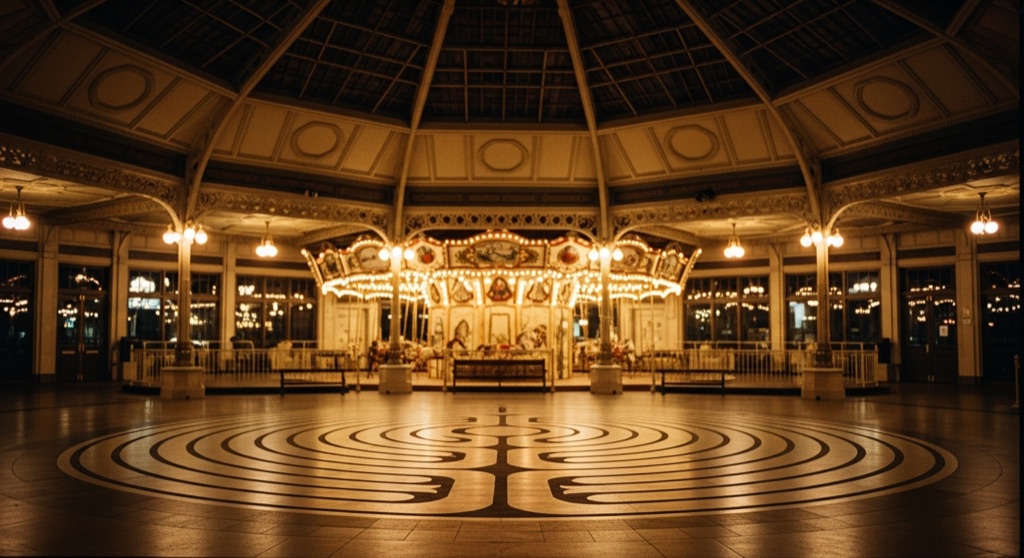 Old Elitch Carousel Dome (with floor labyrinth)
On the corner where Berkeley meets Tennyson sits a 12-sided, bell-roofed pavilion built in 1926 that most people walk past assuming it's a shuttered event hall. It held the original Elitch Gardens carousel until 1995 -- and now that the horses are gone, an 11-circuit labyrinth is laid right into the floor where they used to spin. There's a small plaque inside but almost no signage out front, so you have to already know to look. Walk it on a quiet weekday and you've got the whole strange little rotunda to yourself.
Old Elitch Carousel Dome (with floor labyrinth)
On the corner where Berkeley meets Tennyson sits a 12-sided, bell-roofed pavilion built in 1926 that most people walk past assuming it's a shuttered event hall. It held the original Elitch Gardens carousel until 1995 -- and now that the horses are gone, an 11-circuit labyrinth is laid right into the floor where they used to spin. There's a small plaque inside but almost no signage out front, so you have to already know to look. Walk it on a quiet weekday and you've got the whole strange little rotunda to yourself.
-
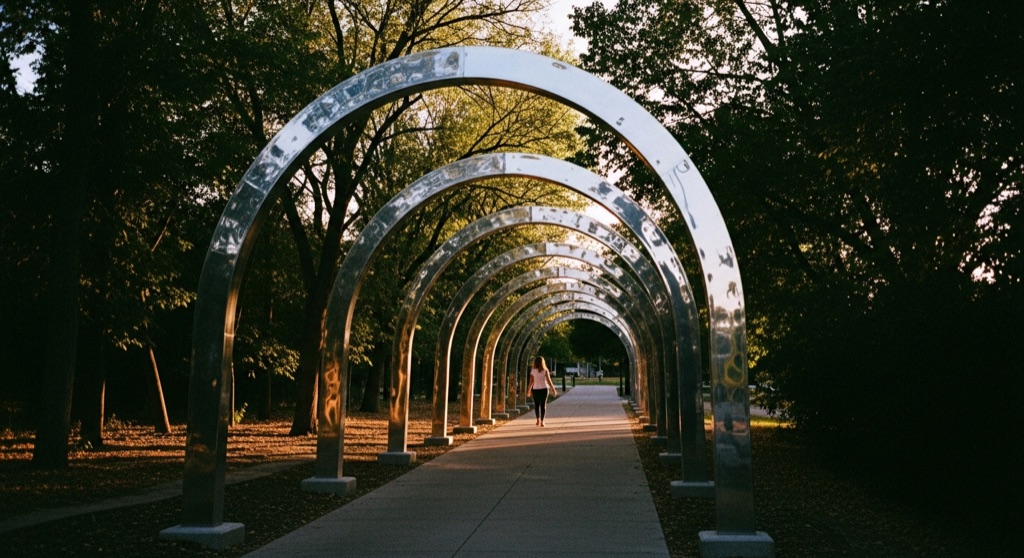 BOWS — Patrick Marold Steel Arch Installation
On the wooded eastern edge of Cranmer Park, a run of reflective steel inverse arches lines the passageway between the neighborhood and the park. It's a commissioned Denver Public Art piece by Patrick Marold — installed in 2020 — but there's no plaque shouting it, so people walk straight through the arches without realizing they're inside a sculpture. The steel catches and bends light along the corridor as you move. Even people who use the park daily miss that it's art at all.
BOWS — Patrick Marold Steel Arch Installation
On the wooded eastern edge of Cranmer Park, a run of reflective steel inverse arches lines the passageway between the neighborhood and the park. It's a commissioned Denver Public Art piece by Patrick Marold — installed in 2020 — but there's no plaque shouting it, so people walk straight through the arches without realizing they're inside a sculpture. The steel catches and bends light along the corridor as you move. Even people who use the park daily miss that it's art at all.
-
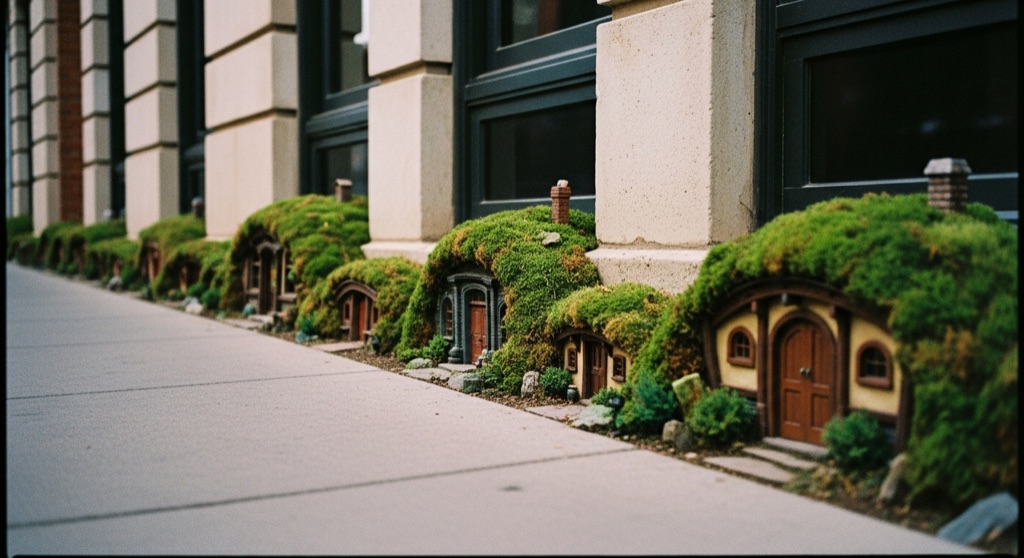 Fairy Doors of South Pearl Street
There are roughly two dozen fairy-sized doors, shrunken storefronts, and mossy hobbit hideaways tucked into the bases of buildings along South Pearl, from Jewell down to Louisiana. They're small enough that the brunch crowd walks past every one without ever looking down. Meow Wolf Denver collaborator Scott Hildebrandt built the first batch after the city's then-councilman approached him in 2021, and neighbors and artists have kept adding to it since. Pull up the map on the South Pearl Street site and you'll suddenly see a whole miniature civilization you've been ignoring.
Fairy Doors of South Pearl Street
There are roughly two dozen fairy-sized doors, shrunken storefronts, and mossy hobbit hideaways tucked into the bases of buildings along South Pearl, from Jewell down to Louisiana. They're small enough that the brunch crowd walks past every one without ever looking down. Meow Wolf Denver collaborator Scott Hildebrandt built the first batch after the city's then-councilman approached him in 2021, and neighbors and artists have kept adding to it since. Pull up the map on the South Pearl Street site and you'll suddenly see a whole miniature civilization you've been ignoring.
-
 Buried 1893 Streetcar Tracks Under South Pearl Street
The entire South Pearl commercial strip exists because the Denver Tramway Company ran a streetcar line up it starting in June 1893, the trolley is why every storefront here was built. When the streetcars died around 1950, the city didn't rip the rails out; it just paved over them. On a few stretches the asphalt has worn thin enough that the original steel rails poke back through, and you can stand on 130-year-old infrastructure that almost everyone walking to brunch never notices.
Buried 1893 Streetcar Tracks Under South Pearl Street
The entire South Pearl commercial strip exists because the Denver Tramway Company ran a streetcar line up it starting in June 1893, the trolley is why every storefront here was built. When the streetcars died around 1950, the city didn't rip the rails out; it just paved over them. On a few stretches the asphalt has worn thin enough that the original steel rails poke back through, and you can stand on 130-year-old infrastructure that almost everyone walking to brunch never notices.
-
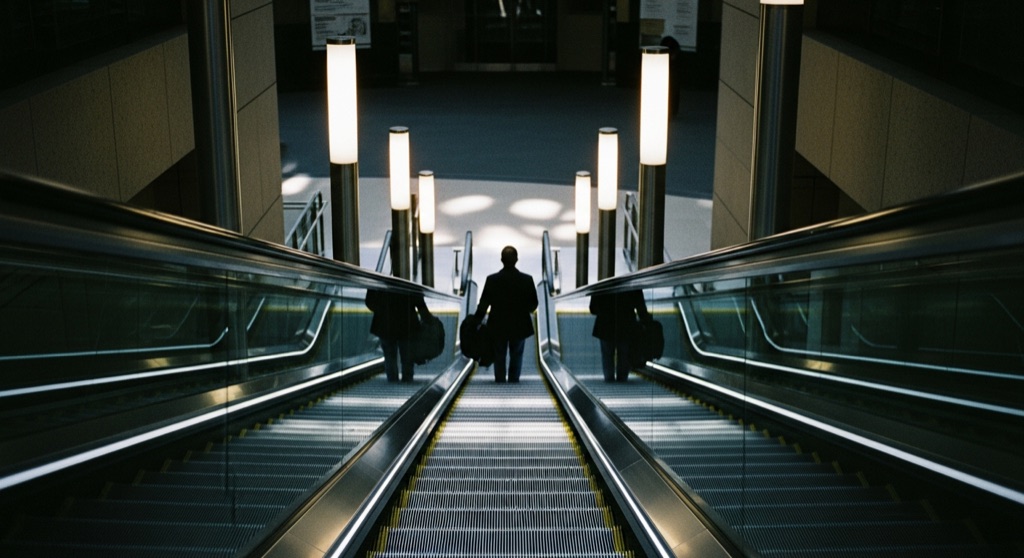 Laughing Escalator
Ride the escalator down from the exhibit-hall level at the Colorado Convention Center and you'll start hearing laughter bubbling up through the cracks between the steps — a different voice every eight feet. It's a hidden 4-channel sound piece artist Jim Green slipped in back in 2004, a 'call and response' volley of giggles bouncing between speakers under your feet. There's no plaque, no fanfare; people either don't notice or assume they're imagining it. Green passed in 2024, but his sneaky little joke keeps running.
Laughing Escalator
Ride the escalator down from the exhibit-hall level at the Colorado Convention Center and you'll start hearing laughter bubbling up through the cracks between the steps — a different voice every eight feet. It's a hidden 4-channel sound piece artist Jim Green slipped in back in 2004, a 'call and response' volley of giggles bouncing between speakers under your feet. There's no plaque, no fanfare; people either don't notice or assume they're imagining it. Green passed in 2024, but his sneaky little joke keeps running.
-
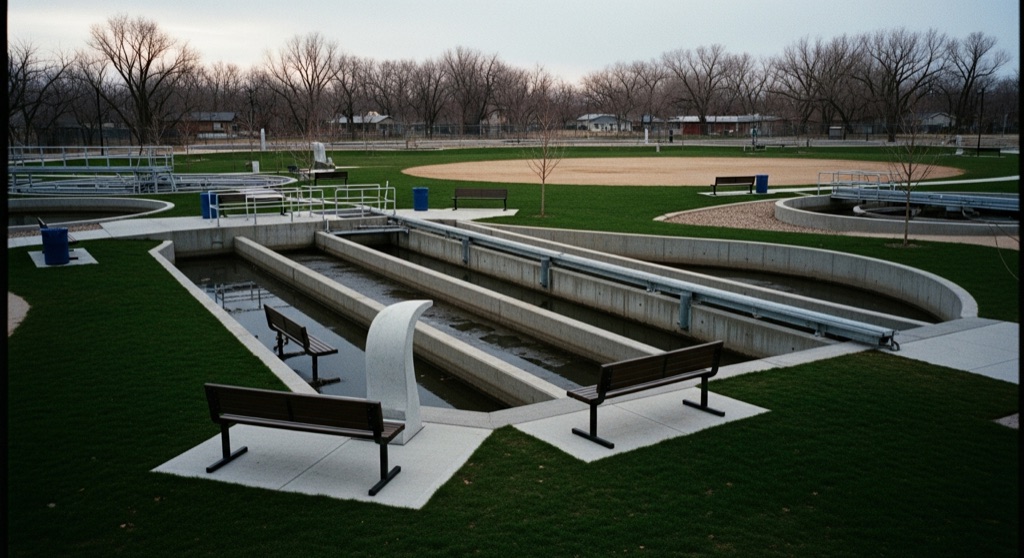 Carpio-Sanguinette Park (Former Sewage Treatment Plant)
On the north bank of the South Platte in Globeville sits a park almost nobody visits, built directly on top of a 1937 sewage treatment plant. When the city reclaimed it in 1999 they didn't bulldoze the infrastructure — they kept the concrete settling ponds, aeration raceways, and sand-filter walls and turned them into benches, sculptures, and the boundaries of the ball fields. It quietly won an American Society of Landscape Architects design award for the reuse. You're literally picnicking on top of where Denver's waste used to bubble.
Carpio-Sanguinette Park (Former Sewage Treatment Plant)
On the north bank of the South Platte in Globeville sits a park almost nobody visits, built directly on top of a 1937 sewage treatment plant. When the city reclaimed it in 1999 they didn't bulldoze the infrastructure — they kept the concrete settling ponds, aeration raceways, and sand-filter walls and turned them into benches, sculptures, and the boundaries of the ball fields. It quietly won an American Society of Landscape Architects design award for the reuse. You're literally picnicking on top of where Denver's waste used to bubble.
-
 Impossible Winterbourne Steampunk Street Sculptures
Since 2010 an anonymous artist calling himself The Impossible Winterbourne has been bolting tiny rusted steampunk robots — SteamBots, SkullBots, MechMonkeys — onto storm drains, tree trunks, and brick walls around Capitol Hill, Uptown, and the Santa Fe Arts District. He won't publish a single location; spotting one is meant to feel like a reward for actually looking up from your phone. His very first street piece in Denver was a little specter hidden in Cheesman Park. There's no map, and pieces come and go, which is exactly the point.
Impossible Winterbourne Steampunk Street Sculptures
Since 2010 an anonymous artist calling himself The Impossible Winterbourne has been bolting tiny rusted steampunk robots — SteamBots, SkullBots, MechMonkeys — onto storm drains, tree trunks, and brick walls around Capitol Hill, Uptown, and the Santa Fe Arts District. He won't publish a single location; spotting one is meant to feel like a reward for actually looking up from your phone. His very first street piece in Denver was a little specter hidden in Cheesman Park. There's no map, and pieces come and go, which is exactly the point.
-
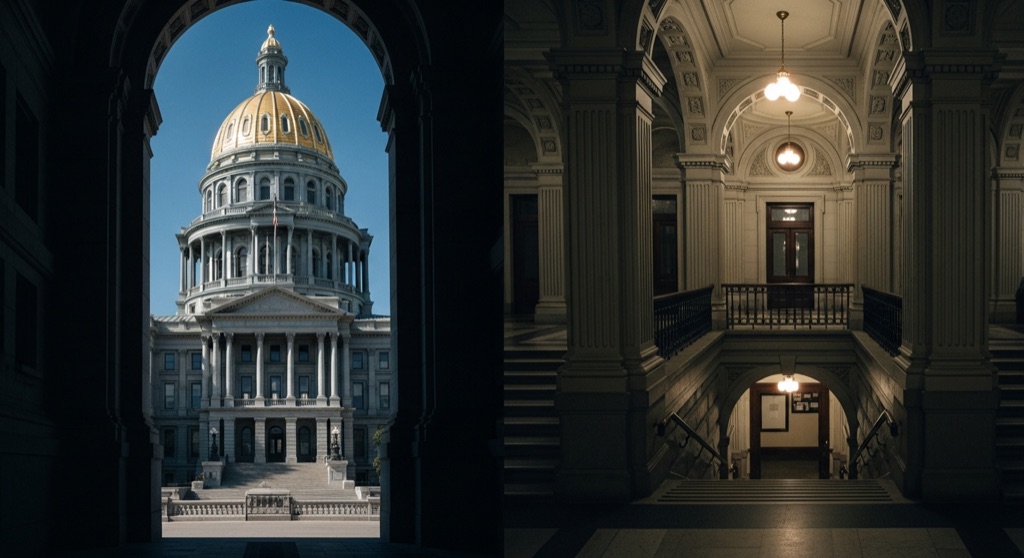 The Espinosa Brothers' Heads at the Colorado State Capitol
Everyone sees the gold-domed Capitol; almost no one knows it once warehoused two severed human heads. In 1863 the 'Bloody Espinosas' murdered up to ~32 people across the territory until tracker Tom Tobin hunted them down, cut off their heads, and brought them in to collect a bounty the governor stiffed him on. The heads ended up at the Capitol — sitting in the treasurer's office, then moved down into the basement tunnels for years, and finally fed into the building's furnace. Staff still claim that when it's quiet you can hear horse hooves on the staircase: the headless brothers, riding, looking for what they lost.
The Espinosa Brothers' Heads at the Colorado State Capitol
Everyone sees the gold-domed Capitol; almost no one knows it once warehoused two severed human heads. In 1863 the 'Bloody Espinosas' murdered up to ~32 people across the territory until tracker Tom Tobin hunted them down, cut off their heads, and brought them in to collect a bounty the governor stiffed him on. The heads ended up at the Capitol — sitting in the treasurer's office, then moved down into the basement tunnels for years, and finally fed into the building's furnace. Staff still claim that when it's quiet you can hear horse hooves on the staircase: the headless brothers, riding, looking for what they lost.
-
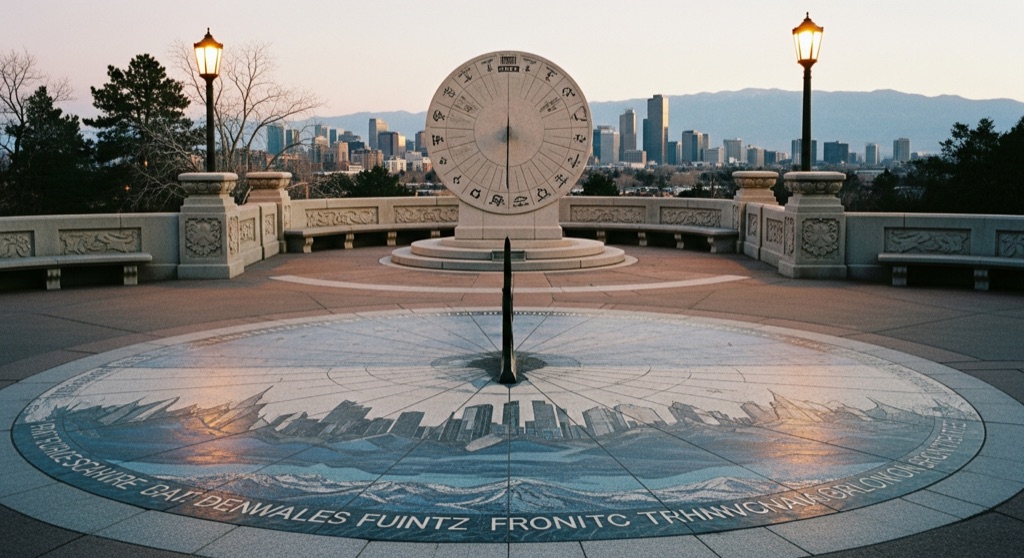 Cranmer Park Sundial Terrace
Hidden in the residential streets of Hilltop is a hundred-yard WPA-built terrace anchored by a giant quartzite sundial modeled on an ancient Chinese design, installed in 1941. Vandals packed dynamite under it and blew it apart in 1965; the neighborhood rebuilt it the next year, and a $1.5M restoration fixed it up again around 2018. The terrace has a mosaic mountain-profile panorama etched into the stone that lines up with the actual Front Range skyline in front of you. There's no real signage and no crowd — just an unobstructed full-range view most Denverites have never seen.
Cranmer Park Sundial Terrace
Hidden in the residential streets of Hilltop is a hundred-yard WPA-built terrace anchored by a giant quartzite sundial modeled on an ancient Chinese design, installed in 1941. Vandals packed dynamite under it and blew it apart in 1965; the neighborhood rebuilt it the next year, and a $1.5M restoration fixed it up again around 2018. The terrace has a mosaic mountain-profile panorama etched into the stone that lines up with the actual Front Range skyline in front of you. There's no real signage and no crowd — just an unobstructed full-range view most Denverites have never seen.
-
 Sand Creek Regional Greenway Trail
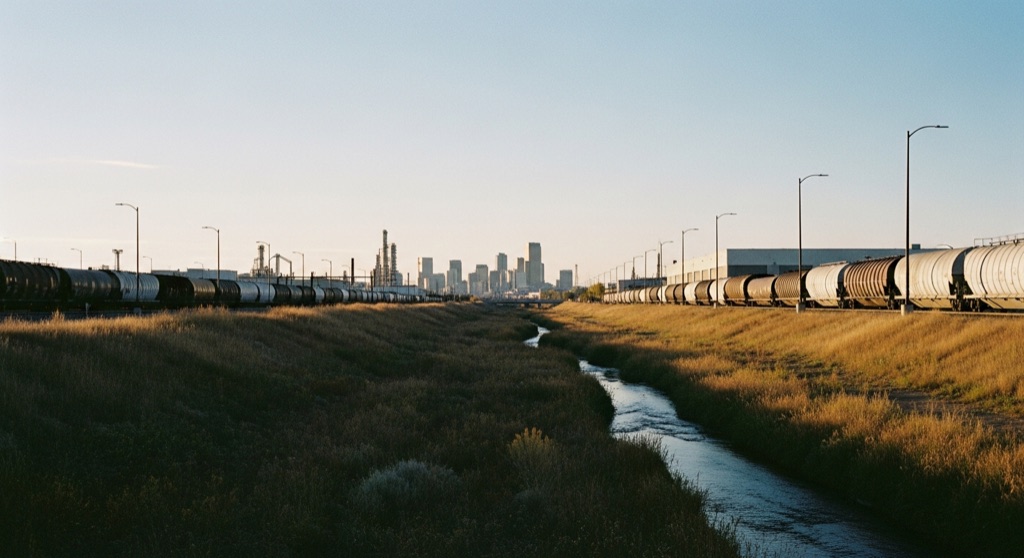
A near-13-mile creek-and-cottonwood corridor that threads straight through Denver's industrial north — past rail yards, refineries, and the backs of warehouses — yet quietly harbors hawks, deer, beaver, and prairie dogs the whole way. Most Denverites never set foot up here because there's no reason to drive into Globeville or Commerce City; that's exactly why it stays empty. String together Bluff Lake Nature Center, the Urban Farm, and Star K Ranch and you've got hours of wild creekside with the skyline at your back. Open sunup to sundown, multiple trailheads, paved on the Denver/Commerce City stretches.
Sand Creek Regional Greenway Trail
A near-13-mile creek-and-cottonwood corridor that threads straight through Denver's industrial north — past rail yards, refineries, and the backs of warehouses — yet quietly harbors hawks, deer, beaver, and prairie dogs the whole way. Most Denverites never set foot up here because there's no reason to drive into Globeville or Commerce City; that's exactly why it stays empty. String together Bluff Lake Nature Center, the Urban Farm, and Star K Ranch and you've got hours of wild creekside with the skyline at your back. Open sunup to sundown, multiple trailheads, paved on the Denver/Commerce City stretches.
-
 Ninth Street Historic Park
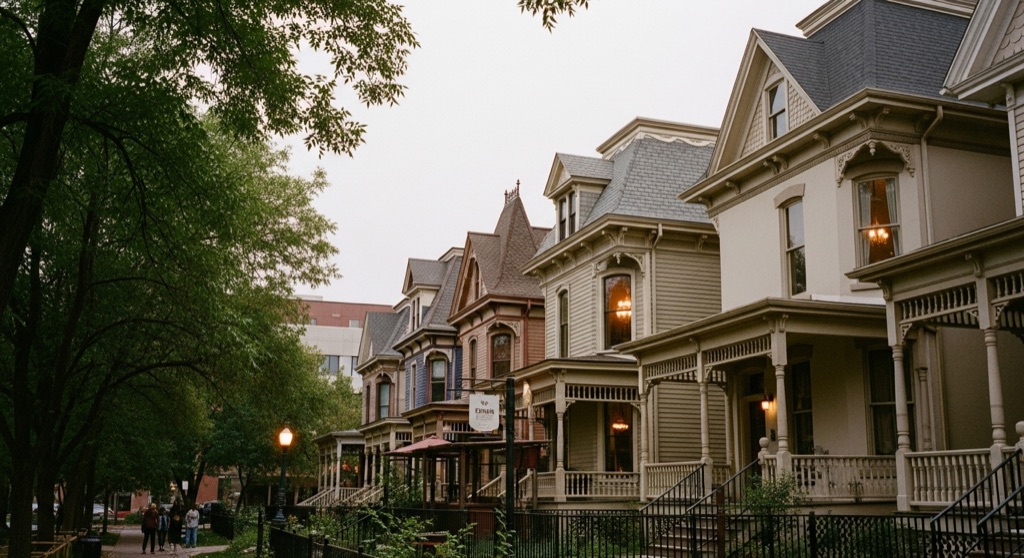
Tucked into the middle of a sprawling commuter campus is one intact block of 1870s-1900s Victorian houses — mansard roofs, scroll-sawn brackets, covered porches — that survived demolition by a grassroots fight in 1970. It's the oldest restored residential street in Denver, sitting on land that was an Arapaho meeting place and the original 1858 settlement of Auraria that became Denver. Almost nobody who isn't a student walks it; the cars on Speer and Colfax blow right past. The street between the homes is now a leafy pedestrian greenway with a couple of campus eateries tucked in.
Ninth Street Historic Park
Tucked into the middle of a sprawling commuter campus is one intact block of 1870s-1900s Victorian houses — mansard roofs, scroll-sawn brackets, covered porches — that survived demolition by a grassroots fight in 1970. It's the oldest restored residential street in Denver, sitting on land that was an Arapaho meeting place and the original 1858 settlement of Auraria that became Denver. Almost nobody who isn't a student walks it; the cars on Speer and Colfax blow right past. The street between the homes is now a leafy pedestrian greenway with a couple of campus eateries tucked in.
-
 Edgar Experimental Mine
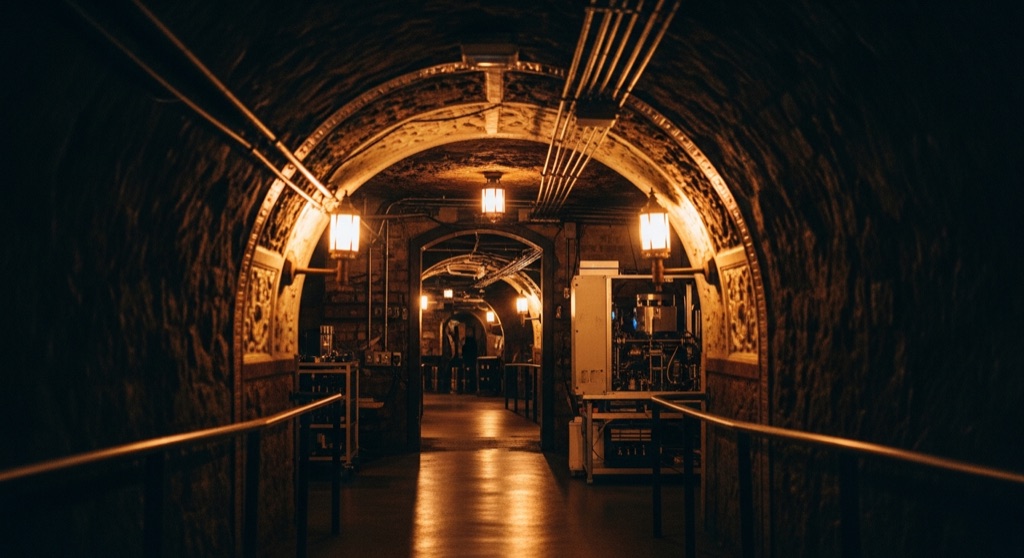
This isn't a tourist gold mine with fake gunfights — it's the Colorado School of Mines' actual working research mine, where engineering students learn to drill, blast, and survey in half a mile of 1870s tunnels. Lately it's gone weirder: under ~200 meters of rock the school built the Colorado Underground Research Institute (CURIE), including a room nicknamed the Subatomic Particle Hideout where muon and neutron detectors run quantum and particle-physics experiments shielded from cosmic rays. Public hard-hat tours wind through the historic workings at a constant 54 degrees year-round. Almost nobody outside the geek pipeline knows you can just book a tour.
Edgar Experimental Mine
This isn't a tourist gold mine with fake gunfights — it's the Colorado School of Mines' actual working research mine, where engineering students learn to drill, blast, and survey in half a mile of 1870s tunnels. Lately it's gone weirder: under ~200 meters of rock the school built the Colorado Underground Research Institute (CURIE), including a room nicknamed the Subatomic Particle Hideout where muon and neutron detectors run quantum and particle-physics experiments shielded from cosmic rays. Public hard-hat tours wind through the historic workings at a constant 54 degrees year-round. Almost nobody outside the geek pipeline knows you can just book a tour.
-
 Palmer Lake Star
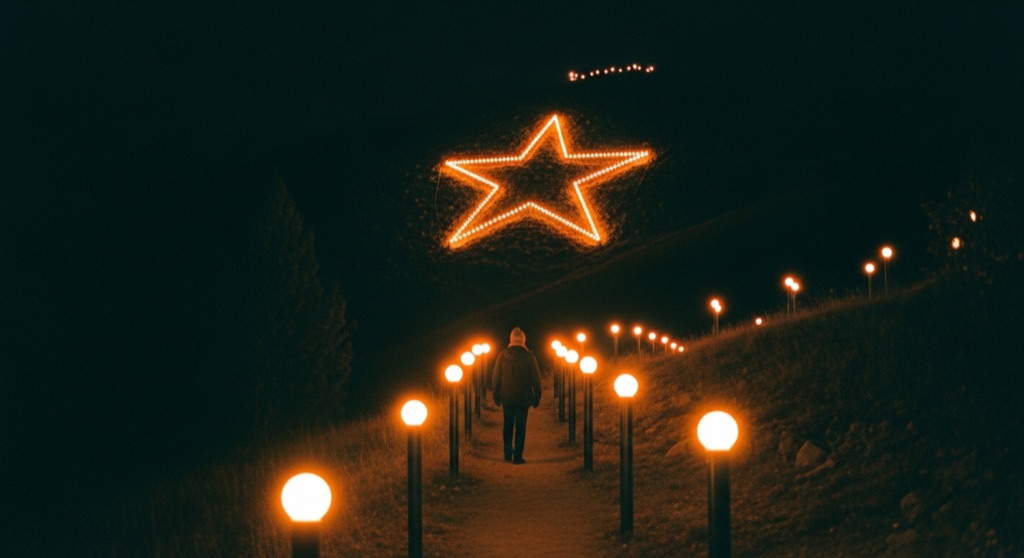
Hand-built by volunteers in 1935 to lift Depression-era spirits, the Palmer Lake Star is a 457-foot-wide, five-pointed star outlined in LED lights across a 58-percent slope of Sundance Mountain — listed on the Colorado State Register of Historic Properties and still lit every December plus special occasions, visible from I-25 for miles in either direction. A KKTV live broadcast confirmed it was lit for Memorial Day 2026, and a community Chili Supper lighting event ran November 29, 2025.
Palmer Lake Star
Hand-built by volunteers in 1935 to lift Depression-era spirits, the Palmer Lake Star is a 457-foot-wide, five-pointed star outlined in LED lights across a 58-percent slope of Sundance Mountain — listed on the Colorado State Register of Historic Properties and still lit every December plus special occasions, visible from I-25 for miles in either direction. A KKTV live broadcast confirmed it was lit for Memorial Day 2026, and a community Chili Supper lighting event ran November 29, 2025.
-
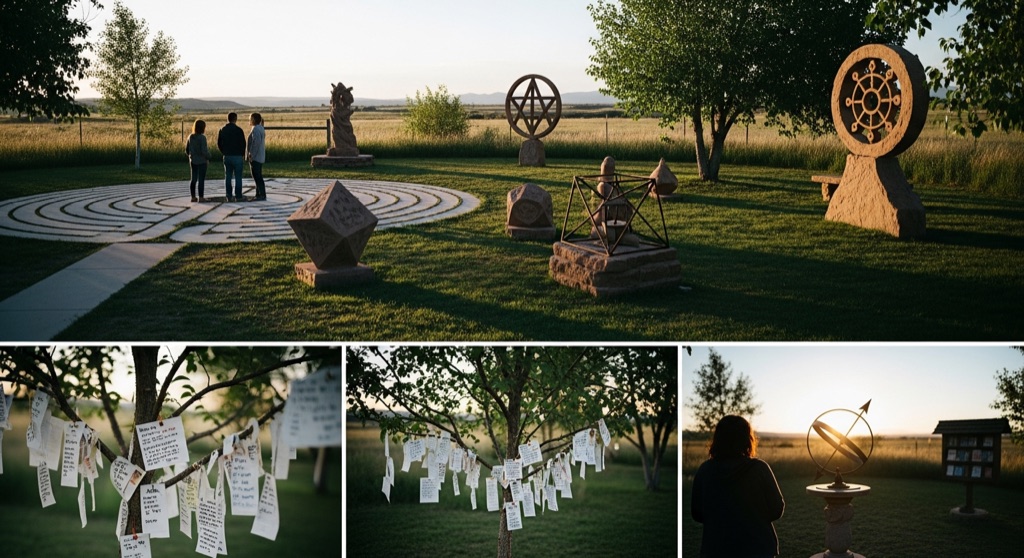 A Sanctuary Center
 is a free, volunteer-maintained nonprofit sacred garden open sunrise to sunset daily, featuring a labyrinth, stone medicine wheel, Platonic-solid sculptures, Pa-Kua symbol, sundial, wishing trees hung with prayer streamers, and a small lending library — all tucked quietly off a rural road between Castle Rock and Sedalia. TripAdvisor reviewers consistently call it an "unadvertised treasure" and praise its unhurried, self-guided contemplative atmosphere.
A Sanctuary Center
A Sanctuary Center is a free, volunteer-maintained nonprofit sacred garden open sunrise to sunset daily, featuring a labyrinth, stone medicine wheel, Platonic-solid sculptures, Pa-Kua symbol, sundial, wishing trees hung with prayer streamers, and a small lending library — all tucked quietly off a rural road between Castle Rock and Sedalia. TripAdvisor reviewers consistently call it an "unadvertised treasure" and praise its unhurried, self-guided contemplative atmosphere.
-
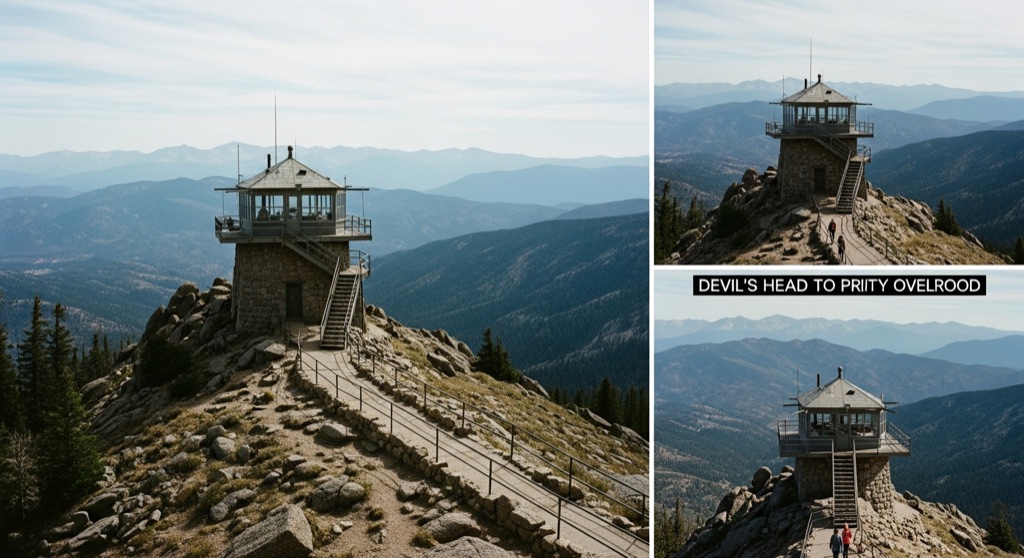 Devil's Head Lookout
Devil's Head is Colorado's last staffed fire lookout — a working ranger mans the historic 1912 tower from roughly mid-May through mid-September, and on a clear day the 143-stair climb to the cab rewards you with a jaw-dropping 360-degree panorama stretching 100 miles across the Front Range. The ranger typically welcomes small groups up into the cab and will point out landmarks and chat about how the fire-detection equipment still works.
Devil's Head Lookout
Devil's Head is Colorado's last staffed fire lookout — a working ranger mans the historic 1912 tower from roughly mid-May through mid-September, and on a clear day the 143-stair climb to the cab rewards you with a jaw-dropping 360-degree panorama stretching 100 miles across the Front Range. The ranger typically welcomes small groups up into the cab and will point out landmarks and chat about how the fire-detection equipment still works.
-
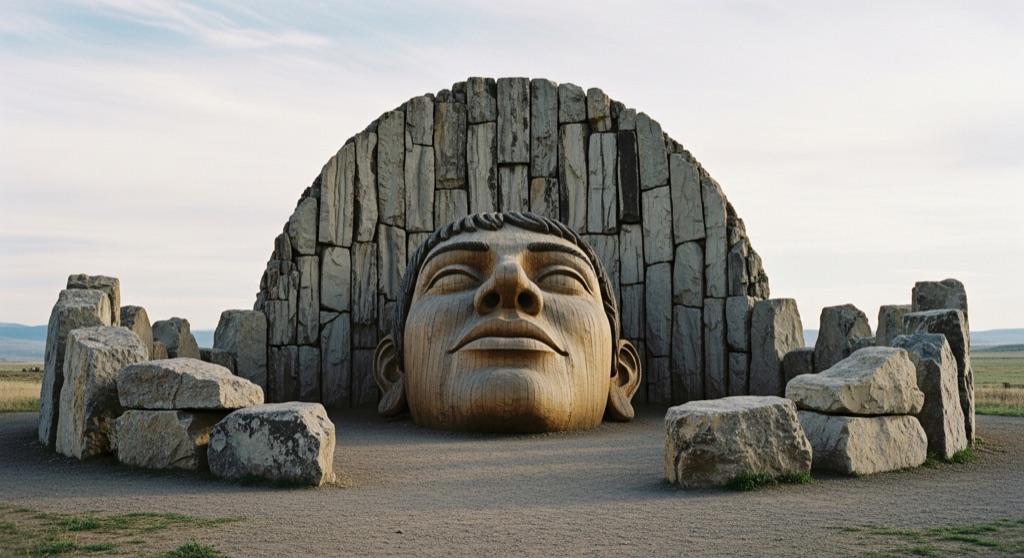 Redman (Trail of the Whispering Giants)
Redman is a 37-foot folk-art wooden head carved in 1979 from a fallen cottonwood by Hungarian-American artist Peter Wolf Toth as part of his "Trail of the Whispering Giants" series — one in every U.S. state. Too weathered to stand, it was gently laid on its back in late 2022, and a local quarry donated massive stones to ring it in a half-circle shrine in 2023, turning its prone form into something genuinely eerie and moving.
Redman (Trail of the Whispering Giants)
Redman is a 37-foot folk-art wooden head carved in 1979 from a fallen cottonwood by Hungarian-American artist Peter Wolf Toth as part of his "Trail of the Whispering Giants" series — one in every U.S. state. Too weathered to stand, it was gently laid on its back in late 2022, and a local quarry donated massive stones to ring it in a half-circle shrine in 2023, turning its prone form into something genuinely eerie and moving.
-
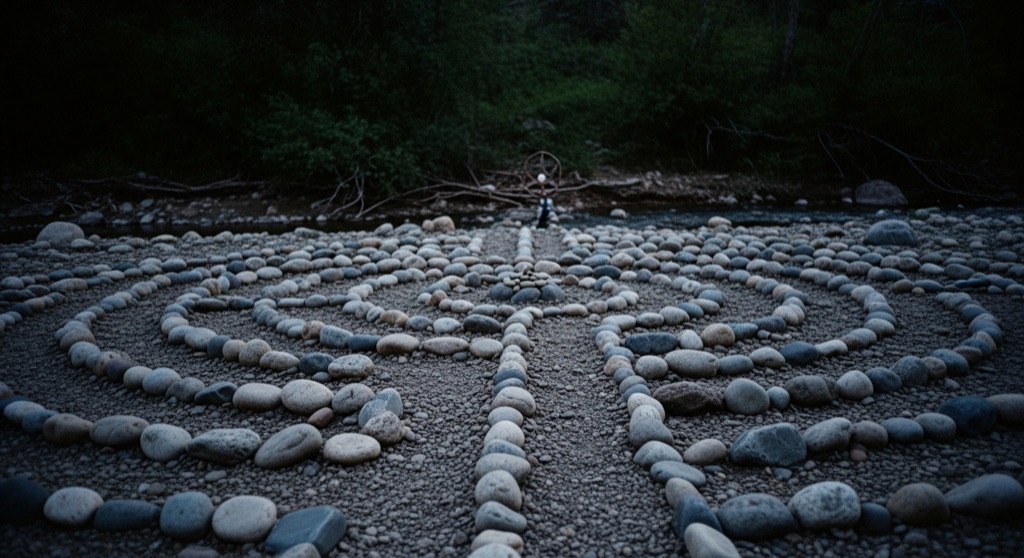 Lyons Memorial Labyrinth
Built on the first anniversary of the catastrophic 2013 flood using rounded cobbles and boulders deposited by the floodwaters themselves, this seven-circuit stone labyrinth sits on the South St. Vrain riverbank just outside Lyons — one of the largest traditional labyrinths in Colorado. Visitors leave offerings, ceremonies are held here, and it functions as a living, maintained outdoor sanctuary open daily dusk to dawn.
Lyons Memorial Labyrinth
Built on the first anniversary of the catastrophic 2013 flood using rounded cobbles and boulders deposited by the floodwaters themselves, this seven-circuit stone labyrinth sits on the South St. Vrain riverbank just outside Lyons — one of the largest traditional labyrinths in Colorado. Visitors leave offerings, ceremonies are held here, and it functions as a living, maintained outdoor sanctuary open daily dusk to dawn.
-
 Saul the Sticker Ball (StickerGiant lobby)
Saul is a 231-pound Guinness World Record-holding ball built from over 171,000 stickers, named after Saul Goodman and started on National Sticker Day 2016, that lives in the StickerGiant lobby where visitors can add their own sticker to its ever-growing surface. It's a genuinely absurd and cheerful piece of roadside Americana tucked inside a working sticker company in Longmont.
Saul the Sticker Ball (StickerGiant lobby)
Saul is a 231-pound Guinness World Record-holding ball built from over 171,000 stickers, named after Saul Goodman and started on National Sticker Day 2016, that lives in the StickerGiant lobby where visitors can add their own sticker to its ever-growing surface. It's a genuinely absurd and cheerful piece of roadside Americana tucked inside a working sticker company in Longmont.
-
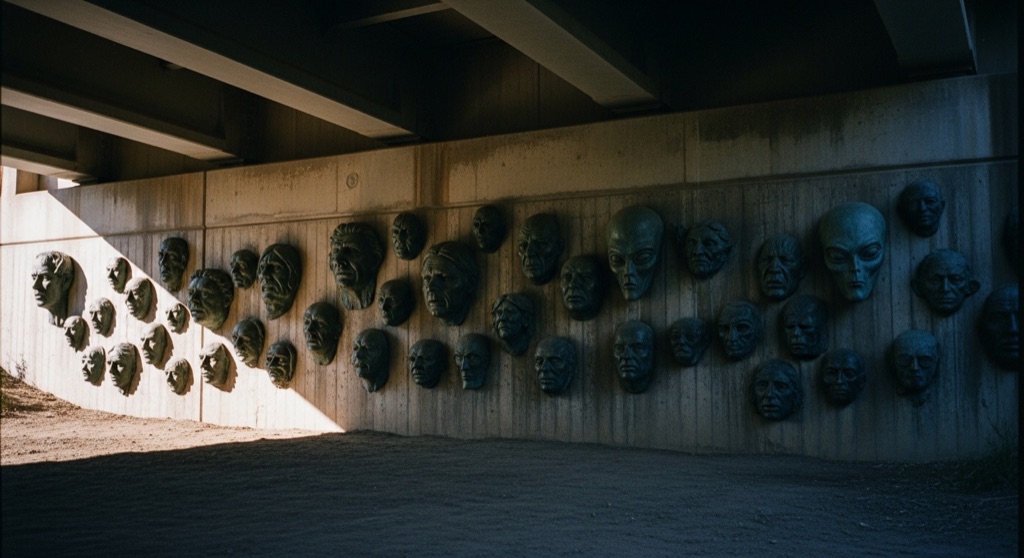 Faces Bridge
Tucked beneath the Wilson Avenue bridge along the Big Thompson River trail, dozens of bronze faces — human, fantastical, and at least one alien — stare out from the underpass wall, a 1999 public art commission by sculptor Randy Hand that most trail users walk right past without looking up. The installation survived Loveland's catastrophic 2013 flood and remains in place as a quietly weird gem in a city already known for public sculpture.
Faces Bridge
Tucked beneath the Wilson Avenue bridge along the Big Thompson River trail, dozens of bronze faces — human, fantastical, and at least one alien — stare out from the underpass wall, a 1999 public art commission by sculptor Randy Hand that most trail users walk right past without looking up. The installation survived Loveland's catastrophic 2013 flood and remains in place as a quietly weird gem in a city already known for public sculpture.
-
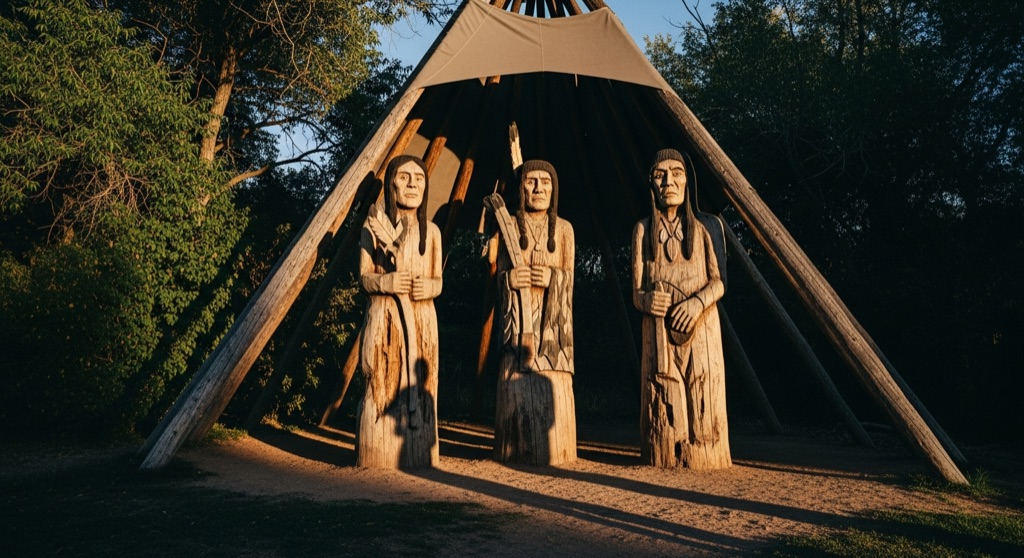 Niwot Tree Carvings (Eddie Running Wolf)
Three towering figures — Spear Lodge Man, The Eagle Catcher, and Cheyenne Holy Man — were carved from dead willow stumps by the late Arapaho artist Eddie Running Wolf starting in 2007, and after restoration by his son Dustin have found their permanent home at Left Hand Valley Grange Park, sheltered under a tipi-like canopy near the LoBo Trail. They stand as eerie, weathered sentinels honoring Chief Niwot and the Arapaho people who once inhabited the Left Hand Valley.
Niwot Tree Carvings (Eddie Running Wolf)
Three towering figures — Spear Lodge Man, The Eagle Catcher, and Cheyenne Holy Man — were carved from dead willow stumps by the late Arapaho artist Eddie Running Wolf starting in 2007, and after restoration by his son Dustin have found their permanent home at Left Hand Valley Grange Park, sheltered under a tipi-like canopy near the LoBo Trail. They stand as eerie, weathered sentinels honoring Chief Niwot and the Arapaho people who once inhabited the Left Hand Valley.
-
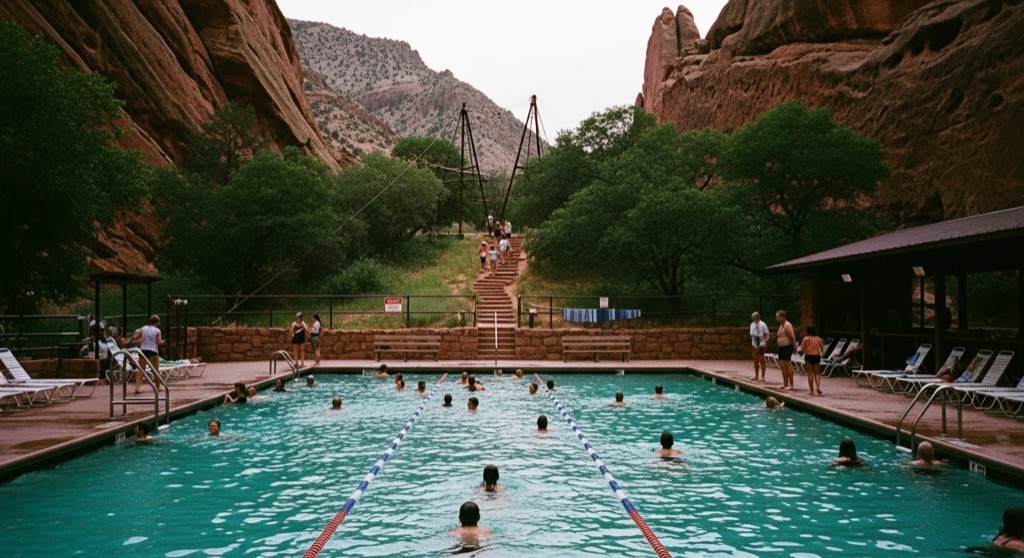 Eldorado Springs Pool & Artesian Spring
A genuine 1905 canyon resort fed by 6,000-year-old artesian water that runs a bracingly cool 76°F year-round, where daredevil Ivy Baldwin walked a tightrope 582 feet above the canyon floor 86 times between 1906 and 1948. The pool opens each Memorial Day and runs through Labor Day plus September weekends, still drawing crowds into a setting of red-rock cliffs.
Eldorado Springs Pool & Artesian Spring
A genuine 1905 canyon resort fed by 6,000-year-old artesian water that runs a bracingly cool 76°F year-round, where daredevil Ivy Baldwin walked a tightrope 582 feet above the canyon floor 86 times between 1906 and 1948. The pool opens each Memorial Day and runs through Labor Day plus September weekends, still drawing crowds into a setting of red-rock cliffs.
-
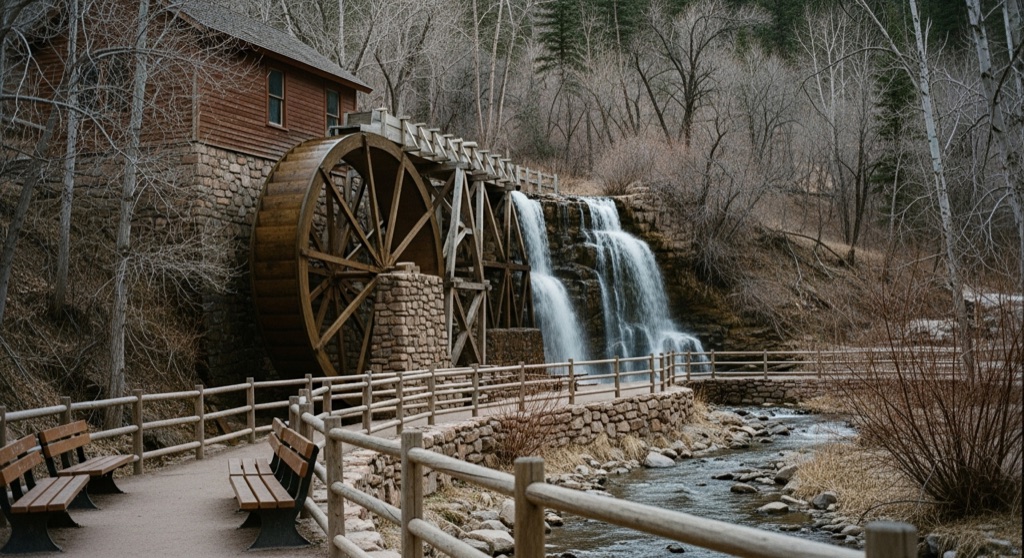 Charlie Tayler Water Wheel
Colorado's largest wooden waterwheel — all 30 feet of it — still turns beside a cascading waterfall, built in 1893 by a grizzled miner who swore off bathing and kissing as his personal health regimen. The wheel is free, accessible year-round, and reached via a short paved path under I-70 from Harold A. Anderson Park.
Charlie Tayler Water Wheel
Colorado's largest wooden waterwheel — all 30 feet of it — still turns beside a cascading waterfall, built in 1893 by a grizzled miner who swore off bathing and kissing as his personal health regimen. The wheel is free, accessible year-round, and reached via a short paved path under I-70 from Harold A. Anderson Park.
-
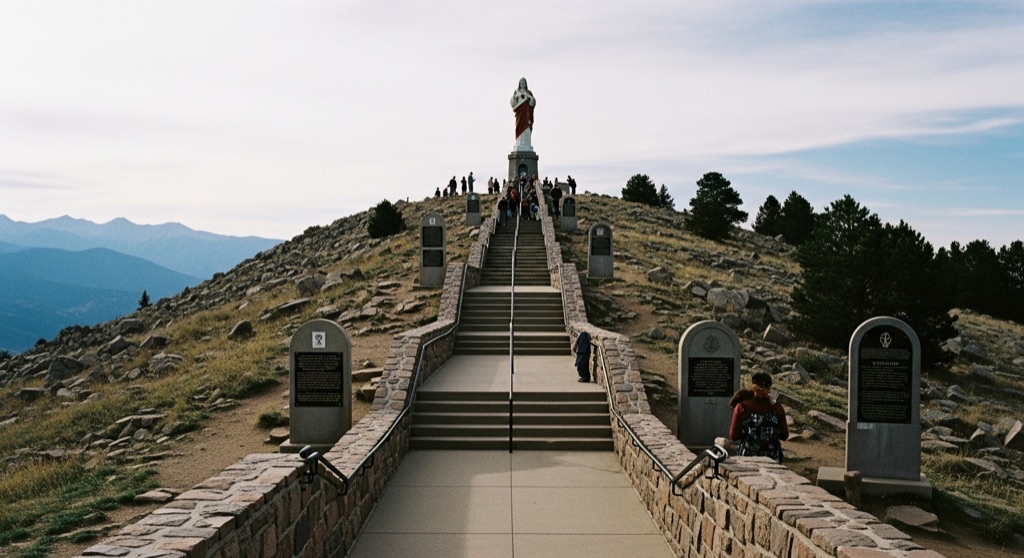 Mother Cabrini Shrine
A free, open-to-all mountaintop pilgrimage site where visitors climb 373 steps past the Stations of the Cross to reach a 22-foot Sacred Heart of Jesus statue — all anchored by a mountain spring that St. Frances Cabrini reportedly called forth from solid rock in 1912. The grounds are open daily 7 a.m. to dusk, with sweeping views of the Front Range at the top.
Mother Cabrini Shrine
A free, open-to-all mountaintop pilgrimage site where visitors climb 373 steps past the Stations of the Cross to reach a 22-foot Sacred Heart of Jesus statue — all anchored by a mountain spring that St. Frances Cabrini reportedly called forth from solid rock in 1912. The grounds are open daily 7 a.m. to dusk, with sweeping views of the Front Range at the top.
-
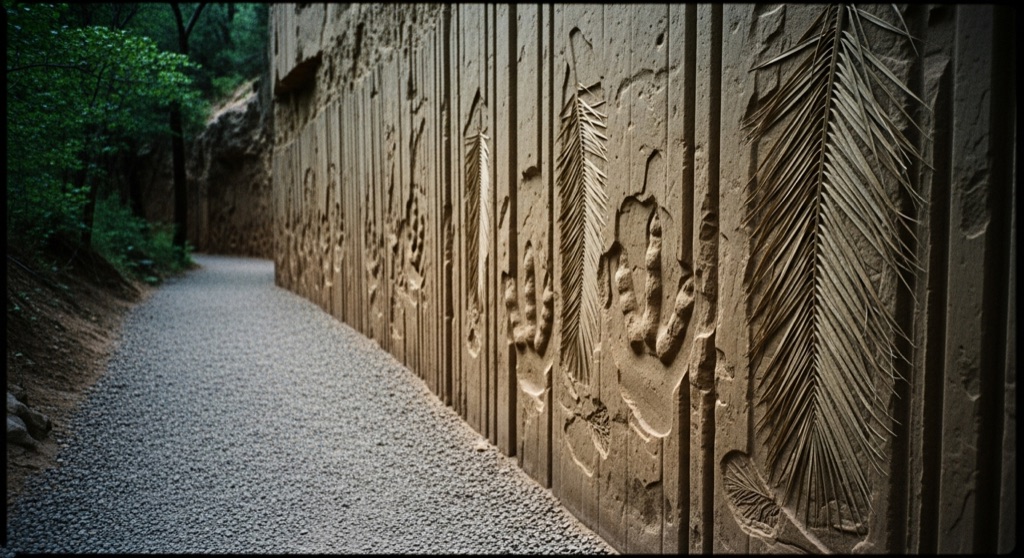 Triceratops Trail
A free, 1.5-mile gravel trail through a reclaimed clay-mining canyon where 68-million-year-old Triceratops and Tyrannosaur tracks protrude outward from vertical sandstone walls as raised negative casts — the inverse of a normal footprint, as if viewed from below the mud surface — alongside fossilized palm fronds. Designated a National Natural Landmark in 2011, it's one of the only places on Earth where you can see dinosaur tracks this way.
Triceratops Trail
A free, 1.5-mile gravel trail through a reclaimed clay-mining canyon where 68-million-year-old Triceratops and Tyrannosaur tracks protrude outward from vertical sandstone walls as raised negative casts — the inverse of a normal footprint, as if viewed from below the mud surface — alongside fossilized palm fronds. Designated a National Natural Landmark in 2011, it's one of the only places on Earth where you can see dinosaur tracks this way.
-
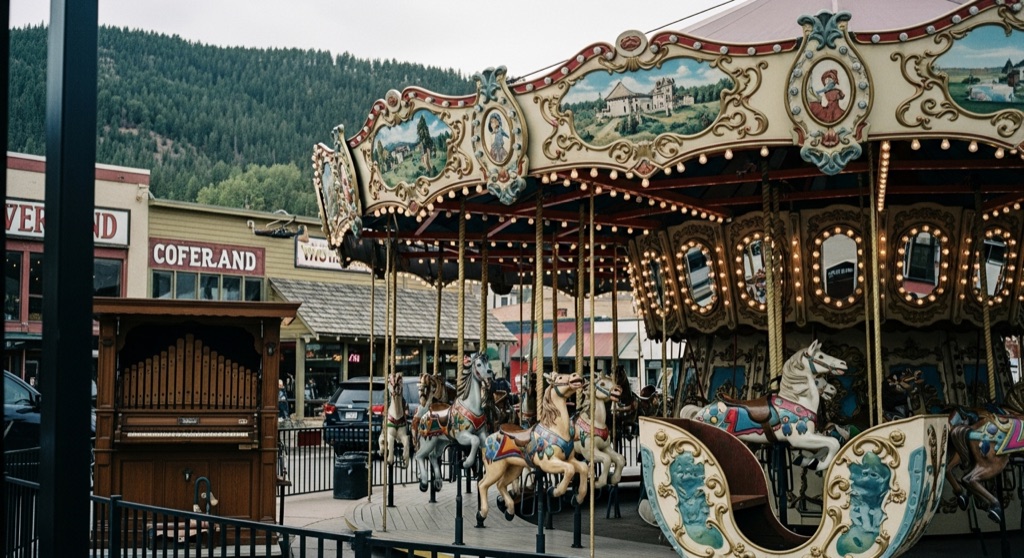 Carousel of Happiness
Marine veteran Scott Harrison spent 26 years hand-carving 56 whimsical, one-of-a-kind animals — inspired by a vision that got him through Vietnam — and mounted them on a rescued 1910 Looff carousel that now spins to the music of a restored 1913 Wurlitzer band organ. Open daily in Nederland with rides at $3 each, it has delighted over a million visitors since opening on Memorial Day 2010.
Carousel of Happiness
Marine veteran Scott Harrison spent 26 years hand-carving 56 whimsical, one-of-a-kind animals — inspired by a vision that got him through Vietnam — and mounted them on a rescued 1910 Looff carousel that now spins to the music of a restored 1913 Wurlitzer band organ. Open daily in Nederland with rides at $3 each, it has delighted over a million visitors since opening on Memorial Day 2010.
-
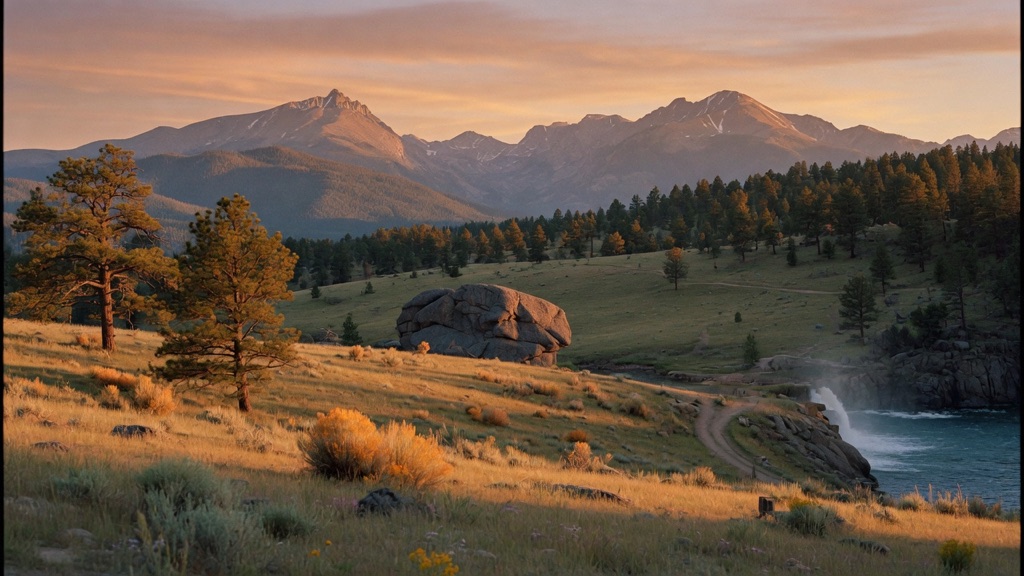 Sleepy Lion Trail to Button Rock Dam
Most people aiming for "a hike near Boulder" never turn down the dirt road to Button Rock Preserve, which is exactly why it stays quiet. You start on a flat service road tracing North St. Vrain Creek past tiny Longmont Reservoir, then the Sleepy Lion Trail peels off and climbs through ponderosa and Douglas fir into a high rolling meadow with views toward Longs Peak and Mt. Meeker. It's named for a ranger who found a mountain lion napping on a rock here. Bighorn sheep, reintroduced in the 1980s, and wintering elk move through these slopes. The loop closes at Button Rock Dam, where water roars off a granite cliff into a pool. Big country, almost nobody on it.
Sleepy Lion Trail to Button Rock Dam
Most people aiming for "a hike near Boulder" never turn down the dirt road to Button Rock Preserve, which is exactly why it stays quiet. You start on a flat service road tracing North St. Vrain Creek past tiny Longmont Reservoir, then the Sleepy Lion Trail peels off and climbs through ponderosa and Douglas fir into a high rolling meadow with views toward Longs Peak and Mt. Meeker. It's named for a ranger who found a mountain lion napping on a rock here. Bighorn sheep, reintroduced in the 1980s, and wintering elk move through these slopes. The loop closes at Button Rock Dam, where water roars off a granite cliff into a pool. Big country, almost nobody on it.
-
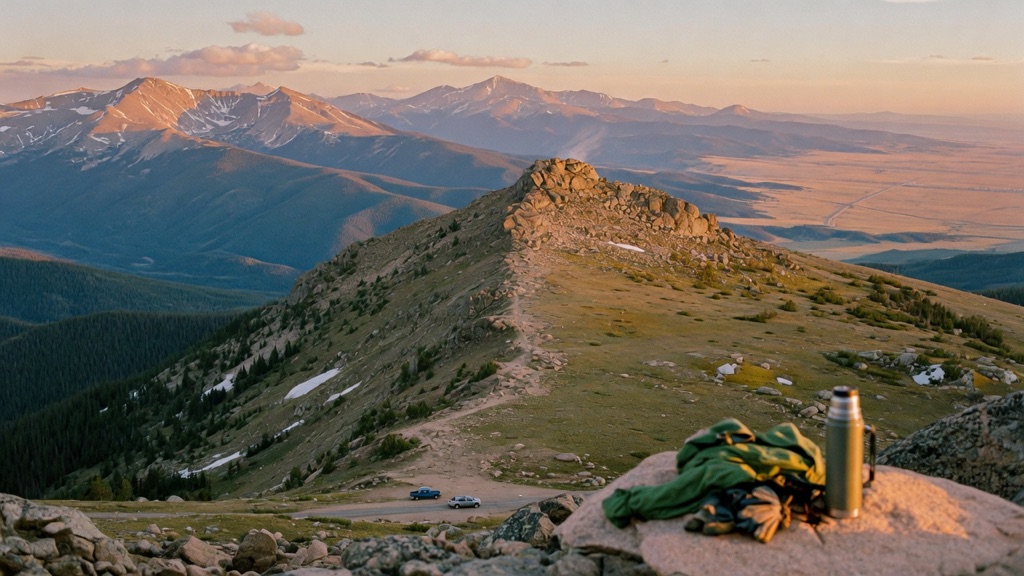 Chief Mountain Trail
Most people barreling up I-70 toward the famous 14ers drive right past this one — and that's the gift. Chief Mountain is short, steep, and absurdly generous: under three miles round trip from a roadside pull-out to an 11,700-foot summit that hands you a genuine 360-degree payoff. You climb fast through pine and into open alpine tundra, then top out on a rocky crown with Rocky Mountain National Park to the north, the Grays and Torreys 14ers and Mount Blue Sky close enough to read, Pikes Peak to the south, and the Denver plains spilling east. Big-mountain views, fraction of the effort, none of the trailhead circus.
Chief Mountain Trail
Most people barreling up I-70 toward the famous 14ers drive right past this one — and that's the gift. Chief Mountain is short, steep, and absurdly generous: under three miles round trip from a roadside pull-out to an 11,700-foot summit that hands you a genuine 360-degree payoff. You climb fast through pine and into open alpine tundra, then top out on a rocky crown with Rocky Mountain National Park to the north, the Grays and Torreys 14ers and Mount Blue Sky close enough to read, Pikes Peak to the south, and the Denver plains spilling east. Big-mountain views, fraction of the effort, none of the trailhead circus.
-
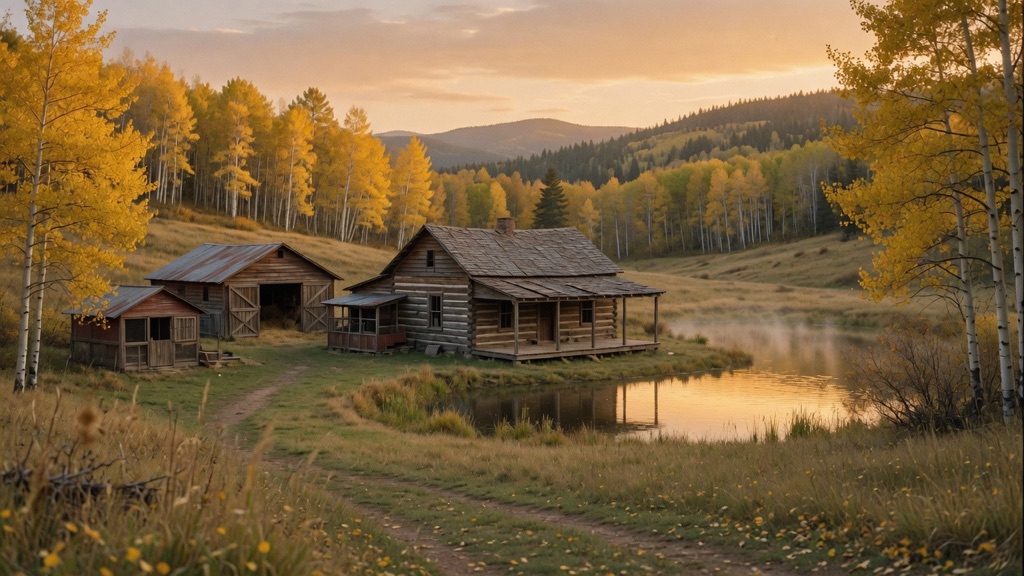 Forgotten Valley Homestead Trail
Most Denver hikers blow past this one for the showier summits, and that's exactly the point. A flat 1.3 miles in — Burro Trail, then a left onto Mountain Lion Trail — drops you into a pocket of meadow where the 1876 Tallman Ranch still stands beside a little trout pond. Four generations of a Swedish immigrant family lived here along Nott Creek, and the weathered ranch house, chicken coop, and stables are still standing, porch facing the water. It's barely a walk and yet it lands somewhere strange and quiet: a forgotten homestead in a state park, hiding in plain sight an hour from the city.
Forgotten Valley Homestead Trail
Most Denver hikers blow past this one for the showier summits, and that's exactly the point. A flat 1.3 miles in — Burro Trail, then a left onto Mountain Lion Trail — drops you into a pocket of meadow where the 1876 Tallman Ranch still stands beside a little trout pond. Four generations of a Swedish immigrant family lived here along Nott Creek, and the weathered ranch house, chicken coop, and stables are still standing, porch facing the water. It's barely a walk and yet it lands somewhere strange and quiet: a forgotten homestead in a state park, hiding in plain sight an hour from the city.
-
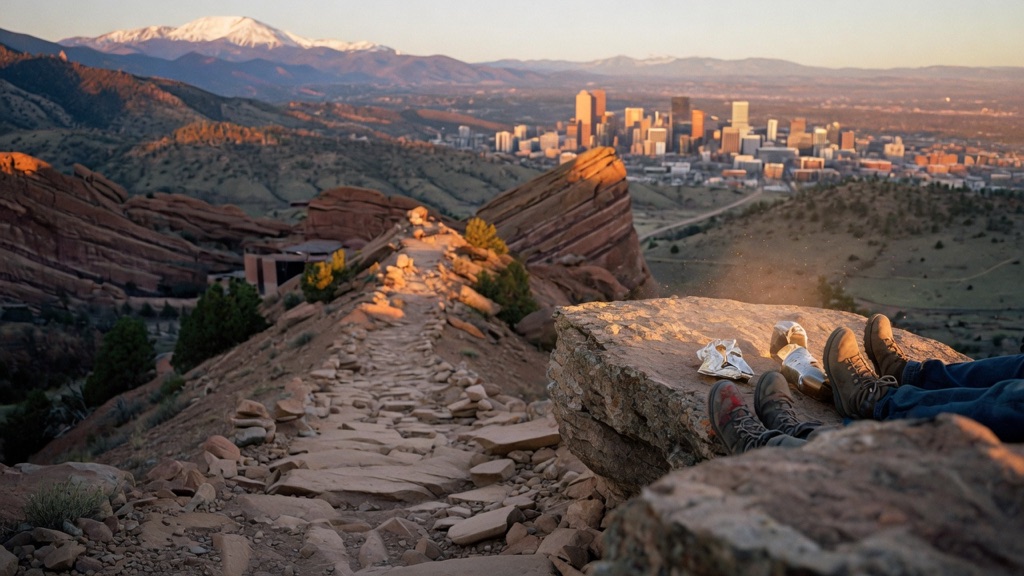 Mount Morrison South Ridge Trail
Everyone drives past this one. Mount Morrison is the jagged peak looming directly over Red Rocks Amphitheatre, but the south ridge that climbs it has no official designation, no maintained tread, and no fanfare — just an unsigned bootpath up a steep, rocky spine that thousands of concertgoers stare at without ever realizing they can climb it. It's barely two miles up but stacks 2,000 feet of gain into it, with hand-over-rock Class 2 scrambling and loose stone near the top. The reward is outsized: Red Rocks' fins in silhouette below you, the full Denver skyline to the east, and the Front Range and Mount Blue Sky stacked behind you to the west. Gritty, intimate, earned.
Mount Morrison South Ridge Trail
Everyone drives past this one. Mount Morrison is the jagged peak looming directly over Red Rocks Amphitheatre, but the south ridge that climbs it has no official designation, no maintained tread, and no fanfare — just an unsigned bootpath up a steep, rocky spine that thousands of concertgoers stare at without ever realizing they can climb it. It's barely two miles up but stacks 2,000 feet of gain into it, with hand-over-rock Class 2 scrambling and loose stone near the top. The reward is outsized: Red Rocks' fins in silhouette below you, the full Denver skyline to the east, and the Front Range and Mount Blue Sky stacked behind you to the west. Gritty, intimate, earned.
-
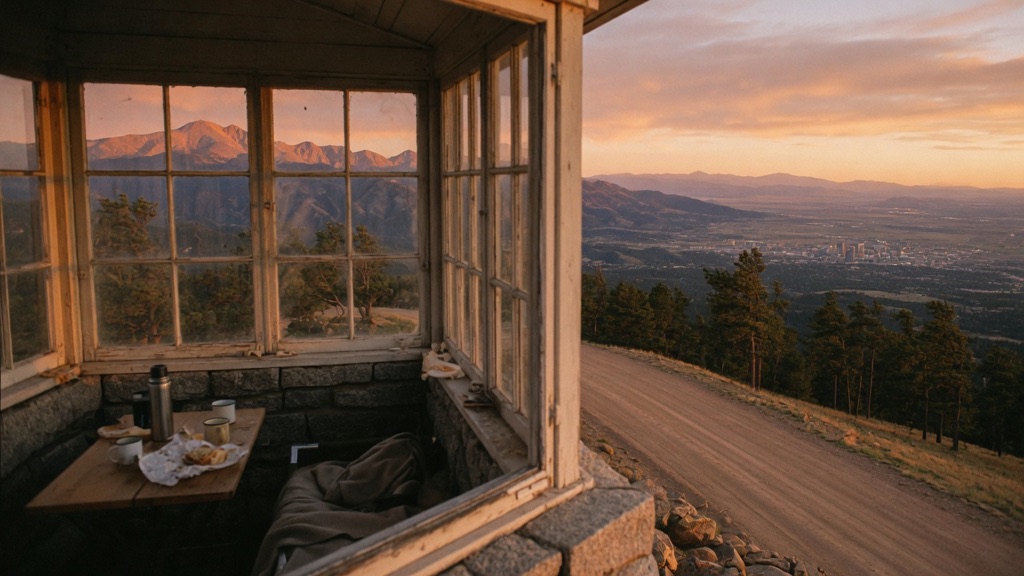 Mestaa'ehehe Mountain Fire Lookout
Almost everyone driving CO-103 toward Mount Blue Sky blows right past this one: a squat 14x14 granite cab ringed with windows, built by the CCC in the 1940s, perched at 11,494 feet. There's no flashy trailhead sign, just a dirt pull-off and a service road grinding uphill through the pines. Walk it about two miles and the trees fall away to a 360-degree payoff almost no one earns: Longs Peak and the Front Range, Pikes Peak to the south, downtown Denver glinting on the plains. The real secret is that the tower itself can be rented overnight, a working-feeling fire lookout you can actually sleep in.
Mestaa'ehehe Mountain Fire Lookout
Almost everyone driving CO-103 toward Mount Blue Sky blows right past this one: a squat 14x14 granite cab ringed with windows, built by the CCC in the 1940s, perched at 11,494 feet. There's no flashy trailhead sign, just a dirt pull-off and a service road grinding uphill through the pines. Walk it about two miles and the trees fall away to a 360-degree payoff almost no one earns: Longs Peak and the Front Range, Pikes Peak to the south, downtown Denver glinting on the plains. The real secret is that the tower itself can be rented overnight, a working-feeling fire lookout you can actually sleep in.
-
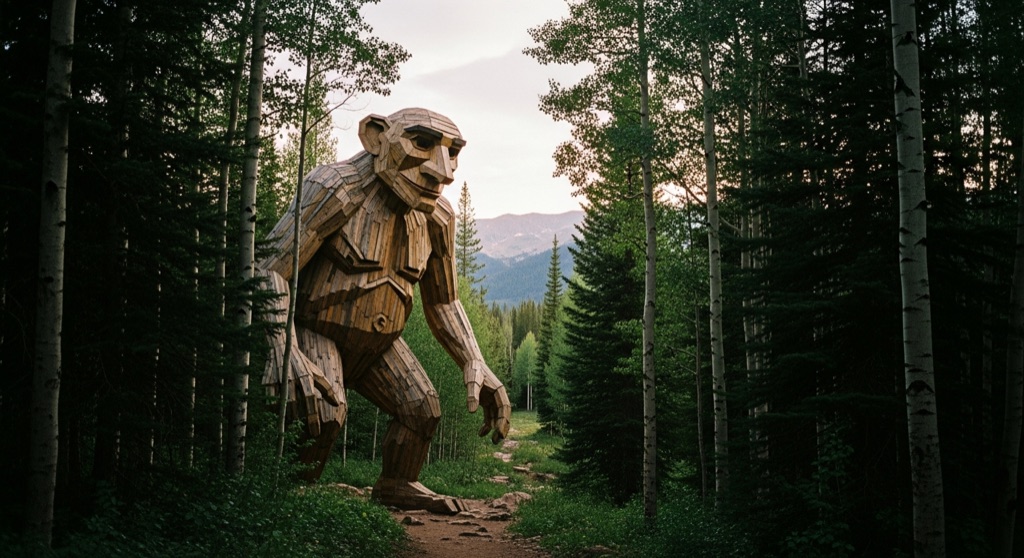 Isak Heartstone
A 15-foot recycled-wood troll by Danish artist Thomas Dambo, built for the 2018 Breckenridge International Festival of Arts and now a permanent trailside sculpture reached by a short mountain walk.
Isak Heartstone
A 15-foot recycled-wood troll by Danish artist Thomas Dambo, built for the 2018 Breckenridge International Festival of Arts and now a permanent trailside sculpture reached by a short mountain walk.
-
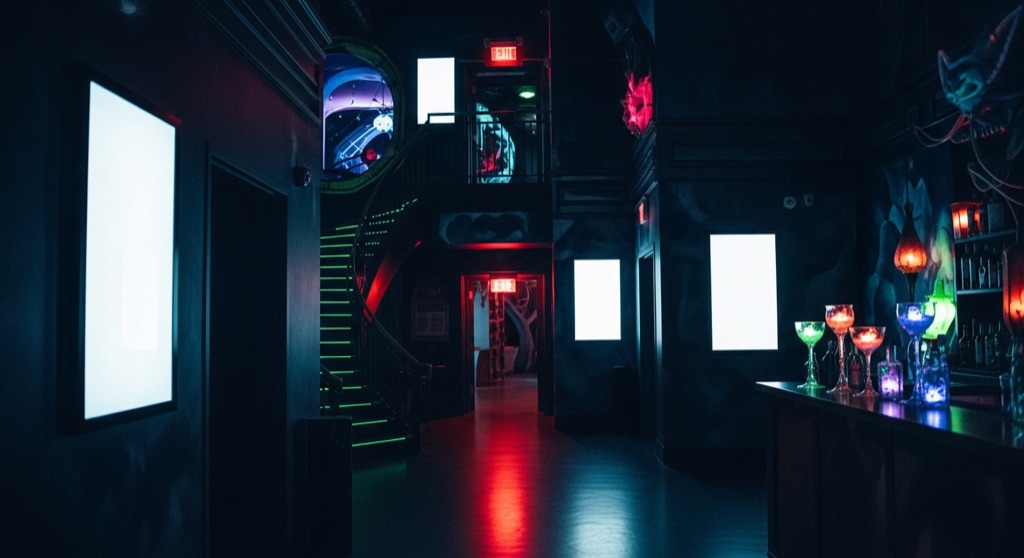 Adulti-Verse at Meow Wolf Convergence Station
Once a month Meow Wolf's four-story sci-fi dreamscape turns 21-plus for the evening, and you can roam its glowing hallways, secret stairwells, and portal-hopping worlds with a drink in hand. Bartenders pour themed 'otherworldly' elixirs and each edition gets a wild theme, from Adult Prom to Monsters & Magic to a Valentine's night. It's the same disorienting, blacklit art labyrinth, just looser, boozier, and child-free.
Adulti-Verse at Meow Wolf Convergence Station
Once a month Meow Wolf's four-story sci-fi dreamscape turns 21-plus for the evening, and you can roam its glowing hallways, secret stairwells, and portal-hopping worlds with a drink in hand. Bartenders pour themed 'otherworldly' elixirs and each edition gets a wild theme, from Adult Prom to Monsters & Magic to a Valentine's night. It's the same disorienting, blacklit art labyrinth, just looser, boozier, and child-free.
-
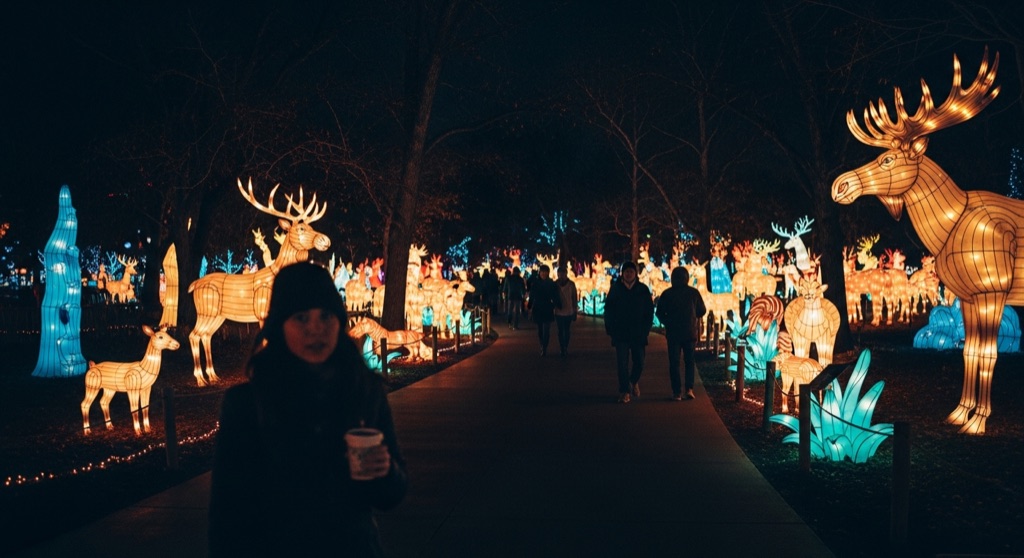 Glowing Wild at Denver Zoo
On select spring nights the zoo turns off the daylight routine and lights up as a lantern walk, with around 175 oversized illuminated lanterns and dozens of glowing scenes hand-built by Chinese artisans. Highlights have included a 20-foot-tall illuminated moose and motion-activated 'radiant reef' displays threaded along the dark pathways. You stroll the glowing trail in the evening hours rather than hunting for live animals.
Glowing Wild at Denver Zoo
On select spring nights the zoo turns off the daylight routine and lights up as a lantern walk, with around 175 oversized illuminated lanterns and dozens of glowing scenes hand-built by Chinese artisans. Highlights have included a 20-foot-tall illuminated moose and motion-activated 'radiant reef' displays threaded along the dark pathways. You stroll the glowing trail in the evening hours rather than hunting for live animals.
Weird outdoor & roadside things to do in Denver — FAQ
Which weird outdoor & roadside oddities in Denver are the strangest?
Ranked by how strange they actually are: Old Elitch Carousel Dome (with floor labyrinth), Impossible Winterbourne Steampunk Street Sculptures and Edgar Experimental Mine. Old Elitch Carousel Dome (with floor labyrinth) — On the corner where Berkeley meets Tennyson sits a 12-sided, bell-roofed pavilion built in 1926 that most people walk past assuming it's a shuttered event hall.
Where in Denver are they?
Across City Park, Berkeley / Tennyson Street, Hilltop, Platt Park / South Pearl Street and Downtown Denver (Colorado Convention Center) and 24 more. Each listing gives the neighborhood and address so you can cluster a couple into one outing.
Are any of the weird outdoor & roadside oddities in Denver free?
Yes — 28 are free to visit, including Prismatic Electric Fountain (Ferril Lake), Old Elitch Carousel Dome (with floor labyrinth) and BOWS — Patrick Marold Steel Arch Installation. The rest are mostly low-cost.
Is this a good weird date in Denver?
That's what the list is built for. Every entry has a specific move rather than a vague recommendation — at Old Elitch Carousel Dome (with floor labyrinth), for instance: Walk the floor labyrinth slowly together in the empty 1926 dome, then drift two blocks up Tennyson for coffee or a drink and trade what you each thought about on the way in.
How were these weird outdoor & roadside oddities chosen?
An agentic research system digs for the genuinely obscure — the spots even locals miss — and every one is verified against real sources before it makes the list. We deliberately skip the landmarks already on every Denver guide.