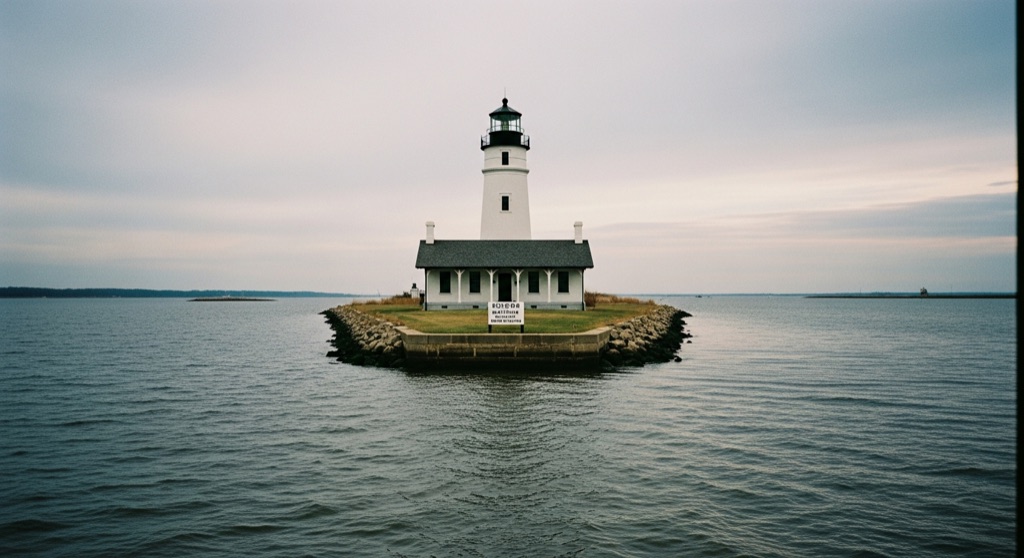
Entry No. 34 — the Washington, D.C. file — filed under: Civil War POW camp
Point Lookout State Park & Lighthouse
Union guards, including U.S. Colored Troops regiments made up partly of formerly enslaved men, ran a Civil War prison camp on this narrow spit; more than 50,000 Confederate captives passed through it over the war (peak population around 20,000) and roughly 3,000-4,000 died of disease and exposure where the Potomac meets the Chesapeake.
→ Three at a time, never the same twice — explore weird Washington, D.C.
The story
At the southernmost tip of St. Mary's County, where the Potomac River churns directly into the Chesapeake Bay, sits a narrow piece of land with a heavy past. Built in 1830, the Point Lookout Lighthouse is the oldest surviving "integral" lighthouse in the United States—meaning the keeper's living quarters were structurally integrated directly into the brick light tower itself, rather than built as a detached cottage.
During the Civil War, Union authorities converted this wind-battered spit into Camp Hoffman, a sprawling, overcrowded prison camp. More than 50,000 Confederate captives passed through the camp over the course of the war, with the peak population swelling around 20,000 men squeezed into canvas tents on the marshy ground. Adding a layer of historical irony that wasn't lost on the prisoners, the camp guards included regiments of the U.S. Colored Troops—men, many recently freed from slavery, now holding key-and-rifle over the southern army.
Disease, typhoid, and brutal salt-air exposure swept through the pens, claiming between 3,000 and 4,000 lives right on the sand before the war ended. Following a thorough renovation completed in 2025, you can climb into the cupola of the historic light tower to look down across the exact spit where the prison pens once stood.
What it's like
Driving down to Scotland, Maryland, puts you on a stark, wind-swept stretch of salt marsh where the river mouth looks more like an ocean horizon. Stepping into the renovated 1830 lighthouse gets you access to the cupola views, but walking the perimeter of the point is where the history sets in. It's a quiet, marshy state park now, but the breeze off the bay remains sharp. Check state park schedules before heading down, as hours for lighthouse access can shift with the seasons.
The move: Climb the cupola of the 1830 lighthouse, the oldest surviving 'integral' lighthouse in the U.S. (keeper's quarters built into the tower), freshly reopened after a 2025 renovation, then walk the point where the mass POW camp once stood.
- 📍 Scotland, MD (St. Mary's County)
- 💸 $$
- ⚡ Up for anything
- 🌗 Indoors
Where: 11175 Point Lookout Road, Scotland, MD 20687
Hours: Added 2026-07-19 — confirm current hours before you go.
⚠ Seasonal or scheduled — always check before you go.
Pair it with
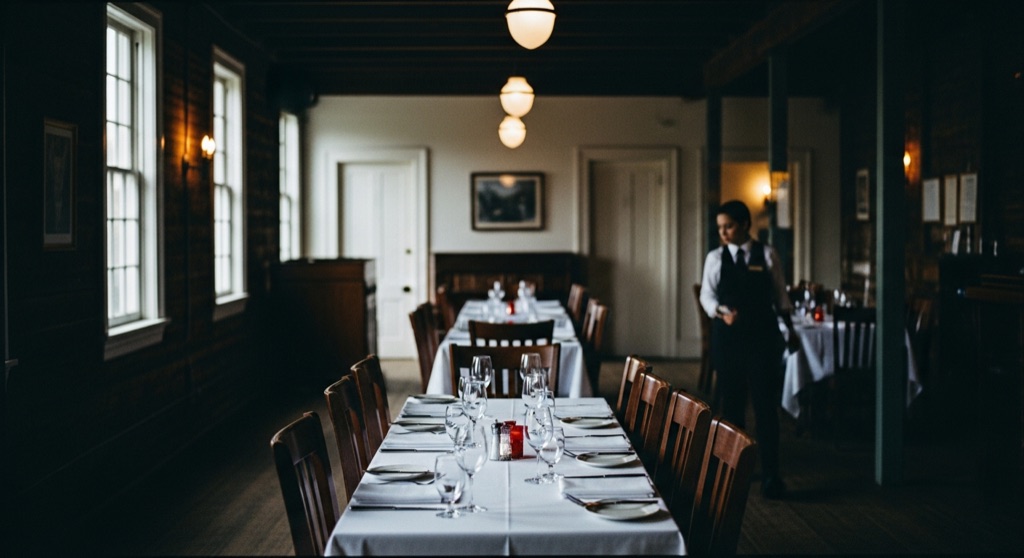
- Surratt House Museum — Follow Maryland's dark Civil War trail north to the safehouse tavern where John Wilkes Booth picked up hidden rifles and binoculars while fleeing Washington.
- Mallows Bay Ghost Fleet — Pair one dark historic shoreline with another by heading west along the Potomac to see the sunken skeletons of 100 wooden World War I steamships.
- Titanic Memorial — Extend your tour of solemn waterfront monuments by visiting this 12-foot granite figure along the Potomac honoring the men who surrendered their lifeboat seats.
More weird in Washington, D.C.
Good to know
What makes the Point Lookout Lighthouse architecturally significant?
Erected in 1830, it is the oldest surviving integral lighthouse in the country, designed with the keeper's quarters built right inside the tower base.
How many prisoners were held at Point Lookout during the Civil War?
More than 50,000 Confederate soldiers passed through the camp, with peak populations reaching roughly 20,000 captives at a single time.
How many people died at the prison camp?
Between 3,000 and 4,000 Confederate prisoners died at Point Lookout, largely due to exposure, harsh conditions, and disease on the exposed peninsula.
Who guarded the prison camp?
Union troops guarded the facility, including regiments of the U.S. Colored Troops made up partly of formerly enslaved men.
Plan a visit & invite your people →
Further reading: dnr.maryland.gov · Wikipedia
last checked: 2026-07-19