Entry No. 8 — the Washington, D.C. file — filed under: assassination history
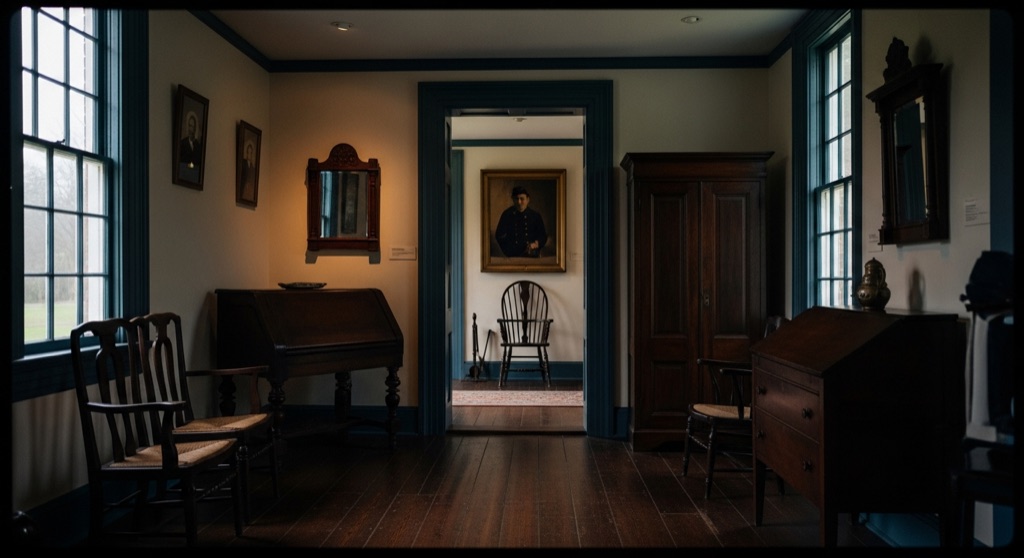
Surratt House Museum
The rifles, ammunition, and field glasses John Wilkes Booth grabbed mid-escape after shooting Lincoln were stashed here first, hidden on tavernkeeper Mary Surratt's orders. She was hanged on July 7, 1865, the first woman ever executed by the U.S. federal government.
→ Three more unusual museums & collections in Washington, D.C. — never the same twice
The story
Hours after John Wilkes Booth pulled the trigger at Ford’s Theatre on April 14, 1865, he didn't flee into deep wilderness—he pulled up to a middle-of-nowhere tavern in what was then Surrattsville, Maryland. Tavernkeeper Mary Surratt had already arranged for weapons and field glasses to be stashed behind the building's walls weeks prior. Booth stayed on his horse on Brandywine Road, nursing a broken leg, while accomplice David Herold went inside to retrieve a Spencer carbine rifle, ammunition, optics, and a bottle of whiskey.
That quick ten-minute pitstop locked Mary Surratt’s fate. Though she maintained her innocence, the federal government deemed the tavern an essential staging ground for the conspiracy. On July 7, 1865, she was hanged at the Old Washington Arsenal, making her the first woman ever executed by the U.S. federal government.
The tavern itself survives as the primary historic artifact on site. It stands in suburban Clinton, quiet and deceptively mundane, preserving the exact interior where local Confederate sympathizers met and where the most famous getaway in American history secured its supplies.
What it's like
You’ll start with a docent-led tour through the restored 19th-century rooms, including the tavern section where the concealed weapons were handed off in the dark. The experience is intimate and detailed, focused heavily on the mechanics of the plot rather than polished theatrical tricks. If you want the full dark-history immersion, check their calendar in advance for the seasonal bus tour, which picks up right from the porch and traces Booth's entire 12-day, 90-mile escape route through southern Maryland down into Virginia. Always check current operating hours before making the drive out to Prince George's County.
The move: Take the docent-led house tour through the actual rooms the conspiracy passed through, then check the calendar for the seasonal John Wilkes Booth Escape Route bus tour, which retraces his 12-day flight starting from this porch.
- 📍 Clinton, MD
- 💸 $$
- ⚡ Up for anything
- 🌗 Indoors
Where: 9110 Brandywine Road, Clinton, MD 20735
Hours: Added 2026-07-19 — confirm current hours before you go.
⚠ Seasonal or scheduled — always check before you go.
Pair it with
- Clara Barton Missing Soldiers Office Museum — Pair this with Clara Barton's office in Penn Quarter to see how another side of Washington scrambled to clean up the war's wreckage in 1865.
- The Big Chair (Chair sculpture) — Stop by this absurd 19-foot mid-century landmark in Anacostia on your drive back north into the District.
- Stabler-Leadbeater Apothecary Museum — Head west across the river to Old Town Alexandria for another remarkably intact 19th-century interior frozen in time.
More weird in Washington, D.C.
Good to know
Where is the Surratt House Museum located?
It is located at 9110 Brandywine Road in Clinton, Maryland (formerly Surrattsville), about 15 miles southeast of central Washington, D.C.
What items did John Wilkes Booth pick up here during his escape?
Booth and David Herold retrieved field glasses, ammunition, whiskey, and a Spencer carbine rifle that Mary Surratt had ordered hidden on the property.
What is the John Wilkes Booth Escape Route tour?
It is a seasonal, bus-based tour hosted by the museum that follows the exact 12-day flight path Booth took from Washington, D.C., starting from the tavern porch and heading south.
Why was Mary Surratt executed?
She was convicted as a co-conspirator in the Lincoln assassination plot for facilitating safe houses and supply drops, leading to her execution by hanging on July 7, 1865.
Plan a visit & invite your people →
Further reading: Wikipedia · Official site · theintersectionmag.com
last checked: 2026-07-19