Entry No. 55 — the Washington, D.C. file — filed under: ruins
Ruins of St. John's Episcopal Church
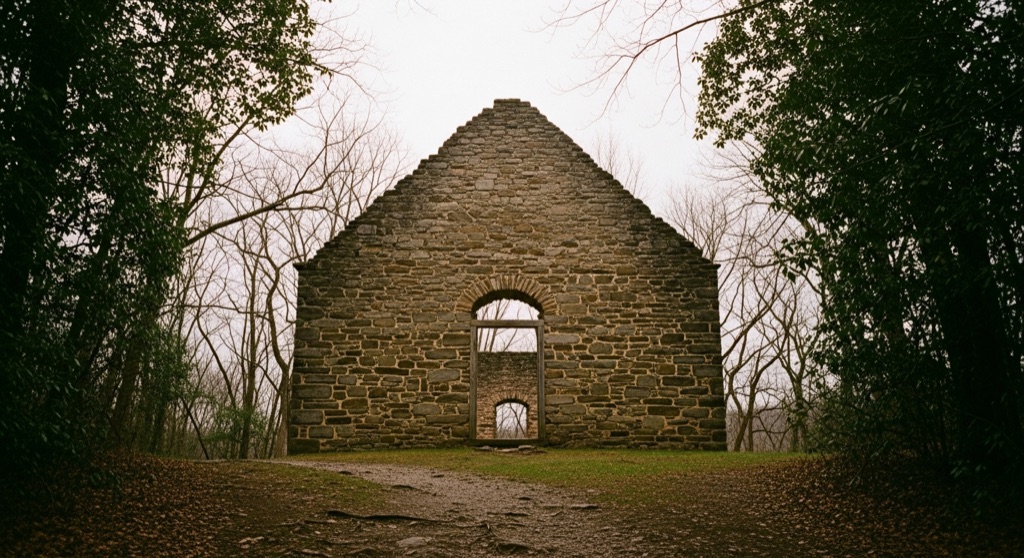
Built in 1852, this historic stone church served as a hospital and barracks during the Civil War, sustaining heavy damage. Though rebuilt after the war, it was abandoned in 1895 when the congregation relocated to a new building in the upper town. Today, only the stabilized fieldstone walls remain, standing as a haunting skeleton along the trail to Jefferson Rock.
→ Three more abandoned & forgotten places in Washington, D.C. — never the same twice
The story
In 1852, Irish immigrants living in Harpers Ferry built St. John's Episcopal Church high on the hillside, anchoring its fieldstone walls directly into the bedrock overlooking the confluence of the rivers. That elevated position gave the congregation incredible views, but it also placed the building squarely in the crosshairs when the Civil War broke out. Harpers Ferry changed hands repeatedly, and the church was promptly stripped of its sacred duties and put to work as a military barracks and a field hospital.
By the time the fighting stopped, the building was a wrecked shell. The congregation managed to piece it back together and resume services after the war, but the location that seemed so picturesque in the 1850s proved unsustainable. Hauling communion wine and elderly parishioners up the treacherous stone stairs every Sunday was a logistical headache. In 1895, the parish abandoned the hillside sanctuary for a shiny new building on Washington Street in upper town, leaving the 1852 fieldstone shell to nature.
What remains today is a roofless stone skeleton pinned in place by National Park Service masons. The open window arches now frame oak branches instead of stained glass, standing along the steep trail upward as a quiet, stone reminder of a town that was repeatedly torn apart and rebuilt.
What it's like
To reach the ruins, you'll climb the steep, hand-cut stone steps leading out of lower Harpers Ferry toward Jefferson Rock along the Appalachian Trail path. The fieldstone shell emerges abruptly from the timber on your right. You cannot step inside the nave or scramble onto the masonry—the park service keeps strict guard over the fragile, stabilized walls, and you must stay on the designated trail. If you want photos of the open window frames without a crowd of day-trippers in the background, start your climb early in the morning before the park shuttles drop off the afternoon crowds.
The move: Hike up the Appalachian Trail steps from lower Harpers Ferry, stopping to admire and photograph the beautiful stone ruins framed by the surrounding forest.
📍 Before you go The ruins are located directly along a public trail within Harpers Ferry National Historical Park, though visitors must remain on the path and are prohibited from climbing on the fragile historic walls.
- 📍 Harpers Ferry
- 💸 Free
- ⚡ Low-key
- 🌗 Outdoors
Where: Harpers Ferry, WV 25425, USA
Hours: Added 2026-07-20 — confirm current access before you go.
Pair it with
- Ruins of Shenandoah Pulp Factory — Double down on Harpers Ferry decay by walking down toward the Shenandoah River to inspect the massive 1880s stone remains of a water-powered pulp mill.
- National Museum of Civil War Medicine — Pair the church's backstory as an emergency field hospital with a look at the actual medical tools and field surgery tactics used during the era.
- Seneca Mill and Quarry Ruins — Continue the overgrown stone architecture tour with a quiet walk around another set of 19th-century masonry ruins hidden in the woods.
More weird in Washington, D.C.
Good to know
Are you allowed to walk inside the church ruins?
No. Visitors are required to stay on the public trail. Climbing, leaning on, or entering the interior of the fragile fieldstone structure is strictly prohibited by park rangers.
How do you get to the ruins?
Hike up the stone staircase off Church Street in lower Harpers Ferry National Historical Park, heading along the Appalachian Trail route toward Jefferson Rock.
Why was the church abandoned?
After suffering severe damage while serving as a Civil War hospital, the parish restored the building, but ultimately abandoned it in 1895 for a more accessible location in the upper town.
Plan a visit & invite your people →
Further reading: nps.gov · Atlas Obscura · theclio.com
last checked: 2026-07-20