Entry No. 50 — the Salt Lake City file — filed under: ruins
Limekiln Gulch Pioneer Kilns
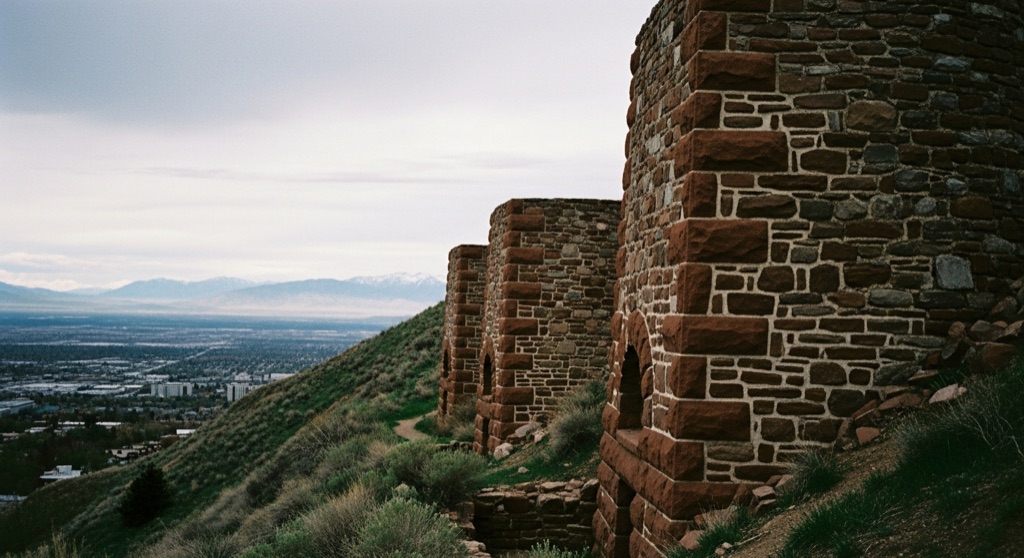
Tucked into the foothills of the Avenues neighborhood, these historic stone structures are the remains of mid-19th-century pioneer lime kilns. Early settlers used them to superheat limestone, producing quicklime for the mortar and plaster that built Salt Lake City. Today, the stabilized, red-sandstone-trimmed ruins stand as a quiet monument along a scenic public trail.
→ Three more abandoned & forgotten places in Salt Lake City — never the same twice
The story
In the late 1850s, early Mormon settlers needed quicklime for mortar and plaster to turn a dry valley into a permanent brick-and-stone city. Rather than hauling materials across the continent, they built three industrial kilns directly into the hillside of what is now the upper Avenues. Pioneers quarried local limestone, chopped down canyon timber to stoke the fires, and superheated the stone inside these red-sandstone-trimmed structures until it broke down into usable lime, which heavy wagons then hauled down the main gulch into town.
What remains today is a surprisingly intact set of masonry ruins clinging to the slope along the Limekiln Gulch Trail. Stabilized by preservationists but quiet and unstaffed, the kilns stand as an obscure industrial remnant of Salt Lake City’s earliest construction boom, tucked just above residential streets and scrub oak.
What it's like
Head up to the trailhead near 1559 E Tomahawk Dr at the top of the Avenues neighborhood. The trail cuts through scrub oak and wildflowers, leading you right up to the heavy stone arches of the kilns. You can get close enough to examine the pioneer masonry work, though iron gates lock off the openings to stop people from clambering inside or spraying graffiti. Go in the morning or late afternoon when the light hits the red sandstone trim and you can get a wide view down across the Salt Lake Valley.
The move: Hike up the Limekiln Gulch Trail together to admire the historic stonework and enjoy panoramic views of the Salt Lake Valley.
📍 Before you go The ruins are located along a public hiking trail, but the kiln openings themselves are gated to prevent entry and vandalism.
- 📍 Salt Lake City
- 💸 Free
- ⚡ Low-key
- 🌗 Outdoors
Where: 1559 E Tomahawk Dr, Salt Lake City, UT 84103, USA
Hours: Added 2026-07-20 — confirm current access before you go.
Pair it with
- Salt Lake City Cemetery — Stay within the Avenues neighborhood and move from pioneer industrial stone to the resting place of early Salt Lake residents.
- Sound Bath at the JCC — Located less than a mile away, this monthly sound session offers a indoor contrast to a dusty hike in the scrub oak.
- Gilgal Sculpture Garden — Trade 1850s functional stonework for Thomas Child Jr.'s vision of hand-carved stone art hidden in central SLC.
More weird in Salt Lake City


Good to know
Can you go inside the pioneer lime kilns?
No. The kiln entrances are fitted with protective iron gates to prevent vandalism and structural damage.
When were the kilns built and what were they used for?
Three kilns were constructed here in the late 1850s to superheat quarried limestone, creating quicklime used for mortar and plaster in Salt Lake City's early historic buildings.
Where is the trailhead located?
Access the trail near 1559 E Tomahawk Dr in the upper foothills of the Avenues neighborhood.
Plan a visit & invite your people →
Further reading: history.utah.gov · hikingproject.com · slcityrealestate.com · backcountrypost.com · cabbit777.blogspot.com
last checked: 2026-07-20