Entry No. 47 — the Salt Lake City file — filed under: history
Ben Harrison Mine Shaft
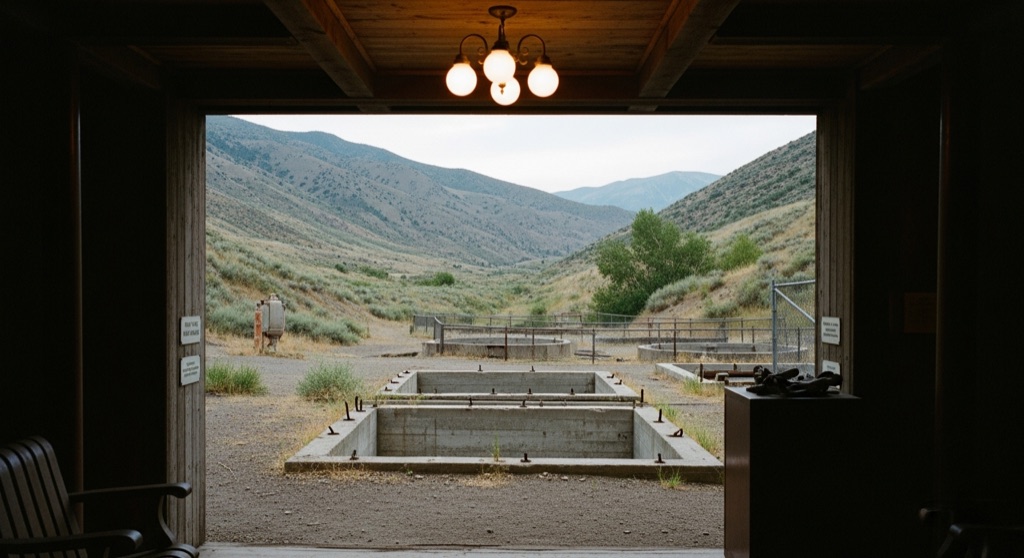
The Ben Harrison Mine (also known as the New Stockton Mine) is a historic lead, silver, gold, and copper mine located in the Oquirrh Mountains east of Stockton, Utah. Discovered in the late 19th century and operated until its closure in 1972, the mine featured a vertical shaft reaching depths of up to 1,000 feet. Today, the site consists of overgrown tailings piles, concrete foundations, and sealed underground workings tucked away in Ben Harrison Gulch.
→ Three more abandoned & forgotten places in Salt Lake City — never the same twice
The story
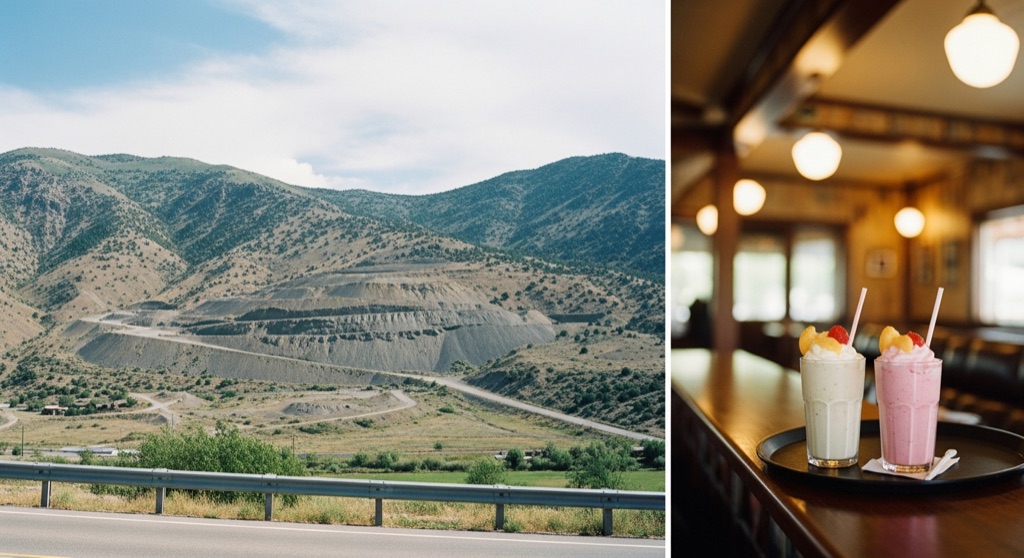
Tucked into Ben Harrison Gulch east of the small mining town of Stockton, the Ben Harrison Mine spent nearly a century pulling lead, silver, gold, and copper out of the western slopes of the Oquirrh Mountains. Discovered in the late 19th century and later leased and managed under regional operators like the Combined Metals Reduction Company and Snyder Mines Incorporated, the operation relied on a vertical shaft plunging 1,000 feet straight into the earth to tap rich veins of galena, chalcopyrite, cerussite, and arsenopyrite.
When the pumps finally shut down in 1972, decades of industrial effort were left to ruin. The underground drifts quickly filled with water, and winter snows went to work rotting out the surface timbering. What remains today is a silent, uncurated graveyard of Utah's hardrock mining era: massive gray tailings piles spilling down the canyon walls, abandoned concrete machine foundations half-swallowed by mountain scrub, and securely sealed adits holding back flooded subterranean tunnels.
What it's like
Reaching the mine site means driving or hiking up the rough dirt roads of Ben Harrison Gulch east of Stockton. There are no gift shops or interpretive plaques out here—just rust, concrete footings, and overgrown rock dumps set against wide-open views of Tooele County. Stay strictly outside any perimeter fencing and off sealed portals; the flooded shafts below are unstable, hazardous, and off-limits. Stick to public access trails to photograph the surface remnants from a safe distance.
The move: Take a scenic drive or hike up Ben Harrison Gulch to photograph the historic tailings and enjoy panoramic views of the Oquirrh Mountains, keeping a safe distance from any fenced or sealed mine openings.
📍 Before you go The underground workings are flooded, sealed, and extremely hazardous, but the surface remnants and tailings can be viewed from the public dirt roads and trails in Ben Harrison Gulch.
- 📍 Tooele
- 💸 Free
- ⚡ Low-key
- 🌗 Outdoors
Where: Tooele, UT 84074, USA
Hours: Added 2026-07-20 — confirm current access before you go.
Pair it with
- Old Mayflower Mine — Double down on 19th-century Oquirrh mining history by hiking out to another abandoned lead and zinc site nearby.
- Stansbury Park Observatory Complex (SPOC) — Trade the pitch-black depth of 1,000-foot flooded mine shafts for open night skies and volunteer-run telescopes just north in Tooele County.
- John Hutchings Museum of Natural History — Inspect vintage mining equipment and local ore specimens in Lehi after seeing where raw galena and chalcopyrite were pulled from the mountain.
More weird in Salt Lake City
Good to know
Can you go inside the Ben Harrison Mine shafts?
No. The underground workings are flooded, sealed off, and extremely hazardous due to bad air, water pressure, and structural collapse.
What minerals were mined at this site?
The mine was primarily worked for lead, silver, gold, and copper, with documented mineral occurrences of galena, chalcopyrite, cerussite, arsenopyrite, and gypsum.
Where is the mine located?
It sits in Ben Harrison Gulch, just east of Stockton in Tooele County, Utah, at roughly 40°27'59"N, 112°19'42"W.
Do I need a ticket or permit to visit the surface ruins?
No tickets or permits are required for viewing surface ruins from public canyon roads, but you should confirm current road and access conditions before heading up the gulch.
Plan a visit & invite your people →
Further reading: westernmininghistory.com · utahrails.net · ugspub.nr.utah.gov · mojaveunderground.com · thediggings.com
last checked: 2026-07-20