Entry No. 78 — the New York City file — filed under: history
Waterloo Mine
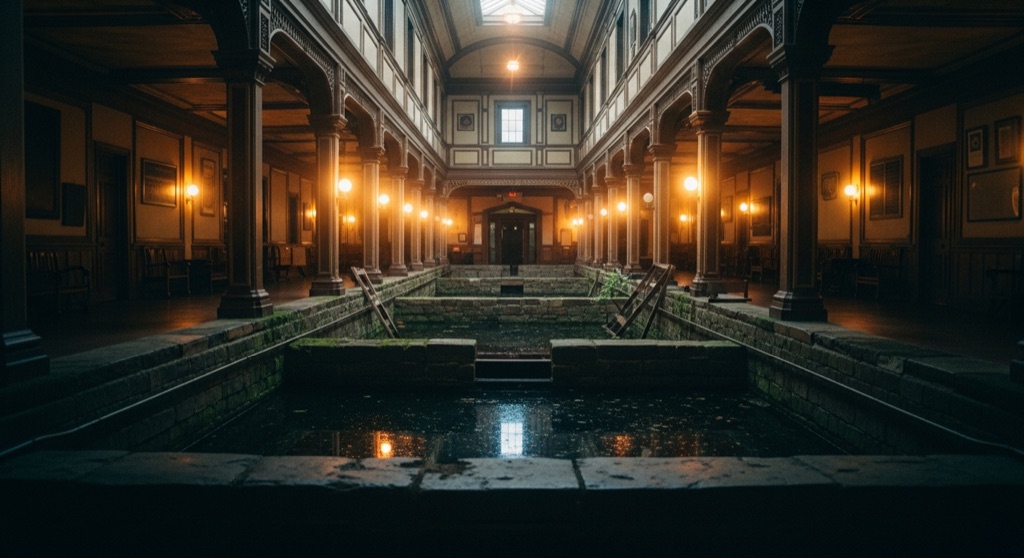
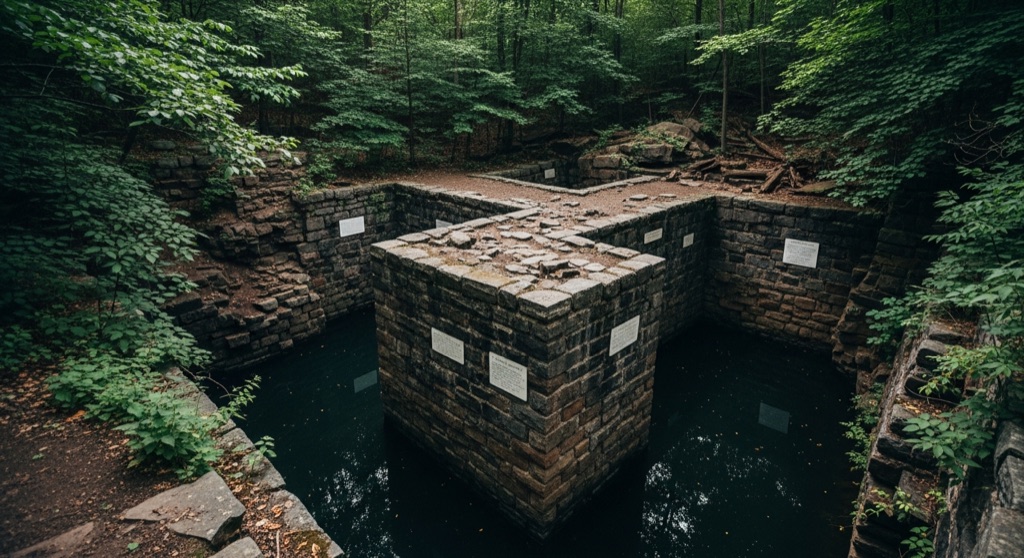
Located within Allamuchy Mountain State Park, the Waterloo Mine (also known as the Brookfield Mine) is a defunct 19th-century iron mine that operated from approximately 1855 to 1885. Miners extracted magnetite ore from several shafts, which was then transported via the Morris Canal and the Sussex Mine Railroad to nearby furnaces. Today, the site is completely abandoned, with water-filled pits, overgrown trenches, and faint traces of its industrial past hidden deep in the forested hills.
→ Three more abandoned & forgotten places in New York City — never the same twice
The story
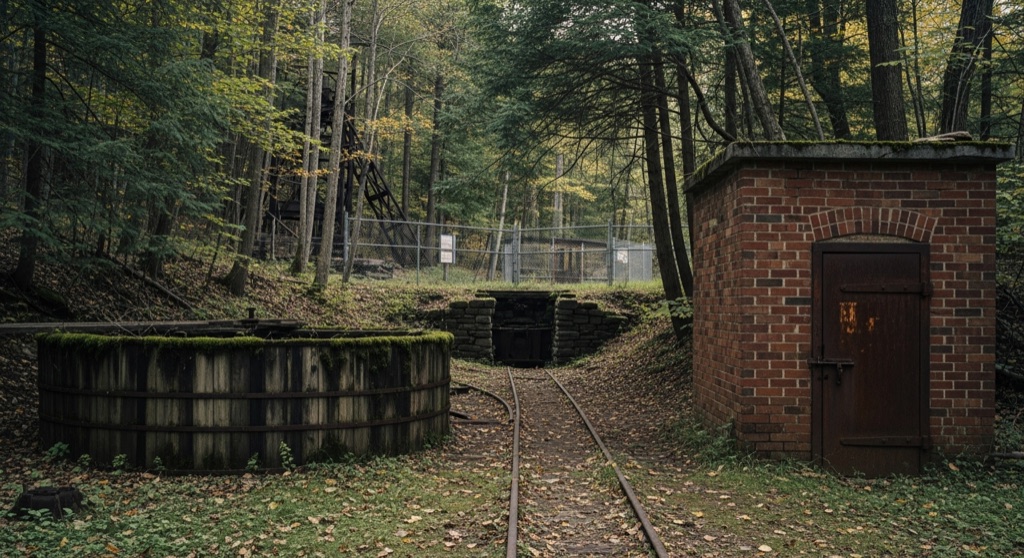
Between 1855 and 1885, crews worked these wooded hillsides cutting deep into raw magnetite veins. Back then, Waterloo Mine—also known as the Brookfield Mine—was an active industrial site. Ore came out of several dark shafts and went straight onto Morris Canal barges and Sussex Mine Railroad cars, destined for regional blast furnaces.
When the iron dried up or got too expensive to pull, the operation dissolved into the forest. A century and a half of leaf litter, mountain run-off, and second-growth timber did the rest. Today, you won't find a visitor center or a gift shop—just flooded pit depressions, overgrown trenches, and subtle stone tailings tucked inside the trees of Allamuchy Mountain State Park.
What it's like
You'll park off Waterloo Road and head into the public trail network of Allamuchy Mountain State Park. You're hunting for terrain anomalies rather than standing buildings: trench cuts carved into the slope, unnatural rock dumps, and dark water standing in historic shaft openings. Don't scramble off-trail into the pits—the ground around old iron workings is hollowed out, slippery, and unstable. Stay on the marked path, spot the industrial scars from high ground, and wrap up with a walk through nearby Waterloo Village.
The move: Hike the scenic trails of Allamuchy Mountain State Park to search for the historic mine's overgrown cuts and geological features, followed by a peaceful walk through the nearby restored Waterloo Village.
📍 Before you go The mine is located on public land within Allamuchy Mountain State Park, making the surrounding trails legally accessible. However, the historic mine workings themselves (shafts, pits, and trenches) are highly unstable, water-filled, and dangerous, so visitors must remain on marked trails and view them from a safe distance.
- 📍 Stanhope
- 💸 Free
- ⚡ Low-key
- 🌗 Outdoors
Where: 1079 Waterloo Rd, Stanhope, NJ 07874, USA
Hours: Added 2026-07-20 — confirm current access before you go.
Pair it with
- Andover Mine — Drive 7 miles north to compare Waterloo with another historic magnetite site that supplied colonial and Revolutionary-era iron.
- Staley Mine — Head 13 miles southwest to trace another 1800s magnetite mine that fed early regional furnaces.
- Old Ogden Mine — Head 15 miles northeast to Sparta Mountain to see an iron complex later swallowed up by Thomas Edison's experimental milling venture.
- Boonton Iron Works Ruins — Follow the historical supply chain 20 miles east to see the sprawling ruins where canal-shipped iron was turned into finished goods.
More weird in New York City
Good to know
Where is the mine located?
The site sits on public land inside Allamuchy Mountain State Park near 1079 Waterloo Rd in Stanhope, New Jersey.
Can you go inside the mine shafts or pits?
No. The historic pits, trenches, and shafts are water-filled and structurally unstable. You must stay on marked park trails and view the terrain features from a safe distance.
How was the iron transported back in the 1800s?
Magnetite ore mined here between roughly 1855 and 1885 was shipped out using the Morris Canal and the Sussex Mine Railroad.
Do I need a permit to hike here?
The mine ruins lie on public state park land with legally accessible trails, though you should confirm current park access and parking guidelines before heading out.
Plan a visit & invite your people →
Further reading: nj.gov · thediggings.com · dep.nj.gov
last checked: 2026-07-20