Entry No. 77 — the New York City file — filed under: history
Old Ogden Mine
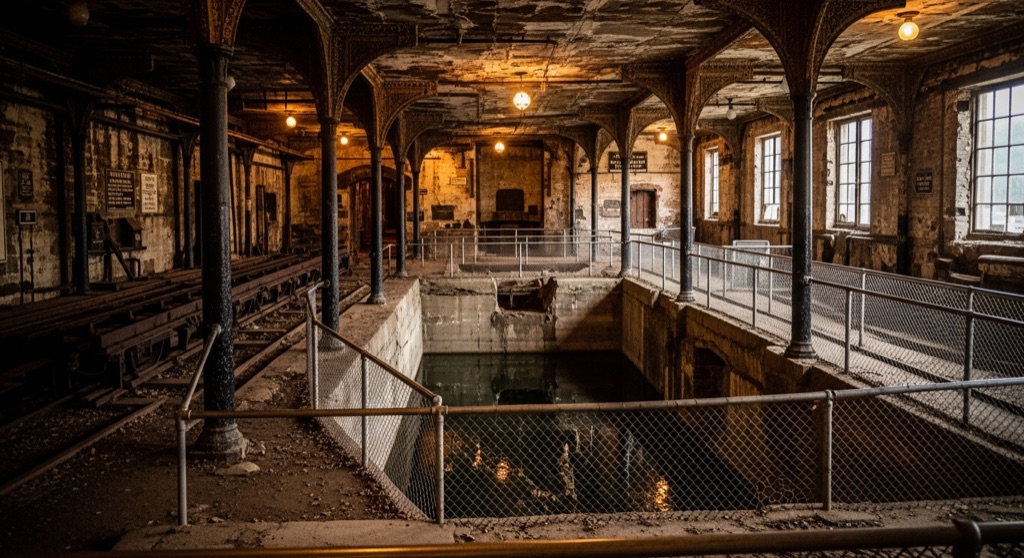
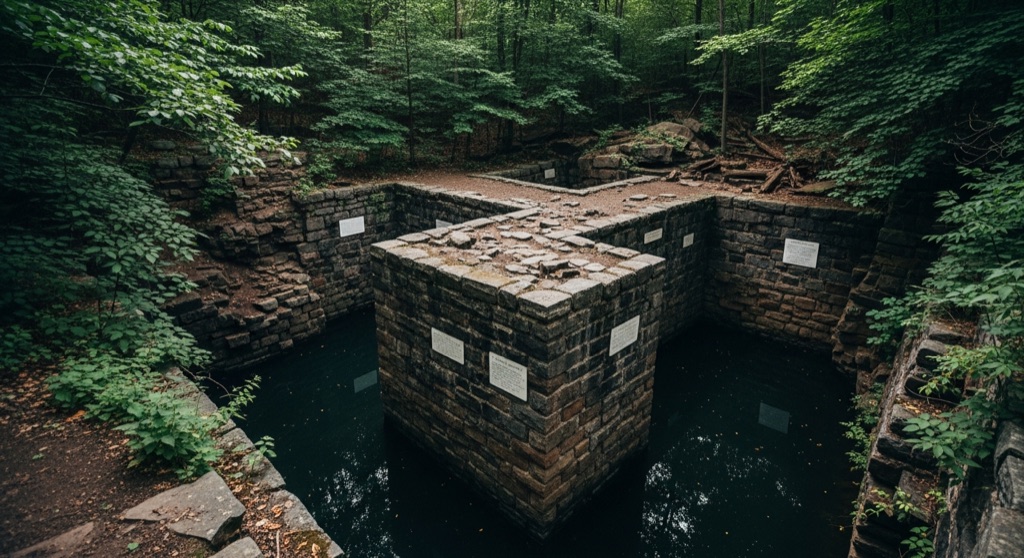
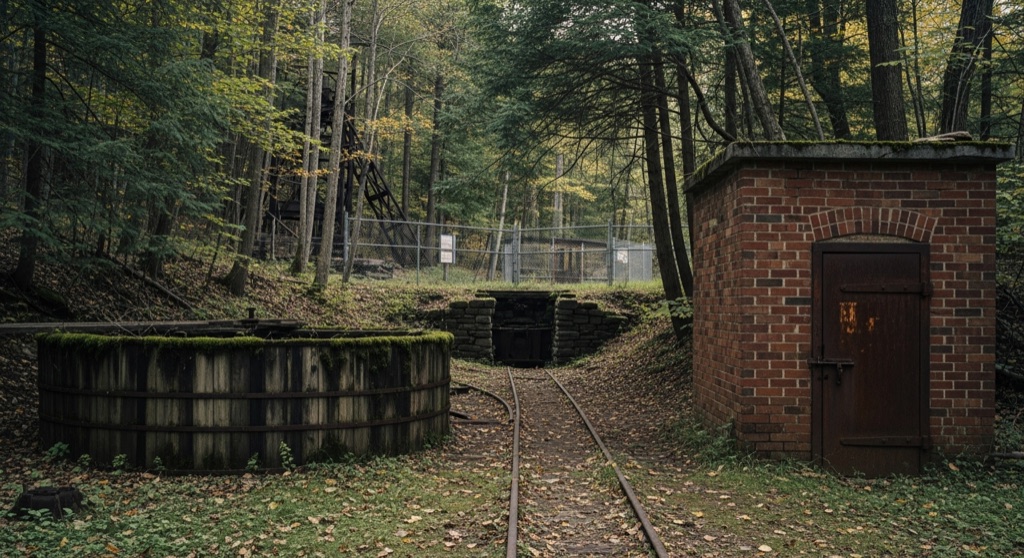
The Old Ogden Mine, later incorporated into Thomas Edison's ill-fated Edison Mines complex, is a historic 19th-century iron mine located atop Sparta Mountain. In the 1890s, Edison built a massive magnetic ore-concentrating plant here, but the venture collapsed by 1900 due to cheaper Midwestern ore. Today, the forest has reclaimed the site, leaving behind concrete foundations, the water-filled Horseshoe Cut pit, and remnants of the old railroad.
→ Three more abandoned & forgotten places in New York City — never the same twice
The story
In the 1890s, Thomas Edison decided he was going to conquer Sparta Mountain. Long before he got here, miners had been pulling iron out of a 24-foot-wide vertical vein at the Old Ogden Mine, but Edison envisioned something far larger: a brutalist, industrial empire atop the ridge. He poured his own wealth into building a massive magnetic ore-concentrating plant designed to crush massive boulders down to dust, pulling iron out of low-grade rock with giant electromagnets to feed East Coast steel mills.
The enterprise was a monumental financial disaster. Just as Edison got his complex machinery humming, vast deposits of high-grade, easily mined iron ore were discovered in Minnesota's Mesabi Range. Midwestern ore hit the market at a fraction of Edison’s crushing costs, rendering the Sparta Mountain operation economically dead by 1900. Edison shut the plant down, salvaged what he could, and walked away from a multimillion-dollar ruin.
More than a century later, the mountain has swallowed almost everything, but the industrial bones are too big to bury completely. Giant concrete foundations poke out of the oak canopy like ancient temple ruins, and the Horseshoe Cut pit—a massive open excavation—now sits completely filled with murky water, framed by silent forest.
What it's like
Finding the site requires a little care: do not set your GPS for 83 Ridge Road unless you want to pull into someone's private driveway and get stared at. Instead, access the Sparta Mountain Wildlife Management Area via Edison Road trailheads. You'll hike along flat, unnaturally straight trail segments that follow the old Ogden Mine Railroad bed. Deep in the woods, you'll hit massive moss-covered concrete piers and stone footings. The flooded Horseshoe Cut pit is wrapped in sturdy chain-link fencing—keep behind it, as the drops are sheer and the water is deep. It’s quiet, heavily wooded, and almost eerie when you realize you're walking over millions of dollars in abandoned 19th-century ambition.
The move: Go for a scenic hike along the Edison Trail in the Sparta Mountain Wildlife Management Area to safely view the historic stone foundations and the fenced-off Horseshoe Cut pit.
📍 Before you go The address 83 Ridge Rd is a private residence, but the mine ruins are located in the adjacent Sparta Mountain Wildlife Management Area. The open pits and shafts are fenced off for safety, but the ruins and foundations can be legally viewed from public hiking trails accessed via Edison Road.
- 📍 Sparta
- 💸 Free
- ⚡ Low-key
- 🌗 Outdoors
Where: 83 Ridge Rd, Sparta, NJ 07871, USA
Hours: Added 2026-07-20 — confirm current access before you go.
Pair it with
- Andover Mine — Continue your Sussex County iron history tour nine miles west at a site that supplied iron for the Revolutionary War.
- Waterloo Mine — Hike another abandoned 19th-century iron operation tucked away inside neighboring Allamuchy Mountain State Park.
- Warwick Drive-In Theatre — Trade ruined 1890s industrial infrastructure for a vintage 1950 drive-in double feature just across the state line.
More weird in New York City

Good to know
Where should I park to access the mine ruins?
Avoid setting your destination to 83 Ridge Road, as that address is a private residence. Park at the public trailheads for the Sparta Mountain Wildlife Management Area off Edison Road.
Can you climb inside the mine pits or shafts?
No. The water-filled Horseshoe Cut pit and open vertical shafts are permanently fenced off for safety, but you can safely view the foundations and pits from the Edison Trail.
Which trail leads through the historic ruins?
Follow the Edison Trail and segments of the Highlands Trail, both of which incorporate the flat grade of the historic Ogden Mine Railroad bed.
How deep were the original iron workings?
State geological surveys recorded the original 19th-century Old Ogden Mine shaft following a 24-foot-wide vein down to a depth of at least 100 feet before Edison expanded surface operations.
Plan a visit & invite your people →
Further reading: Wikipedia · geocaching.com · dep.nj.gov · nynjtc.org
last checked: 2026-07-20