Haunted things to do in New Orleans
Looking for haunted things to do in New Orleans? These 7 are the real ones — Beauregard-Keyes House, St. Louis Cemetery No. 1 and Hotel Monteleone among them — actual dark-history sites and genuinely unsettling places, not a seasonal haunted house with a fog machine. They spread across French Quarter, Tremé, Metairie / Mid-City edge, Navarre / near City Park and 1 more area, so two or three can make a whole afternoon. 3 of them cost nothing. Every entry is hand-vetted against real sources — not scraped off a top-ten list or averaged out of crowd ratings.
-
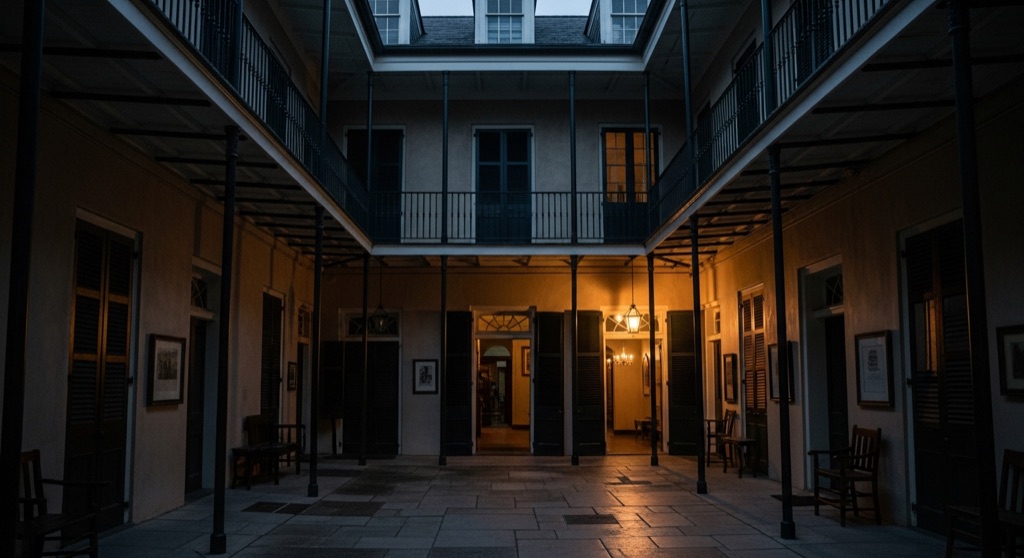 Beauregard-Keyes House
An 1826 raised center-hall mansion that Confederate general P.G.T. Beauregard rented after the Civil War and that novelist Frances Parkinson Keyes later restored. In 1908 it belonged to the Giacona family, wine merchants tied to New Orleans' early Sicilian "Black Hand," and a confrontation with extortionists ended in a deadly shootout on the back gallery that left three men dead. Keyes claimed to see Beauregard's apparition wandering the house at night, and it remains one of the few storied haunted homes you can actually tour inside.
Beauregard-Keyes House
An 1826 raised center-hall mansion that Confederate general P.G.T. Beauregard rented after the Civil War and that novelist Frances Parkinson Keyes later restored. In 1908 it belonged to the Giacona family, wine merchants tied to New Orleans' early Sicilian "Black Hand," and a confrontation with extortionists ended in a deadly shootout on the back gallery that left three men dead. Keyes claimed to see Beauregard's apparition wandering the house at night, and it remains one of the few storied haunted homes you can actually tour inside.
-
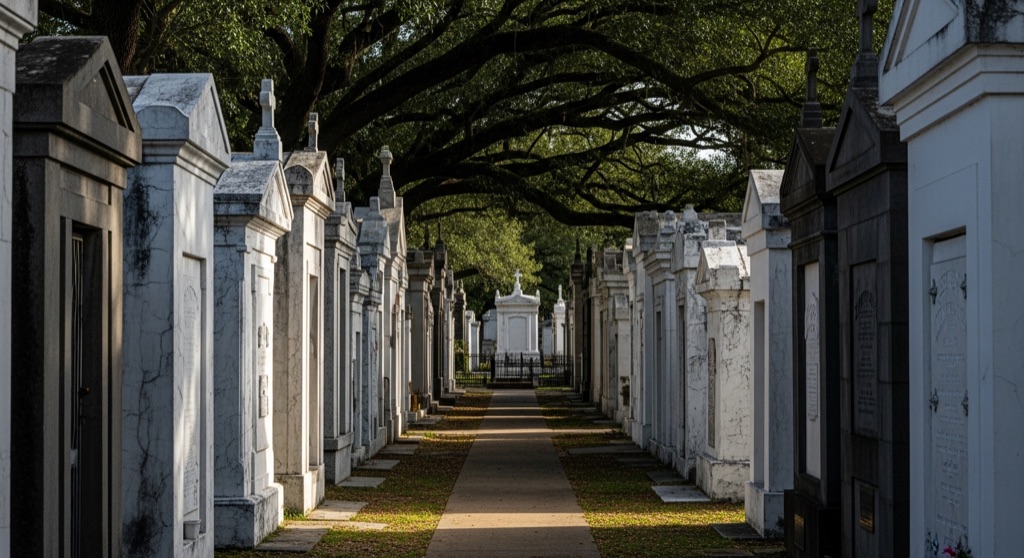 St. Louis Cemetery No. 1
The oldest surviving cemetery in New Orleans, opened in 1789, a dense maze of above-ground tombs just outside the French Quarter. It holds the Laveau-Glapion family tomb said to contain Voodoo priestess Marie Laveau, reportedly the second-most-visited grave in the country after Elvis. Since 2015 the Archdiocese has restricted entry to licensed tour groups and registered family, so the only way in is with a guide or a family pass.
St. Louis Cemetery No. 1
The oldest surviving cemetery in New Orleans, opened in 1789, a dense maze of above-ground tombs just outside the French Quarter. It holds the Laveau-Glapion family tomb said to contain Voodoo priestess Marie Laveau, reportedly the second-most-visited grave in the country after Elvis. Since 2015 the Archdiocese has restricted entry to licensed tour groups and registered family, so the only way in is with a guide or a family pass.
-
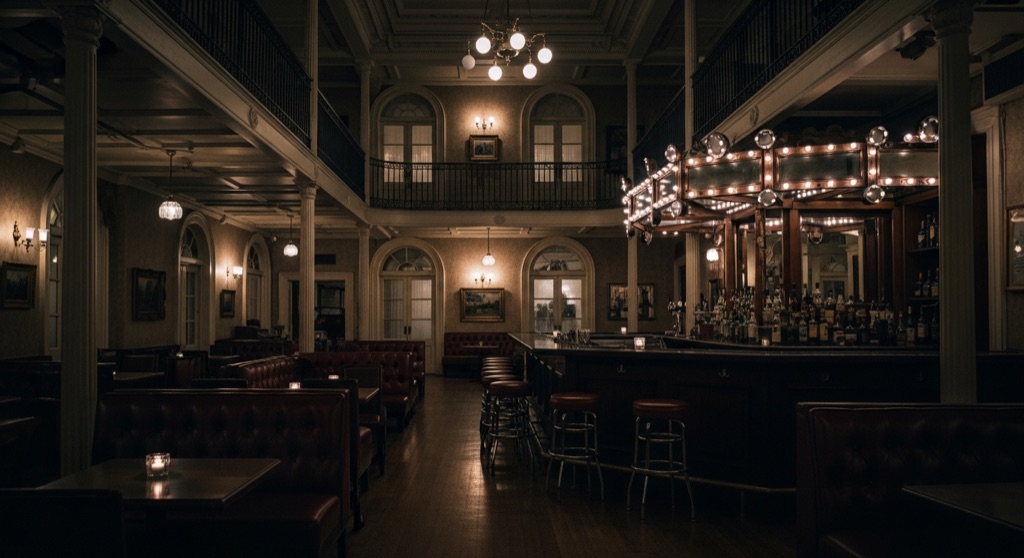 Hotel Monteleone
A Beaux-Arts grand hotel founded in 1886 by Sicilian cobbler Antonio Monteleone and still run by his family, anchored by the revolving Carousel Bar that slowly rotates as you drink. Its haunted reputation centers on Maurice Begere, a toddler who died of fever here in the 1890s and is said to appear on the upper floors. Staff and guests report children's laughter in empty halls, a phantom child reaching for hands, and a clockmaker's face seen in the lobby's grandfather clock.
Hotel Monteleone
A Beaux-Arts grand hotel founded in 1886 by Sicilian cobbler Antonio Monteleone and still run by his family, anchored by the revolving Carousel Bar that slowly rotates as you drink. Its haunted reputation centers on Maurice Begere, a toddler who died of fever here in the 1890s and is said to appear on the upper floors. Staff and guests report children's laughter in empty halls, a phantom child reaching for hands, and a clockmaker's face seen in the lobby's grandfather clock.
-
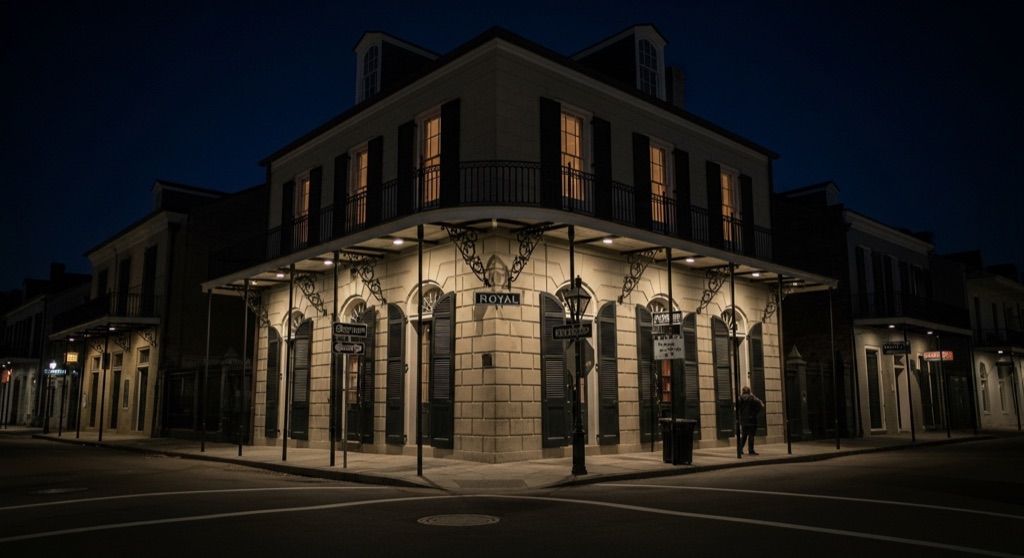 LaLaurie Mansion (exterior)
The Empire-style mansion at Royal and Governor Nicholls is tied to one of the city's most genuinely horrific episodes: an 1834 fire exposed enslaved people who had been chained, starved, and tortured by socialite Delphine LaLaurie, sparking a mob that gutted the house. It is a private residence today, so you can only view the exterior, but the corner is a fixture of nearly every serious French Quarter ghost and dark-history tour. Passersby report apparitions in the upper windows after dark.
LaLaurie Mansion (exterior)
The Empire-style mansion at Royal and Governor Nicholls is tied to one of the city's most genuinely horrific episodes: an 1834 fire exposed enslaved people who had been chained, starved, and tortured by socialite Delphine LaLaurie, sparking a mob that gutted the house. It is a private residence today, so you can only view the exterior, but the corner is a fixture of nearly every serious French Quarter ghost and dark-history tour. Passersby report apparitions in the upper windows after dark.
-
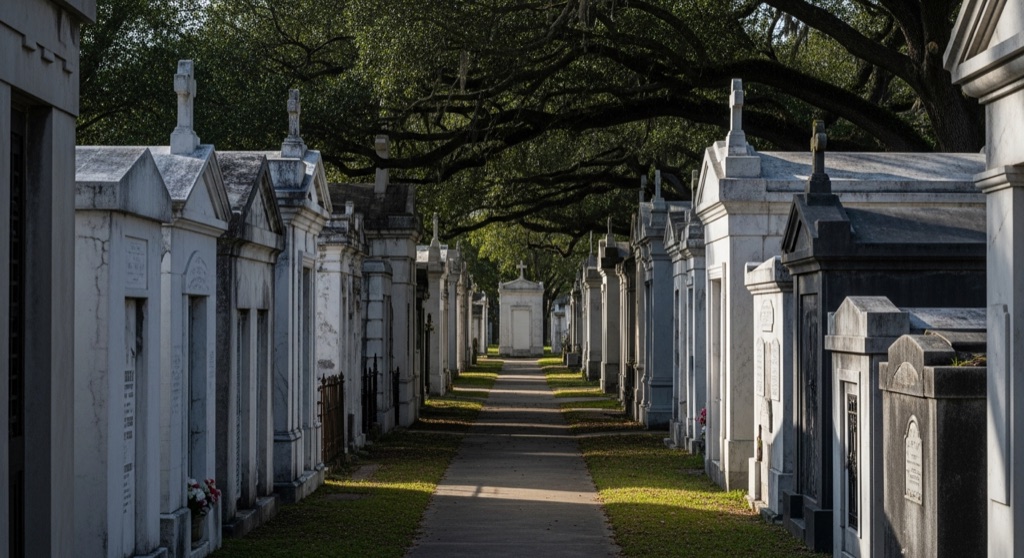 Metairie Cemetery (Lake Lawn Metairie)
Built atop the former 1838 Metairie Race Course, this sprawling cemetery has the city's largest collection of marble tombs and a strip of extravagant mausoleums locals call Millionaires' Row. The most photographed is the Brunswig pyramid, an Egyptian-revival tomb flanked by a sphinx and a woman bearing a libation urn, built by a pharmaceutical millionaire who buried his wife and son inside, moved to L.A., and had his own body shipped back decades later. Central Avenue's oval drive still traces the old racetrack, so you can wander or slowly drive among sphinxes and weeping angels — and find the reddish-granite Morales tomb (built for Storyville madam Josie Arlington) that once seemed to glow on fire at night, an illusion created by a red traffic light reflecting off its polished stone.
Metairie Cemetery (Lake Lawn Metairie)
Built atop the former 1838 Metairie Race Course, this sprawling cemetery has the city's largest collection of marble tombs and a strip of extravagant mausoleums locals call Millionaires' Row. The most photographed is the Brunswig pyramid, an Egyptian-revival tomb flanked by a sphinx and a woman bearing a libation urn, built by a pharmaceutical millionaire who buried his wife and son inside, moved to L.A., and had his own body shipped back decades later. Central Avenue's oval drive still traces the old racetrack, so you can wander or slowly drive among sphinxes and weeping angels — and find the reddish-granite Morales tomb (built for Storyville madam Josie Arlington) that once seemed to glow on fire at night, an illusion created by a red traffic light reflecting off its polished stone.
-
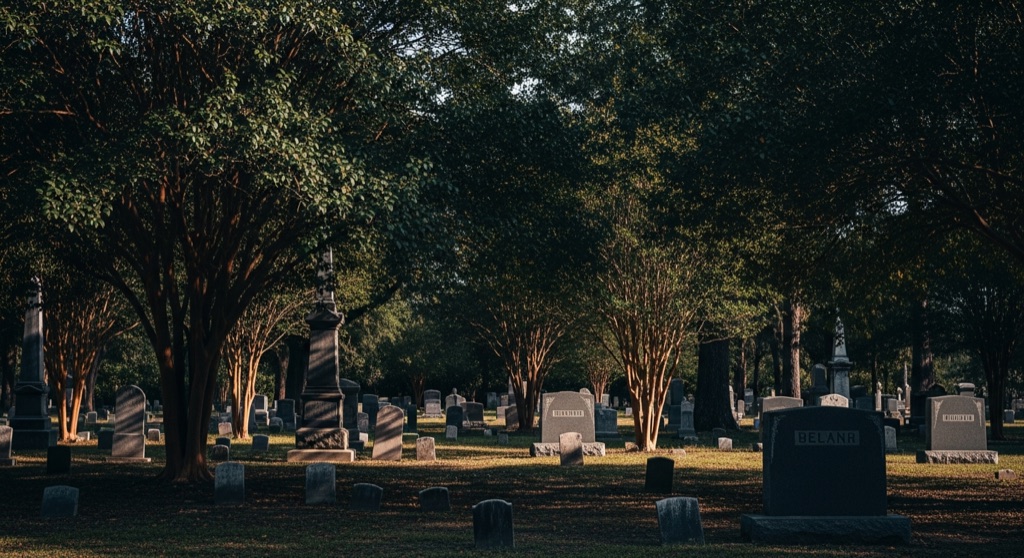 Holt Cemetery
A rare in-ground potter's field, established in 1879, where most graves were handmade by families rather than stonemasons. Markers here are improvised from PVC pipe, painted fence posts, plastic headstones with stick-on lettering, garden fencing, and astroturf, an enduring African-American folk-burial tradition with roots tracing to the Caribbean and West Africa. Early jazz cornetist Buddy Bolden and singers Jessie Hill and Babe Stovall are buried somewhere in its unruly, deeply personal rows.
Holt Cemetery
A rare in-ground potter's field, established in 1879, where most graves were handmade by families rather than stonemasons. Markers here are improvised from PVC pipe, painted fence posts, plastic headstones with stick-on lettering, garden fencing, and astroturf, an enduring African-American folk-burial tradition with roots tracing to the Caribbean and West Africa. Early jazz cornetist Buddy Bolden and singers Jessie Hill and Babe Stovall are buried somewhere in its unruly, deeply personal rows.
-
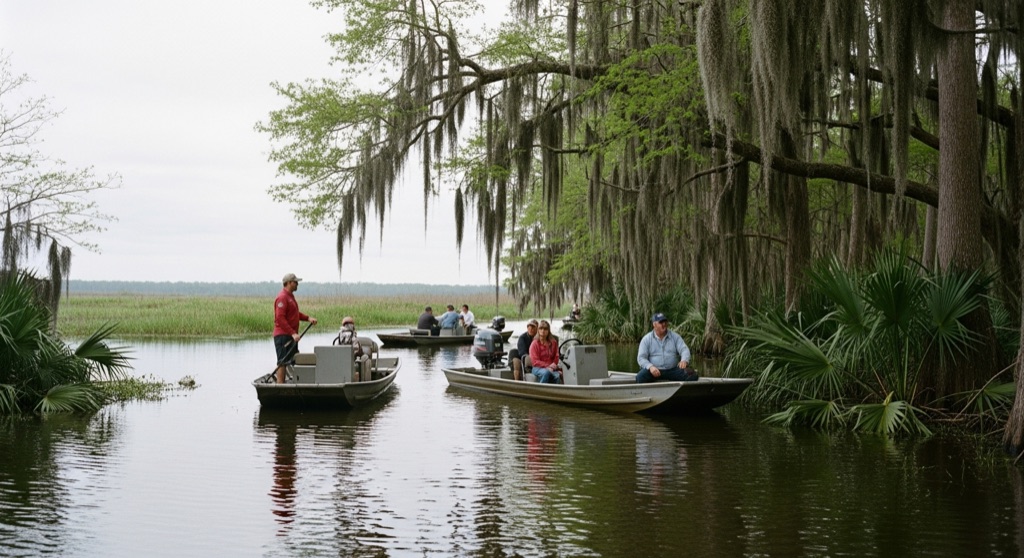 Cajun Pride Swamp Tours (Manchac Swamp)
This privately owned wildlife refuge sits in the Manchac Swamp about 25 miles from New Orleans, where flat-bottom boats glide under draped Spanish moss past free-roaming alligators. The bayou here is steeped in dark local lore: a voodoo priestess remembered as Julia Brown (also called Julie White) is said to have cursed the area before the September 1915 hurricane that wiped out three nearby settlements: Frenier, Ruddock, and Napton. Add in the rougarou werewolf legend and the drowned ghost towns, and the cypress threads feel a long way from anywhere.
Cajun Pride Swamp Tours (Manchac Swamp)
This privately owned wildlife refuge sits in the Manchac Swamp about 25 miles from New Orleans, where flat-bottom boats glide under draped Spanish moss past free-roaming alligators. The bayou here is steeped in dark local lore: a voodoo priestess remembered as Julia Brown (also called Julie White) is said to have cursed the area before the September 1915 hurricane that wiped out three nearby settlements: Frenier, Ruddock, and Napton. Add in the rougarou werewolf legend and the drowned ghost towns, and the cypress threads feel a long way from anywhere.
Haunted things to do in New Orleans — FAQ
Which haunted places & dark-history spots in New Orleans are the strangest?
Ranked by how strange they actually are: St. Louis Cemetery No. 1, LaLaurie Mansion (exterior) and Hotel Monteleone. St. Louis Cemetery No. 1 — The oldest surviving cemetery in New Orleans, opened in 1789, a dense maze of above-ground tombs just outside the French Quarter.
Where in New Orleans are they?
Across French Quarter, Tremé, Metairie / Mid-City edge, Navarre / near City Park and LaPlace. Each listing gives the neighborhood and address so you can cluster a couple into one outing.
Are any of the haunted places & dark-history spots in New Orleans free?
Yes — 3 are free to visit, including Metairie Cemetery (Lake Lawn Metairie), Holt Cemetery and Cajun Pride Swamp Tours (Manchac Swamp). The rest are mostly low-cost.
Is this a good weird date in New Orleans?
That's what the list is built for. Every entry has a specific move rather than a vague recommendation — at St. Louis Cemetery No. 1, for instance: Book a licensed daytime walking tour and let the guide thread you through the tombs to Marie Laveau's vault.
How were these haunted places & dark-history spots chosen?
An agentic research system digs for the genuinely obscure — the spots even locals miss — and every one is verified against real sources before it makes the list. We deliberately skip the landmarks already on every New Orleans guide.