Entry No. 33 — the New Orleans file — filed under: outdoor-weird
Holt Cemetery
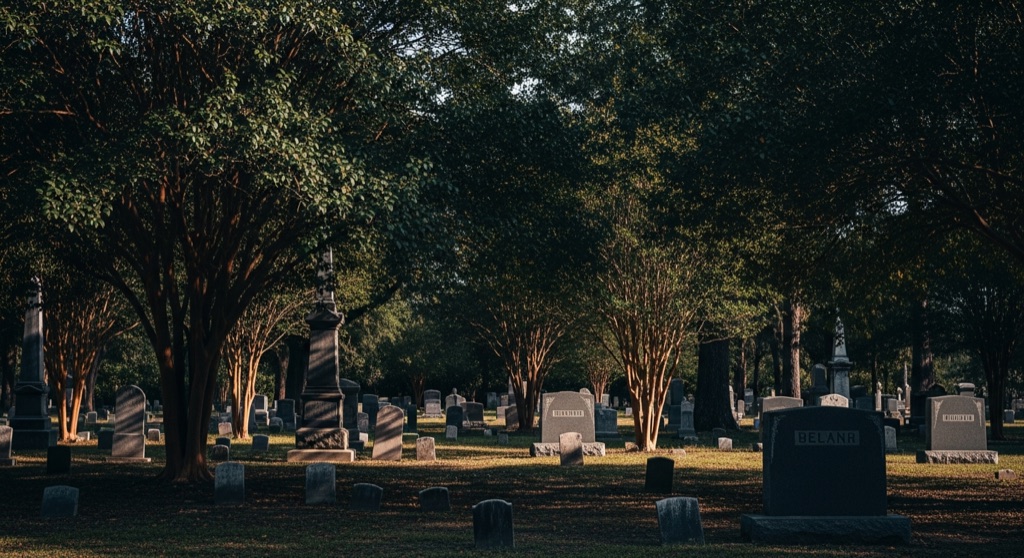
A rare in-ground potter's field, established in 1879, where most graves were handmade by families rather than stonemasons. Markers here are improvised from PVC pipe, painted fence posts, plastic headstones with stick-on lettering, garden fencing, and astroturf, an enduring African-American folk-burial tradition with roots tracing to the Caribbean and West Africa. Early jazz cornetist Buddy Bolden and singers Jessie Hill and Babe Stovall are buried somewhere in its unruly, deeply personal rows.
→ Three more haunted places & dark-history spots in New Orleans — never the same twice
The story
New Orleans is famous for towering marble cities of the dead, but Holt Cemetery is something else entirely: a rare in-ground potter's field established in 1879 to replace the dangerously overfilled Locust Grove Cemeteries. Tucked behind Delgado Community College, this patch of earth was set aside for the city's indigent, working-class, and marginalized residents. Because land here was reused continuously, individual plots have been filled to capacity and reused for dozens of burials over the decades, creating a deeply layered physical archive of local life and loss.
What makes Holt unique isn't monumental stonework, but an enduring African-American folk-burial tradition with roots tracing to the Caribbean and West Africa. Rather than hiring professional stonemasons, families constructed markers themselves out of whatever materials were available—PVC piping, painted wooden fence posts, plastic slates with stick-on mailbox lettering, garden fencing, and swaths of astroturf. Scattered throughout these unruly, heavily personalized rows are early New Orleans music legends whose exact final resting places have slipped into uncertainty, including jazz cornet pioneer Buddy Bolden and singers Jessie Hill and Babe Stovall.
What it's like
Visiting Holt feels like stepping into an intimate, outdoor folk museum of grief rather than a manicured tourist stop. The cemetery sits directly behind the right-field wall of Delgado's baseball field, making for a surreal atmosphere where the crack of a bat drifts over fragile, sunken plots. Tread lightly: the ground is notoriously uneven, the soil settles constantly, and sunken graves are everywhere. Treat this as the active, fragile working cemetery it is—stay on the footpaths between plots, give mourning families space, and leave every handmade marker and personal offering exactly as you found it. Admission is free, but confirm operating hours before you head out.
The move: Wander slowly through the handmade plots reading the improvised markers, then go looking for the spot honoring jazz pioneer Buddy Bolden.
📍 Before you go This is an active, fragile working cemetery with many sunken graves; tread carefully and stay on paths between plots.
- 📍 Navarre / near City Park
- 💸 Free
- ⚡ Up for anything
- 🌗 Outdoors
Where: 635 City Park Ave, New Orleans, LA 70119
Hours: Added 2026-06-22 — confirm current hours before you go.
Pair it with
- Metairie Cemetery (Lake Lawn Metairie) — A stark contrast in death traditions, pairing Holt's handmade in-ground potter's field markers with Metairie's opulent collection of marble tombs built on an old racetrack.
- The Mortuary — Trace another layer of local funeral history at this Grand Victorian mansion that operated as a major funeral home for decades, just four-tenths of a mile down City Park Avenue.
- The Singing Oak — Follow up a quiet walk through Holt's folk-art plots with a visit under City Park's giant live oak hung with massive, chime-playing pipes.
More weird in New Orleans

Good to know
Why are the graves in Holt Cemetery in-ground rather than above-ground?
Holt was established in 1879 as a potter's field for indigent New Orleans residents, making simple earth burials standard rather than the expensive above-ground marble tombs seen elsewhere in the city.
Can you find Buddy Bolden's exact grave site?
No exact location survives. Decades of continuous plot reuse mean jazz pioneer Buddy Bolden is buried somewhere within the cemetery's unruly rows, marked today by a monument honoring his memory.
Is Holt Cemetery free to visit?
Yes, admission is free, though it is a fragile and active working cemetery, so confirm current opening hours before visiting.
What precautions should visitors take inside the cemetery?
Because many plots are sunken and the markers are made from fragile materials like PVC and wood, stick strictly to established footpaths between plots and never disturb grave decorations or markers.
Plan a visit & invite your people →
Further reading: Wikipedia · Atlas Obscura · acloserwalknola.com · Yelp · theamericanscholar.org · findagrave.com
last checked: 2026-06-22