Entry No. 13 — the Miami file — filed under: weird monument
Cuban Memorial Boulevard Park
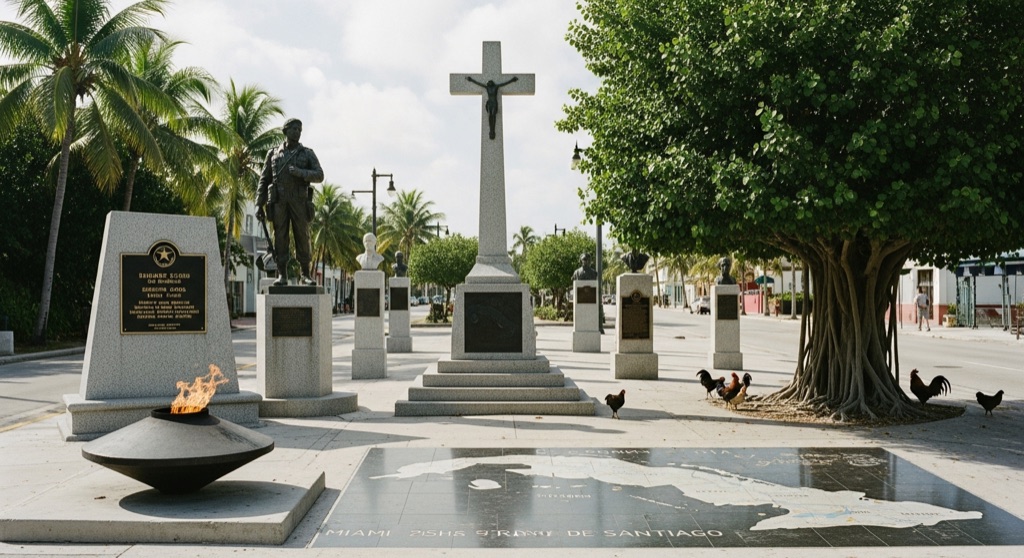
A half-mile median strip crammed with an eternal flame for Brigade 2506's Bay of Pigs dead, a bronze José Martí, a nine-meter granite cross marking Miami's own starting point of the Camino de Santiago pilgrimage, a wall-sized map of Cuba set into the pavement, a sacred ceiba tree tied to Santería practice, and a small flock of roosters that just live there.
→ Three at a time, never the same twice — explore weird Miami
The story
Most memorial parks give you a manicured lawn and a bench. Cuban Memorial Boulevard Park crams half a century of anti-communist exile history, intense religious devotion, and feral poultry into a half-mile grass median splitting SW 13th Avenue between Calle Ocho and SW 24th Street. You're walking on traffic-buffered turf anchored by an eternal flame burning inside a monument to Brigade 2506—the CIA-backed invasion force killed or captured at the Bay of Pigs in 1961—surrounded by dozens of bronze busts of historical figures, monuments to Operation Pedro Pan, and memorials honoring those who fought the Castro regime.
Keep walking south and the monuments get weirder and more eclectic. Embedded straight into the walkway pavement is a massive relief map of Cuba. Stand next to it and you'll find a nine-meter granite cross marking Miami's designated starting point for the Camino de Santiago medieval pilgrimage route. Right nearby, a sacred ceiba tree acts as a focal point for Santería rituals; look close at the base of the trunk and you'll spot fresh offerings like coins, flowers, or wrapped parcels. Strutting past all of it—completely unbothered by the sacred flames or the traffic roaring on both sides—is a resident flock of roosters that treat the political sanctuary like their personal yard.
What it's like
You'll park along the side streets off SW 13th Avenue and step straight onto the median strip. The roar of Little Havana traffic hums constantly on both sides while roosters crow from the shade of the statues. It takes about 20 to 30 minutes to stroll the whole half-mile, reading the brass plaques, stepping across the pavement map, and inspecting the offerings left at the base of the sacred ceiba tree. It's totally open, free, and unstaffed. When you're done, cross over to Calle Ocho for a quick cortadito at a nearby ventanita to process the sheer density of history squeezed into a roadway.
The move: Walk the boulevard slowly end to end, reading every plaque and bust (there are dozens of them), then grab a cortadito at a nearby ventanita and debate which monument was the strangest.
- 📍 Little Havana
- 💸 Free
- ⚡ Up for anything
- 🌗 Outdoors
Where: 999 SW 13th Ave, Miami, FL 33135 (median running from SW 8th St to SW 24th St)
Hours: Added 2026-07-19 — confirm current hours before you go.
Pair it with
- Caballero Rivero Woodlawn Park North Cemetery and Mausoleum — Continue your tour of Little Havana's exile history at this nearby 1926 mausoleum where exiled Cuban dictator Gerardo Machado is entombed.
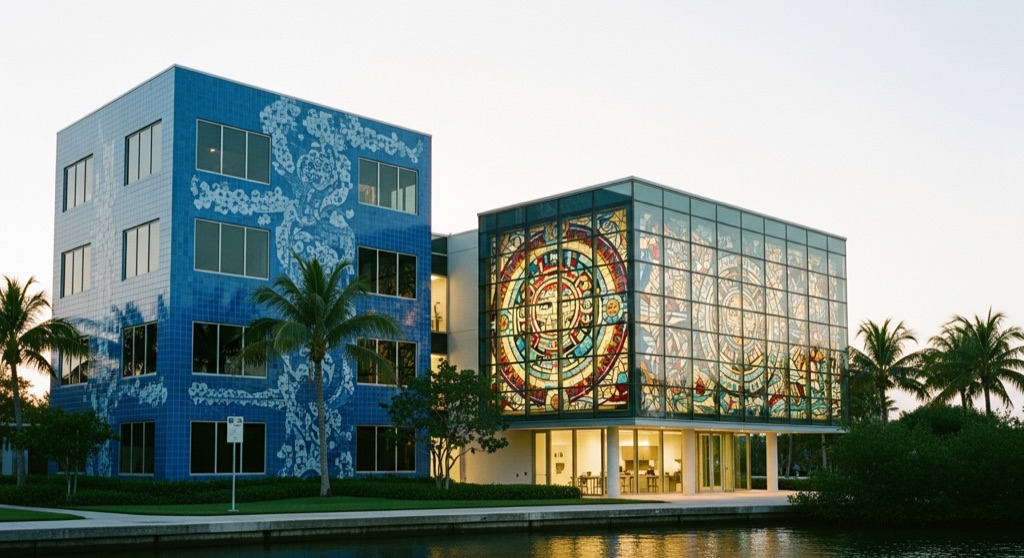
- Vizcaya Village Night Market — Trade the heavy open-air political memorials for an evening stroll through the historic, working farm village of the original Vizcaya estate.
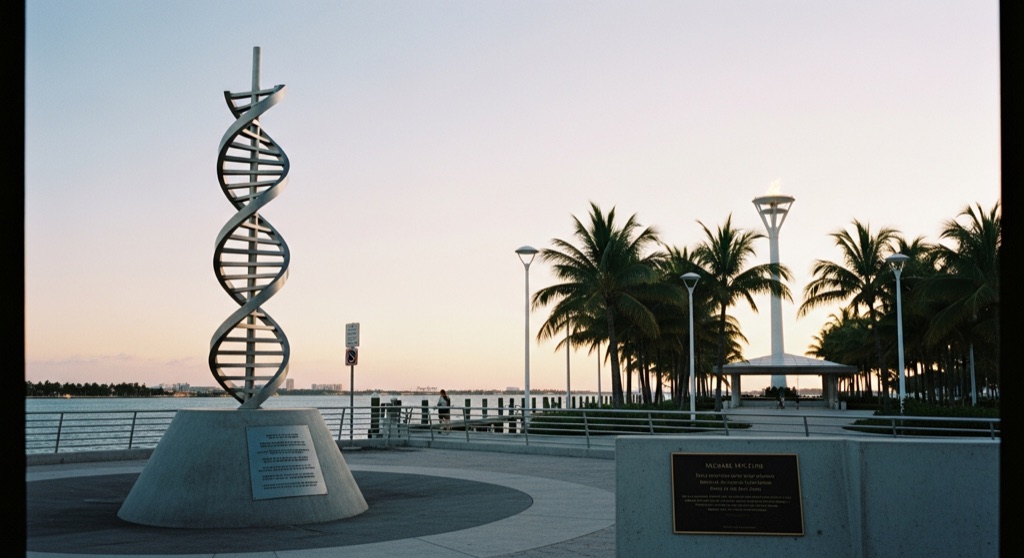
- Bayfront Park — Challenger Memorial — Compare Little Havana's dense median of exile plaques with downtown Miami's 100-foot stainless-steel spiral honoring the seven Challenger astronauts.
More weird in Miami
Good to know
Where is the park located?
It spans the grassy median strip along SW 13th Avenue in Little Havana, extending from Calle Ocho (SW 8th Street) south to SW 24th Street.
Does it cost anything or have set opening hours?
It's a free public linear park located on an open street median, so you can walk it anytime, though daylight is recommended so you can actually read the plaques.
What specific monuments are along the median?
Highlights include the Brigade 2506 eternal flame monument, a bronze José Martí bust, an Operation Pedro Pan memorial, a pavement map of Cuba, a nine-meter granite Camino de Santiago cross, and a sacred ceiba tree.
Why are there roosters and items around the tree?
A wild flock of roosters lives along the boulevard, and the large ceiba tree is an active site for Santería practices where visitors leave traditional offerings at the root line.
Plan a visit & invite your people →
Further reading: parkmagnet.com · Wikipedia
last checked: 2026-07-19