Entry No. 28 — the Houston file — filed under: freedmen's cemetery
College Memorial Park Cemetery
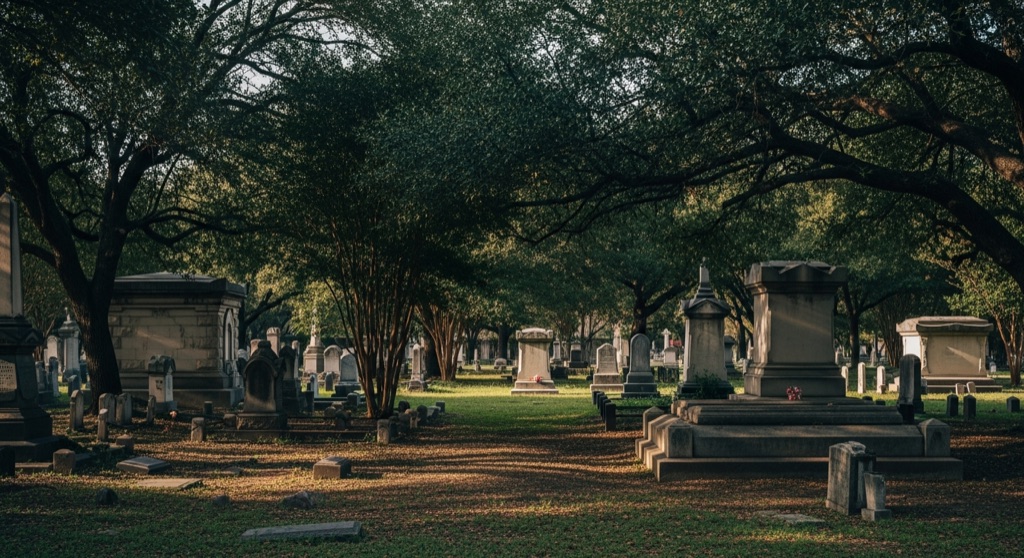
Founded in 1896 as the burial ground for formerly enslaved residents of Freedmen's Town, this five-acre cemetery holds over 4,000 graves — including soldiers from the 1917 Camp Logan mutiny and Rev. Jack Yates, founder of Emancipation Park. Its central path was originally paved in crushed seashells, a West African burial tradition.
→ Three more haunted places & dark-history spots in Houston — never the same twice
The story
When segregation dictated where Black Houstonians could be buried, College Memorial Park Cemetery opened in 1896 on five acres along West Dallas Street. Tucked right on the edge of the Fourth Ward—the historic Freedmen’s Town established by formerly enslaved people—the ground holds over 4,000 burials. Look closely at the main central path: it was originally paved in crushed seashells, an intentional continuation of West African burial traditions where shells symbolize the watery threshold between the living world and the ancestors.
The soil here holds heavy chapters of Houston’s past. Among the weathered headstones sits the grave of Reverend Jack Yates, the former slave turned community leader who helped buy the land for Emancipation Park. Deep in the five-acre plot lie soldiers tied to the 1917 Camp Logan Riot—the night Black soldiers of the 24th Infantry Regiment marched into the city following a police beating, a violent clash that resulted in military court-martials and quiet burials right here.
What it's like
Stepping into this five-acre plot feels like slipping into a silent seam between modern Houston development and 19th-century memory. You'll navigate uneven ground, mature trees, and simple headstones sitting right off busy West Dallas Street. Because the site relies heavily on volunteer preservation efforts by the College Park Cemetery Association, don't expect a manicured manicured-lawn experience—it's a weathered, sacred landscape. Confirm access before you head out as opening hours can be variable, and keep your visit quiet and low-key out of respect for descendants who still visit.
The move: Walk the shell-paved main path at dusk, find Jack Yates's grave, and talk through the 1917 Camp Logan Riot — the night Black soldiers stationed nearby marched into the city after a police beating, a story that ends with several of them buried right here.
- 📍 Fourth Ward / near River Oaks
- 💸 $$
- ⚡ Up for anything
- 🌗 Indoors
Where: 3525 W Dallas St, Houston, TX 77019
Hours: Added 2026-07-19 — confirm current hours before you go.
Pair it with
- Founders Memorial Park (Old City Cemetery) — Pair one of Houston's surviving historic Black cemeteries with the city's very first 1836 burial ground just 1.6 miles away.
- River Oaks Theatre — Rocky Horror Picture Show shadowcast — Just a third of a mile down the road, contrast a quiet, reflective walk through Freedmen's Town history with a late-night cult theater ritual inside a 1939 art-deco movie palace.
- The Beer Can House — Take a short one-mile drive from solemn 19th-century history to Houston's ultimate piece of local folk art constructed from 50,000 beer cans.
- Julia Ideson Building — Head two miles east to search the city archives in a 1926 library after standing at the graves of the early Black pioneers who built Houston.
More weird in Houston


Good to know
Who is buried in College Memorial Park Cemetery?
Over 4,000 Black Houstonians rest here, including Reverend Jack Yates (founder of Emancipation Park) and soldiers connected to the 1917 Camp Logan Riot.
Why are crushed seashells used on the path?
The shell-lined central walkway stems from a West African burial tradition where shells symbolize the physical and spiritual boundary between the living and the ancestors across the water.
How old is the cemetery?
It was founded in 1896 as a dedicated burial site during the era of racial segregation, making it one of three remaining historical Black cemeteries from that period in Houston.
What should I know before visiting?
Hours can change, so confirm access before you go. Treat the grounds with care, as it is an active historic preservation site maintained by volunteer groups.
Plan a visit & invite your people →
Further reading: tclf.org · Official site · hmdb.org · findagrave.com
last checked: 2026-07-19