Entry No. 26 — the Houston file — filed under: haunted library
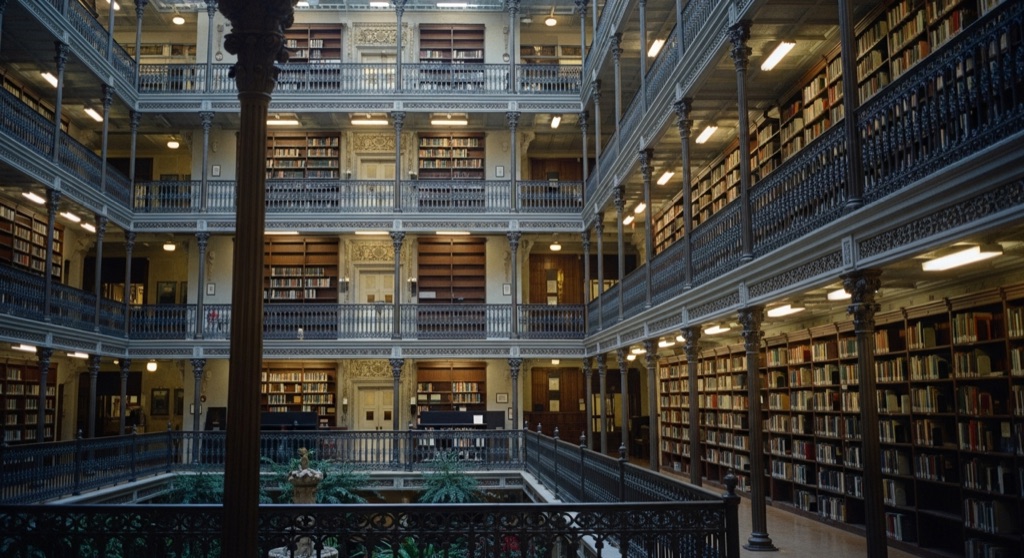
Julia Ideson Building
This 1926 Spanish Renaissance library still houses the city's archives — and the legend of Jacob Frank Cramer, a night watchman who climbed to the third floor to play violin for his dog every night until librarians found his body in the basement in November 1936.
→ Three more haunted places & dark-history spots in Houston — never the same twice
The story
When the Julia Ideson Building opened in 1926, it was built to give Houston a central library modeled after Spanish Renaissance architecture, outfitted with painted plaster ceilings, custom wrought iron, and heavy timbering. Named after the city’s first head librarian, Julia Bedford Ideson, it replaced an overcrowded 1904 Carnegie facility. Today, surrounded by modern glass high-rises, the building houses the Houston History Research Center and stores the city's official archives, rare books, and historic photographs.
The real draw isn't just the municipal paper trail—it's the phantom musician. During the Great Depression, a night watchman named Jacob Frank Cramer lived inside the library. On quiet graveyard shifts, Cramer would wander the halls playing his violin, accompanied only by his pet dog trotting across the floorboards. The routine ended abruptly in November 1936, when staff discovered Cramer's dead body in the basement.
Cramer left behind his violin, but according to decades of staff and visitor reports, his nightly rounds never stopped. People working late in the archive stacks or walking the third-floor corridors report hearing faint, disembodied violin solos drifting through the ceiling vaults. Stand still long enough as the building empties, and you might hear the soft, rhythmic clicking of dog nails following an unseen owner across the floor.
What it's like
You'll step off the Downtown pavement into a quiet, echoing sanctuary thick with the smell of old paper and dark wood stain. Researchers whisper over manuscript boxes in the reading rooms, but the upper floors and the wrought-iron courtyard feel untouched by the city outside. The best time to visit is near late afternoon when daylight fades through the arched windows and the silence stretches thin—though you should double-check operating hours online before heading over, as archive schedules can shift.
The move: Wander the wrought-iron courtyard and the Texas Room's archive stacks at closing time, then stand still on the third floor and listen — staff and visitors have reported hearing a faint violin and a dog's nails on the floorboards for decades.
- 📍 Downtown / Houston Public Library
- 💸 $$
- ⚡ Up for anything
- 🌗 Indoors
Where: 550 McKinney St, Houston, TX 77002
Hours: Added 2026-07-19 — confirm current hours before you go.
Pair it with
- La Carafe — Trade the quiet haunted library stacks for Houston's oldest bar half a mile north, where melted wax and 19th-century ghost stories keep the historic downtown night going.
- The Cistern (Buffalo Bayou Park) — Completed in the exact same year (1926), this subterranean former drinking reservoir exchanges Spanish Renaissance arches for an eerie forest of 221 concrete columns.
- Virtuoso — Follow up the story of a phantom violinist by walking four blocks into the Theater District to see a disembodied 36-foot concrete cellist looming outdoors.
More weird in Houston
Good to know
What is the Julia Ideson Building used for today?
It houses the Houston History Research Center (HHRC), preserving the Houston Public Library's rare books, local manuscripts, maps, and municipal archives.
What is the history behind the ghost legend?
Night watchman Jacob Frank Cramer lived in the library and played violin for his dog on late shifts until he was found dead in the basement in November 1936. Visitors and staff have reported hearing faint violin music and claw taps ever since.
When was the building constructed?
It was completed in 1926 as Houston's main central library, replacing the city's original 1904 Carnegie Library.
Is it free to visit?
Yes, as a public library facility, entry to public areas and historic corridors is free, though research access to specific archives may require advance scheduling.
Plan a visit & invite your people →
Further reading: Official site · hauntedplaces.org · Wikipedia · texasstandard.org · askhpl.houstonlibrary.org
last checked: 2026-07-19