Entry No. 27 — the Houston file — filed under: haunted hospital
Elder Street Artist Lofts (former Jefferson Davis Hospital)
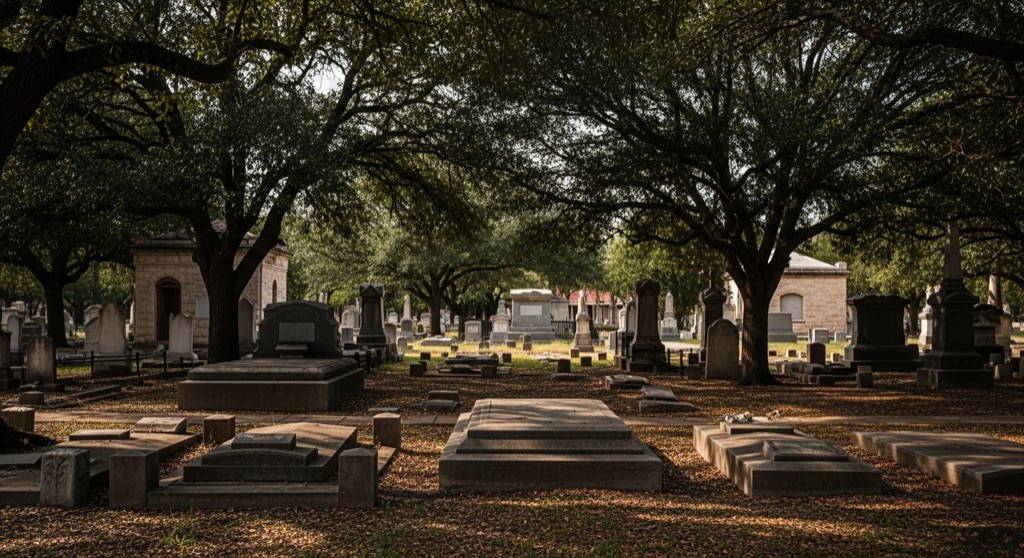
Houston's 1924 charity hospital was built directly atop the 1840s City Cemetery, where thousands of Civil War soldiers and yellow-fever victims lay buried — so many unmarked graves that the builders raised the whole structure with its basement above ground rather than dig through them. It's now 24 live/work artist lofts.
→ Three more haunted places & dark-history spots in Houston — never the same twice
The story
When Houston broke ground in 1924 on its first municipal charity hospital for indigent patients, city planners picked a plot in the Old Sixth Ward with a grim backstory. The land was the city’s 1840s municipal cemetery, home to thousands of unmarked burials—yellow fever casualties, cholera victims, and Civil War soldiers stacked tightly beneath the turf. Rather than excavating thousands of human remains, the architects chose a bizarre structural compromise: they raised the entire building, setting the basement above ground level so construction crews wouldn't have to plunge shovels into the grave soil.
The classical revival building served as Jefferson Davis Hospital for decades before closing its doors and sitting abandoned, quickly mutating into one of the city's favorite haunted legends. Urban explorers whispered about unexplained footsteps and the tragic lore of a patient jumping from the former psychiatric floor. Following an EPA brownfield cleanup grant, the decaying shell was rehabilitated around 2005 and converted into 24 live/work lofts for local working artists.
What remains today is a rare piece of adaptive reuse built literally over a forgotten graveyard. Stroll up to the front façade on Elder Street and you can see the raised, above-grade basement floor for yourself—concrete physical evidence of the dead left undisturbed beneath the floorboards.
What it's like
Because this is now a private residential building housing 24 active artist lofts, you cannot casually wander the interior hallways or knock on doors. Plan an outdoor visit to Elder Street in the quiet Old Sixth Ward neighborhood. You can walk the perimeter to inspect the raised foundation, read the official historic marker, and admire the restored brickwork from the sidewalk. Dusk is the ideal time to visit if you want to appreciate the eerie history without disturbing the residents.
The move: Walk past the raised, above-grade basement — the physical evidence of the graves underneath — and read the historical marker together, then compare notes on the old-hospital lore of a woman said to have jumped from the former psychiatric floor.
- 📍 Old Sixth Ward
- 💸 $$
- ⚡ Up for anything
- 🌗 Indoors
Where: 1101 Elder St, Houston, TX 77007
Hours: Added 2026-07-19 — confirm current hours before you go.
Pair it with
- Founders Memorial Park (Old City Cemetery) — Head one mile away to Houston's earliest historic cemetery to explore more of the city's 1850s yellow-fever burial grounds.
- The Cistern (Buffalo Bayou Park) — Pair one 1920s structural oddity with another by booking a step down into this decommissioned 1926 underground water reservoir.
- La Carafe — Cap off your historic haunt tour with a candlelit drink inside Houston's oldest commercial building just across downtown.
More weird in Houston

Good to know
Can you tour the inside of the Elder Street Artist Lofts?
No. The interior consists of 24 private residential live/work spaces, so it is closed to the general public.
Why was the basement built above ground?
The hospital was constructed directly on top of the 1840s City Cemetery. To avoid disturbing thousands of unmarked graves, builders raised the entire basement structure above ground level.
When did the hospital open and close?
The Jefferson Davis Hospital opened on Elder Street in 1924 as Houston's first municipal hospital treating indigent patients. After decades of medical use and a long period of abandonment, it was rehabilitated into artist lofts in 2005.
Plan a visit & invite your people →
Further reading: hauntedplaces.org · Wikipedia · houstontx.gov
last checked: 2026-07-19