Entry No. 1 — the Houston file — filed under: single-obsession
The Beer Can House
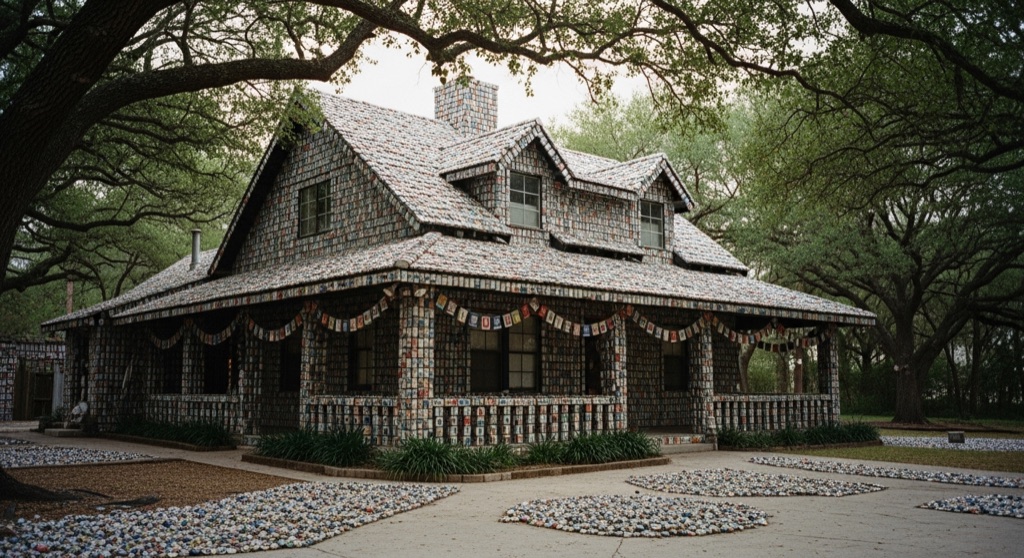
Retired railroad upholsterer John Milkovisch got sick of mowing the lawn in 1968 and instead spent the next 18 years sheathing his house in an estimated 50,000 flattened beer cans, with can-tab garlands strung off the eaves that chime in the wind. He told visitors he saw it as a pastime, not art, and that his favorite beer was 'whatever's on special.'
→ Three more weird outdoor & roadside oddities in Houston — never the same twice
The story
John Milkovisch didn't set out to construct a temple of outsider art; he just hated mowing his lawn. In 1968, the retired railroad upholsterer began pouring concrete over his Rice Military lot, embedding the slabs with rocks, marbles, and metal buttons. Once he eliminated every square inch of turf, he turned his attention to the house itself, beginning an eighteen-year home improvement project executed almost entirely in crushed aluminum.
Over the next two decades, Milkovisch flattened, sliced, and fastened an estimated 50,000 beer cans into siding, decorative aluminum trim, and dangling garlands made from pull tabs. He was no snob about his brew—he regularly told visitors his favorite beer was 'whatever's on special'—and he dismissed talk of artistic genius, insisting it was simply a pastime to keep him busy. The house at 222 Malone Street is now preserved and operated by the Orange Show Center for Visionary Art.
What it's like
Standing on Malone Street, you will hear the house before you fully process what you are looking at: thousands of cut aluminum tabs dangling off the eaves click and chime together in the wind. You can inspect the shimmering facade from the public sidewalk for free at any time, though paying the $5 tour admission when the property is open lets you step into the yard to examine the marble-studded concrete walkways up close. It sits right inside a residential neighborhood, so park quietly on the street and wear sunglasses on bright afternoons when the sun hits the siding.
The move: Circle the yard slowly — the beer-can curtains and marble-studded concrete rewards close looking — then debate whether it's folk-art genius or just a very committed way to avoid yard work.
- 📍 Rice Military
- 💸 $
- ⚡ Up for anything
- 🌗 Indoors
Where: 222 Malone Street, Houston, TX 77007
Hours: Added 2026-07-19 — confirm current hours before you go.
Pair it with
- Sugar Room — Trade an exterior made of 50,000 flattened beer cans for a speakeasy hidden behind the pantry shelves of a cupcake bakery six blocks away.
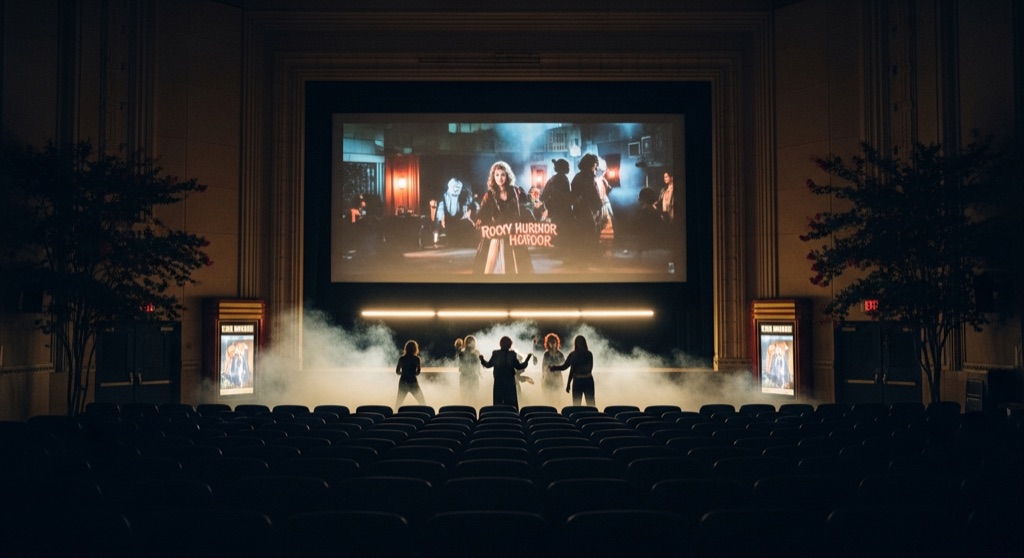
- River Oaks Theatre — Rocky Horror Picture Show shadowcast — Pair Milkovisch's DIY suburban folk art with Houston's late-night shadowcast performance tradition at this restored 1939 cinema a mile south.
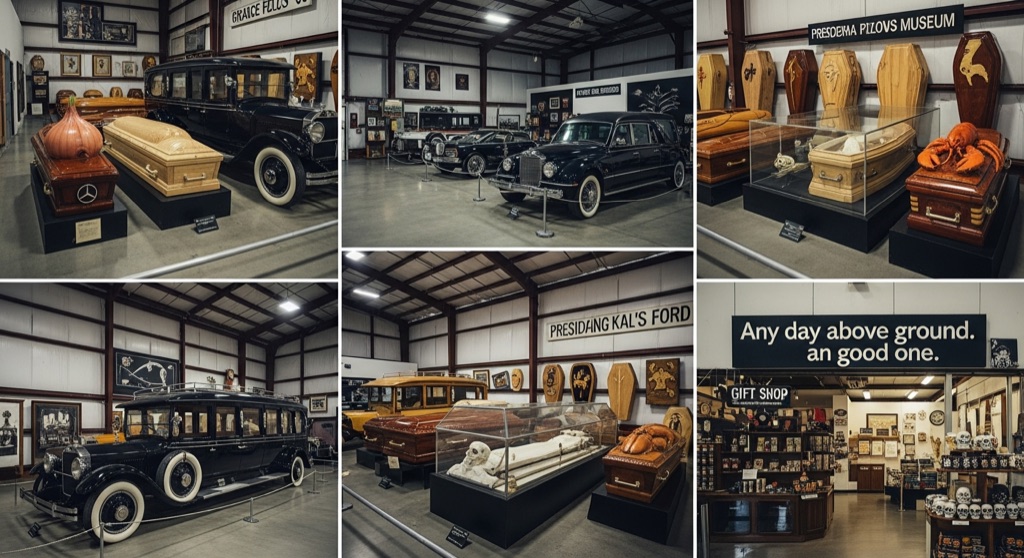
- College Memorial Park Cemetery — Follow up a walk around an eccentric home with a quiet stroll through this historic 1896 Freedmen's Town burial ground a mile away.
More weird in Houston

Good to know
How much does it cost to visit?
Viewing the house and listening to the wind chimes from the Malone Street sidewalk is free anytime. To step past the fence into the yard during tour hours, admission is $5.
What kind of beer cans did he use?
Milkovisch used whatever was cheap and available, holding to his personal rule that his favorite drink was 'whatever's on special.' You will see standard domestic staples alongside regional Texas labels from the 1970s and 1980s.
Why did he build it?
It started in 1968 as a stubborn solution to yard maintenance. After paving over his grass with concrete, marbles, and rocks, Milkovisch turned to aluminum cans as a durable material that never needed painting.
Plan a visit & invite your people →
Further reading: orangeshow.org · secrethouston.com · houston.culturemap.com · 365thingsinhouston.com · Tripadvisor
last checked: 2026-07-19