Entry No. 54 — the Grand Junction file — filed under: uranium-mining
Calamity Camp Mining Site
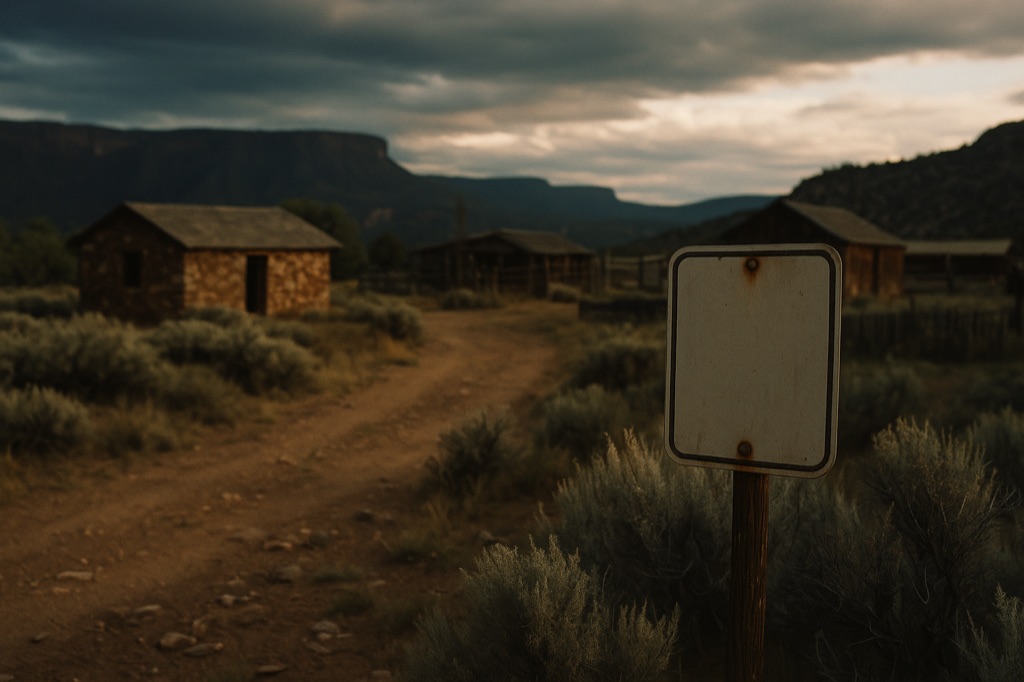
The BLM sign actually warns you about residual radiation before you get out of the truck — this mesa-top camp operated from 1916 to 1980, pulling uranium, vanadium, and radium out of the Uncompahgre Plateau, and it supplied material that fed the Manhattan Project. Five rock cabins, a bunkhouse, horse corrals, and a cedar-post barn are still standing out here, more or less as they were left. Colorado's last uranium mine closed in 2005; this camp got put on the National Register in 2011 and has been slowly decomposing into the sagebrush ever since.
→ Three more weird outdoor & roadside oddities in Grand Junction — never the same twice
The story
You don't usually get greeted by an official federal radiation warning before you even cut your engine, but Calamity Camp isn't your average high-desert ghost town. Perched on Calamity Mesa high above the canyon floor, this remote outpost spent nearly seven decades—from 1916 to 1980—tearing radium, vanadium, and uranium out of the sandstone of the Uncompahgre Plateau. The yellowcake dug out of these rock seams didn't just fuel Cold War stock-piles; material extracted from this dirt helped feed the Manhattan Project during the race to construct the first nuclear weapons.
Today, the heavy earthmovers are gone, but the skeleton of the working camp remains surprisingly intact. Five rock cabins, a bunkhouse, horse corrals, and a weather-beaten cedar-post barn still sit out in the open, slowly succumbing to the mesa winds. Placed on the National Register of Historic Places in 2011—six years after Colorado's final operating uranium mine closed in 2005—the site is completely unmonitored, left to slowly decompose back into the sagebrush.
What it's like
Reaching the camp means committing to 16 miles of unpaved, rutted dirt road off Highway 141 east of Gateway, so don't try it in a sedan; high-clearance 4WD is essential. Once you park, pull out your BLM site map and walk the camp ruins on foot between the dry-stacked stone structures and the cedar barn. It is completely silent, wind-scoured, and open for primitive tent camping if you want to stay overnight, though you'll need to pack in every drop of water and keep your dog leashed.
The move: Drive the 16-mile dirt road off Hwy 141 onto Calamity Mesa, walk the camp with the BLM map in hand, and let the radiation warning sign do the explaining.
📍 Before you go High-clearance 4WD required — the access road is 16 miles of dirt off Hwy 141, roughly 4 miles east of Gateway; pickup a BLM map from the Grand Junction Field Office (970-244-3000) before heading out. Tent camping on-site; dogs allowed on leash.
- 📍 Gateway
- 💸 Free
- ⚡ Up for anything
- 🌗 Outdoors
Hours: Added 2026-06-21 — confirm current hours before you go.
⚠ Seasonal or scheduled — always check before you go.
Pair it with
- Hanging Flume Overlook — After seeing high-mesa uranium extraction, drop down to Highway 141 to view another extreme 19th-century engineering attempt pinned directly to the canyon cliffside.
- Gateway Canyons Resort — Curator of Curiosity Tours — Contrast the raw, unattended decay of Calamity Camp with a polished tour of the area's geology and history down at the Gateway resort.
- Driggs Mansion Ruins — Pair one set of decaying stone cabins on Calamity Mesa with another abandoned stone ruin sitting along the Highway 141 corridor.
More weird in Grand Junction
Good to know
What kind of vehicle do I need to reach Calamity Camp?
You need a high-clearance 4WD vehicle to handle the 16-mile dirt road off Colorado Highway 141, located about four miles east of Gateway.
Where can I get a map of the historic structures?
Pick up a site map from the BLM Grand Junction Field Office (970-244-3000) before heading out into the field.
Is camping allowed at Calamity Camp?
Yes, primitive tent camping is allowed on-site. Dogs are permitted as long as they remain on a leash.
Why is there a radiation sign posted at the site?
Because the camp actively mined uranium, radium, and vanadium for decades, the BLM posts signs warning visitors about low-level residual radiation on the mesa top.
Plan a visit & invite your people →
Further reading: blm.gov · historicorps.org · historictrades.org
last checked: 2026-06-21