Entry No. 25 — the Fort Collins file — filed under: history
Lindenmeier Paleo Site at Soapstone Prairie
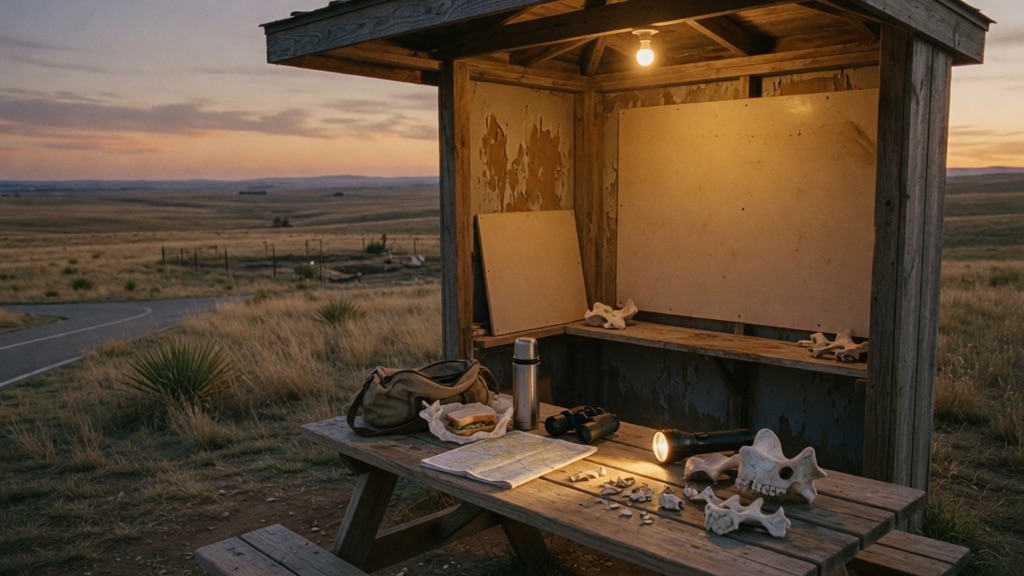
One of the most significant Paleo-Indian sites in North America, the Lindenmeier Site preserves the largest known Folsom culture campsite ever found. Calibrated radiocarbon dates place human occupation here around 10,300 BCE — over 12,000 years ago. In the 1930s the Smithsonian Institution and the Colorado Museum of Natural History excavated tens of thousands of stone and bone artifacts: Folsom projectile points, scrapers, scored hematite pieces, and bones from an ancient bison species standing roughly seven feet tall. Designated a National Historic Landmark in 1961, the site is now protected within Fort Collins' Soapstone Prairie Natural Area, accessible via a short paved overlook trail with interpretive panels. The prairie itself is stunning: 28 square miles of grassland with long views east to the plains.
→ Three at a time, never the same twice — explore weird Fort Collins
The story
In 1934, local amateur archaeologists Jack Cotter and the Coffin brothers (Judge Roy Coffin and Major Roy Coffin) alerted the Smithsonian to a gully full of strange, razor-sharp fluted stone points north of Fort Collins. What Frank H. H. Roberts Jr. and his Smithsonian crews dug up over the next six summers altered North American archaeology forever: a massive, recurring camp used by Folsom hunters around 10,300 BCE. They found more than 20,000 artifacts—not just weapon tips, but tiny bone needles, scrapers, engraved hematite chunks used for body paint, and the butchered remains of *Bison antiquus*, an extinct ancestor of the modern bison that stood seven feet tall at the hump.
What makes Lindenmeier strange isn't just its age; it's the sheer density of human life left behind in an epoch most people imagine as empty wilderness. Deep in the arroyo, two distinct social groups appear to have met and camped on opposite sides of a ancient spring-fed stream, re-sharpening tools made from chert and jasper carried hundreds of miles from modern-day Texas and New Mexico. It is effectively the oldest documented social gathering spot in the region.
Today, the actual excavation trenches have been backfilled to protect the remaining layers from erosion and looters—you aren't allowed to wander down into the arroyo itself. Instead, you stand at an overlook gazing across 28 square miles of untouched high-plains grassland where the wind hums through the needle-and-thread grass, knowing that twelve thousand years ago, people sat in this exact draw sewing hide clothes and eating prehistoric bison.
What it's like
The drive out is part of the ritual: 25 miles north of town, transitioning from pavement to miles of unpaved county dirt roads before reaching the Soapstone Prairie entrance. From the parking lot, it's an easy, paved half-mile walk out to the Lindenmeier Overlook, equipped with metal interpretive panels that lay out the timeline. The vibe is stark, silent, and immensely windy—there is zero shade on the trail, no running water, and cell service vanishes completely miles before you hit the gate. If you want more than a surface view, bring sturdy boots and branch off onto the unpaved Towhee or Cheyenne Creek dirt trails that loop through the surrounding prairie draws.
The move: Drive 25 miles north of Fort Collins for a half-mile walk to the Lindenmeier Overlook — read the interpretive panels together, then keep hiking the open prairie trails. Pack a picnic; the vault toilets and sheltered trailhead make it an easy half-day outing with a genuinely mind-bending sense of deep human time.
📍 Before you go Open March 1 through November 30, dawn to dusk; closed December–February. No dogs allowed. No water available on-site — bring everything you need. Cell service is unreliable; an emergency call box is at the entrance station. The Lindenmeier Overlook is a short, easy paved path from the trailhead. Free guided hikes with volunteer Master Naturalists can be arranged by contacting Fort Collins Natural Areas (970-224-6118). About 25 miles from Fort Collins; plan 40–45 minutes each way.
- 📍 Fort Collins
- 💸 Free
- ⚡ Up for anything
- 🌗 Outdoors
Where: 22998 Rawhide Flats Rd, Wellington, CO 80549
Hours: Added 2026-06-11 — confirm current hours before you go.
⚠ Seasonal or scheduled — always check before you go.
Pair it with
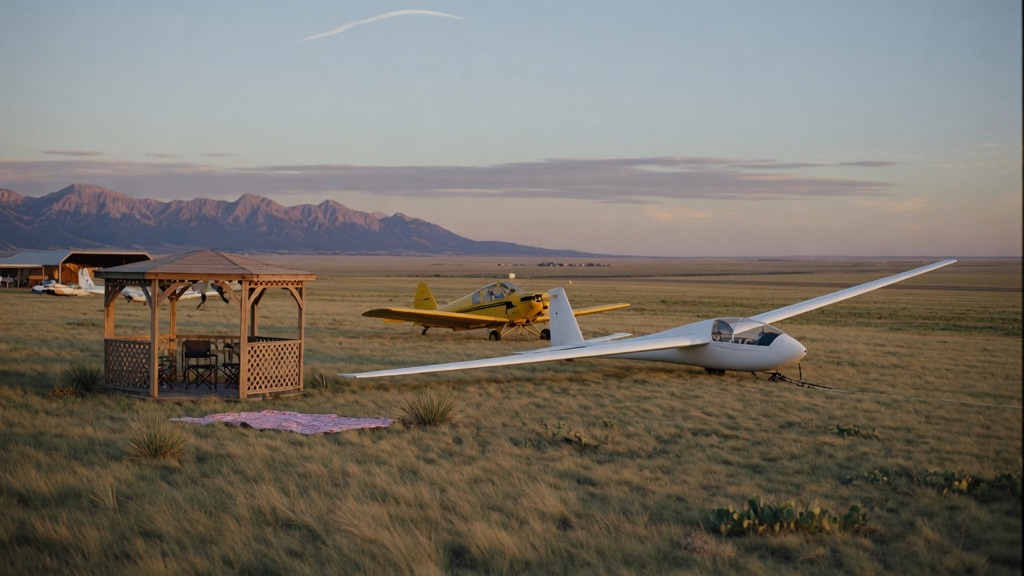
- Owl Canyon Gliderport — After looking down at 12,000-year-old earth, watch modern motorless gliders silently catch thermals over the exact same high-plains landscape just 12 miles south.
- Virginia Dale Overland Trail Stage Station — Pair deep Paleo-Indian antiquity with 1860s stagecoach history and outlaw lore just a short hop across the Larimer County dirt roads.
- Deadman Butte Mine — Follow up the ancient stone hunting camp with a quick detour to an abandoned 20th-century gypsum prospect hidden in the nearby foothills.
More weird in Fort Collins

Good to know
Can I see the actual artifacts on-site?
No, the stone points and bone tools dug up in the 1930s are housed in the Smithsonian Institution and the Denver Museum of Nature & Science (though some casts and local history displays exist at the Fort Collins Museum of Discovery). The physical dig site itself was buried back in to preserve it.
Is it open year-round?
No. Soapstone Prairie Natural Area is strictly closed during winter (December through February) to protect wintering wildlife. It opens March 1 and closes November 30, operating dawn to dusk.
Are dogs allowed at Lindenmeier?
No. Dogs are strictly prohibited anywhere within Soapstone Prairie Natural Area to protect local wildlife, including grazing bison herds and ground-nesting birds.
Is there an entrance fee?
Entry to Soapstone Prairie Natural Area and access to the Lindenmeier Overlook is completely free.
Plan a visit & invite your people →
Further reading: Wikipedia · uncovercolorado.com · alltrails.com · northfortynews.com · fcgov.com · smithsonianmag.com
last checked: 2026-06-11