Haunted things to do in Chicago
Looking for haunted things to do in Chicago? These 11 are the real ones — Congress Plaza Hotel, Couch Tomb, Lincoln Park and Graceland Cemetery and Arboretum among them — actual dark-history sites and genuinely unsettling places, not a seasonal haunted house with a fog machine. They spread across South Loop, Lincoln Park, Uptown, Justice and 7 more areas, so two or three can make a whole afternoon. Every entry is hand-vetted against real sources — not scraped off a top-ten list or averaged out of crowd ratings.
-
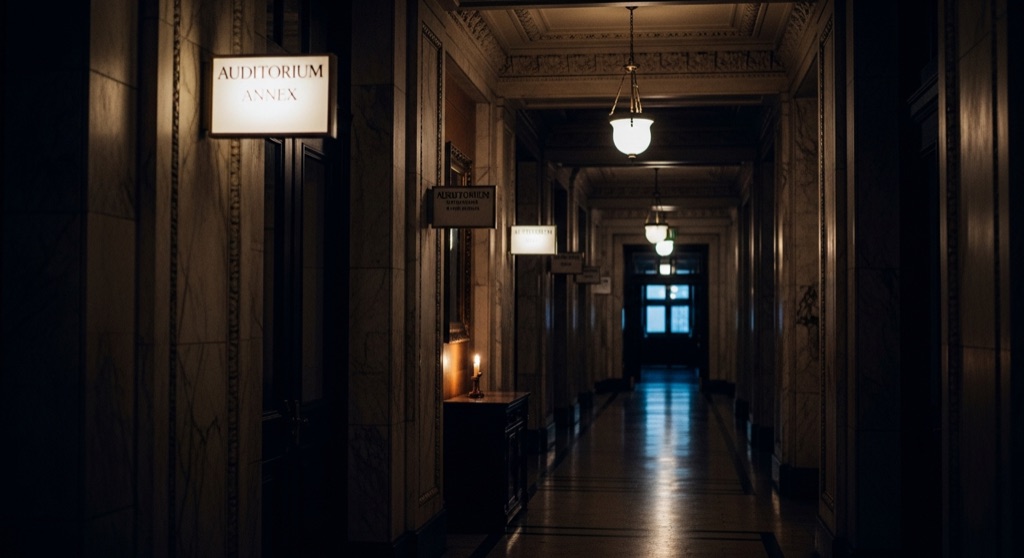 Congress Plaza Hotel
Opened in 1893 as the Auditorium Annex to house World's Columbian Exposition visitors, this 14-story Michigan Avenue landmark has hosted presidents, performers, and gangsters including Al Capone, and is routinely called the most haunted hotel in Illinois. Staff and guests report cold spots, voices, and moving objects, with the fourth and twelfth floors named most active. Room 441 is the stuff of local legend, and parts of the hotel are said to be permanently sealed off.
Congress Plaza Hotel
Opened in 1893 as the Auditorium Annex to house World's Columbian Exposition visitors, this 14-story Michigan Avenue landmark has hosted presidents, performers, and gangsters including Al Capone, and is routinely called the most haunted hotel in Illinois. Staff and guests report cold spots, voices, and moving objects, with the fourth and twelfth floors named most active. Room 441 is the stuff of local legend, and parts of the hotel are said to be permanently sealed off.
-
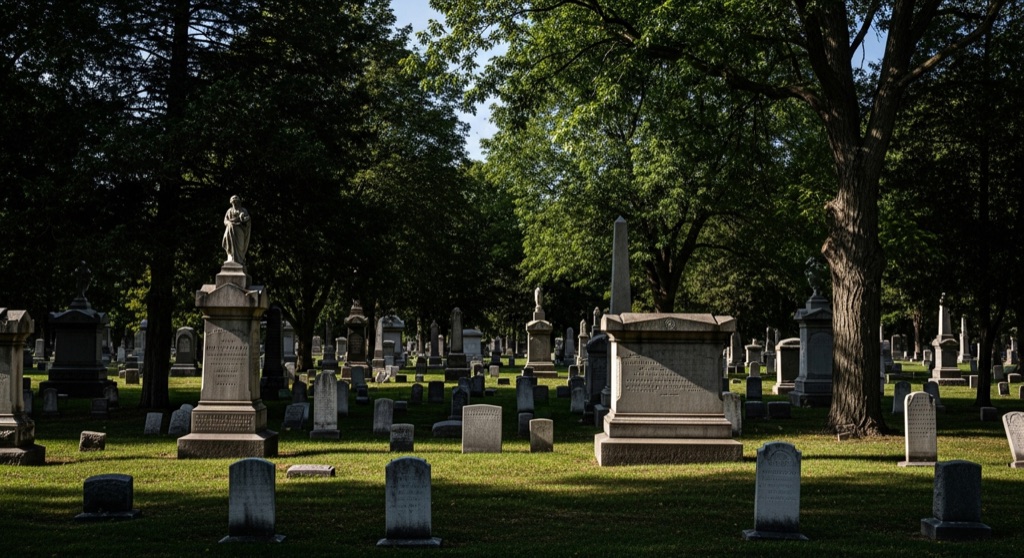 Couch Tomb, Lincoln Park
This fifty-ton limestone mausoleum is the last above-ground trace of Lincoln Park's origins as a city cemetery that stopped taking burials around 1866, after which most graves were relocated to make way for the park. The Couch family tomb was simply left behind, and to this day no one is certain who, or how many, remain sealed inside, with estimates ranging from a single body to thirteen. It sits incongruously in a cluster of trees on a quiet lawn just steps from the Chicago History Museum.
Couch Tomb, Lincoln Park
This fifty-ton limestone mausoleum is the last above-ground trace of Lincoln Park's origins as a city cemetery that stopped taking burials around 1866, after which most graves were relocated to make way for the park. The Couch family tomb was simply left behind, and to this day no one is certain who, or how many, remain sealed inside, with estimates ranging from a single body to thirteen. It sits incongruously in a cluster of trees on a quiet lawn just steps from the Chicago History Museum.
-
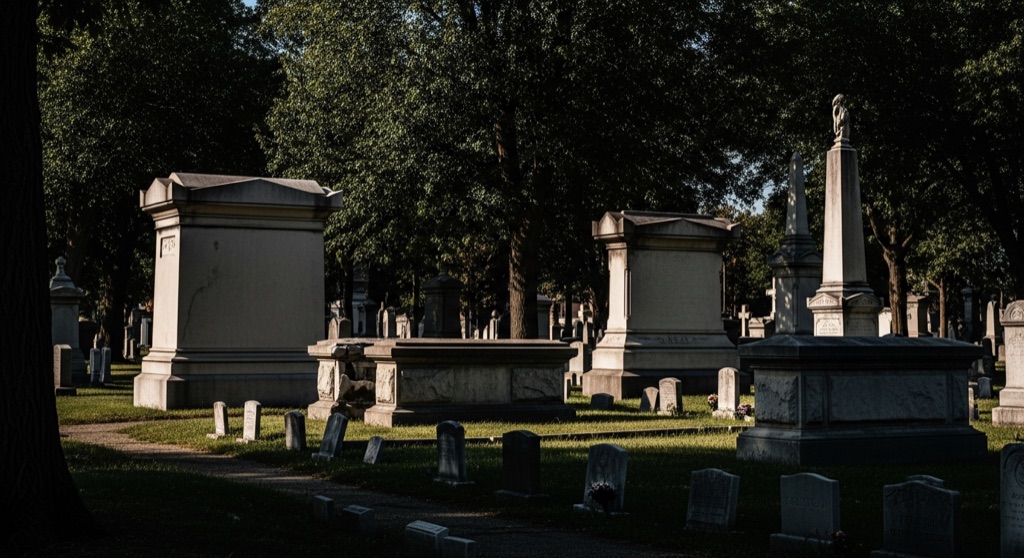 Graceland Cemetery and Arboretum
Founded in 1860, Graceland is the resting place of Chicago titans and the source of two of the city's most famous eerie monuments: Lorado Taft's hooded bronze 'Eternal Silence,' whose eyes legend says reveal your own death, and the glass-encased statue of young Inez Clarke, rumored to vanish during thunderstorms. The grounds double as a beautiful arboretum laced with winding paths and ornate Victorian tombs. Free self-guided theme maps are available at the visitor center near the historic entrance.
Graceland Cemetery and Arboretum
Founded in 1860, Graceland is the resting place of Chicago titans and the source of two of the city's most famous eerie monuments: Lorado Taft's hooded bronze 'Eternal Silence,' whose eyes legend says reveal your own death, and the glass-encased statue of young Inez Clarke, rumored to vanish during thunderstorms. The grounds double as a beautiful arboretum laced with winding paths and ornate Victorian tombs. Free self-guided theme maps are available at the visitor center near the historic entrance.
-
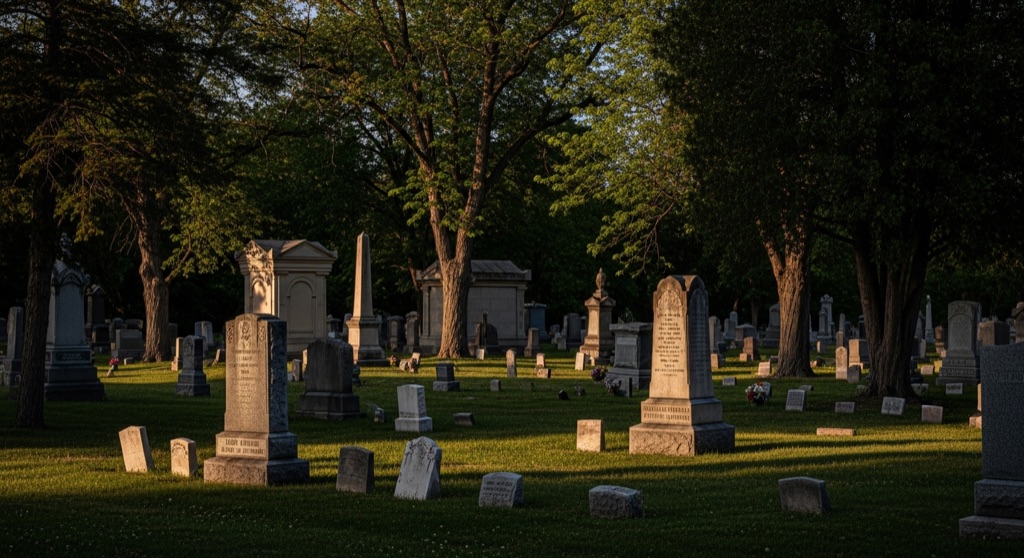 Resurrection Cemetery (Resurrection Mary)
The front gates of this sprawling Catholic cemetery are ground zero for Resurrection Mary, Chicago's most famous ghost: since the 1930s, drivers along Archer Avenue have reported a young blonde woman in a white party dress who hitches a ride and then vanishes at the cemetery gate. The bars of the gate were once allegedly bent and scorched by ghostly handprints, a story still pointed out by ghost-tour guides. Many link Mary to Mary Bregovy, killed in a 1934 car crash.
Resurrection Cemetery (Resurrection Mary)
The front gates of this sprawling Catholic cemetery are ground zero for Resurrection Mary, Chicago's most famous ghost: since the 1930s, drivers along Archer Avenue have reported a young blonde woman in a white party dress who hitches a ride and then vanishes at the cemetery gate. The bars of the gate were once allegedly bent and scorched by ghostly handprints, a story still pointed out by ghost-tour guides. Many link Mary to Mary Bregovy, killed in a 1934 car crash.
-
 Stony Island Arts Bank
Artist Theaster Gates rescued a derelict 1923 South Shore bank and filled it with rescued single-subject archives under one roof: the Johnson Publishing (Ebony/Jet) research library, house-music pioneer Frankie Knuckles' personal record collection, and Edward J. Williams's trove of "negrobilia."
Stony Island Arts Bank
Artist Theaster Gates rescued a derelict 1923 South Shore bank and filled it with rescued single-subject archives under one roof: the Johnson Publishing (Ebony/Jet) research library, house-music pioneer Frankie Knuckles' personal record collection, and Edward J. Williams's trove of "negrobilia."
-
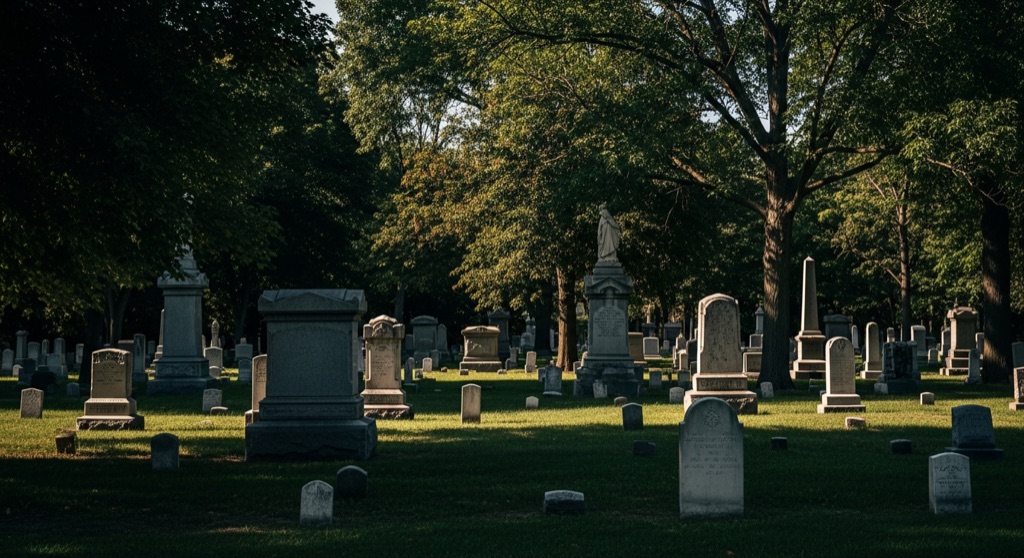 George Bangs Tree-Trunk Grave, Rosehill Cemetery
A tombstone carved as a dead tree trunk crawling with sculpted birds and animals, with a tiny stone railway mail car frozen mid-entry into a tunnel at its base — a Victorian memorial to George S. Bangs, the U.S. Mail railway superintendent who invented the "Fast Mail" system, epitaph carved in: "His crowning effort: The Fast Mail."
George Bangs Tree-Trunk Grave, Rosehill Cemetery
A tombstone carved as a dead tree trunk crawling with sculpted birds and animals, with a tiny stone railway mail car frozen mid-entry into a tunnel at its base — a Victorian memorial to George S. Bangs, the U.S. Mail railway superintendent who invented the "Fast Mail" system, epitaph carved in: "His crowning effort: The Fast Mail."
-
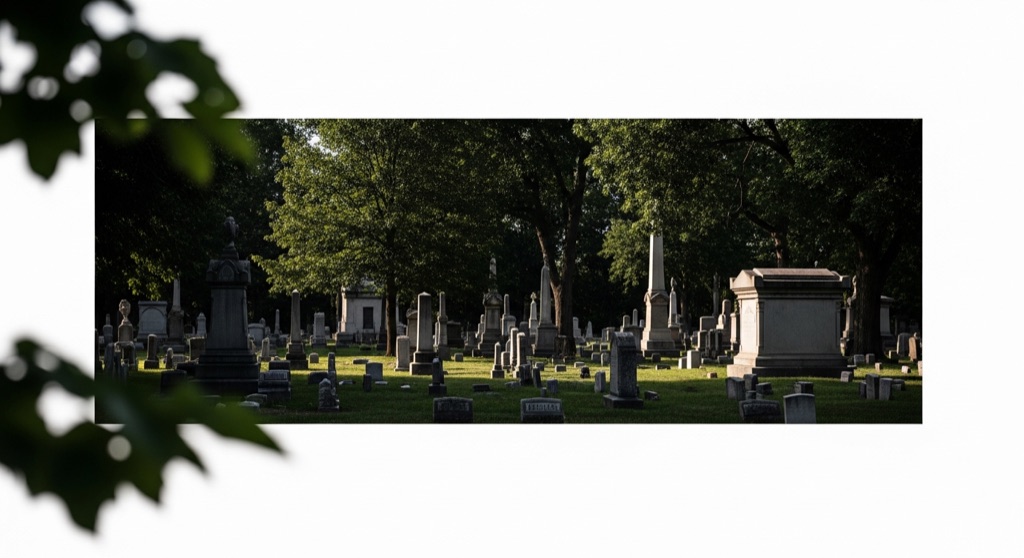 Oak Woods Cemetery (Confederate Mound)
Confederate Mound is a Civil War mass grave tied to Camp Douglas -- Chicago's own Andersonville -- where POWs who died in captivity were reburied in concentric trenches under a single bronze soldier monument. The monument's much-repeated figure of ~6,000 dead is considered inflated by historians (it lists just over 4,000 names). It sits a few sections over from Enrico Fermi, Jesse Owens, and Harold Washington.
Oak Woods Cemetery (Confederate Mound)
Confederate Mound is a Civil War mass grave tied to Camp Douglas -- Chicago's own Andersonville -- where POWs who died in captivity were reburied in concentric trenches under a single bronze soldier monument. The monument's much-repeated figure of ~6,000 dead is considered inflated by historians (it lists just over 4,000 names). It sits a few sections over from Enrico Fermi, Jesse Owens, and Harold Washington.
-
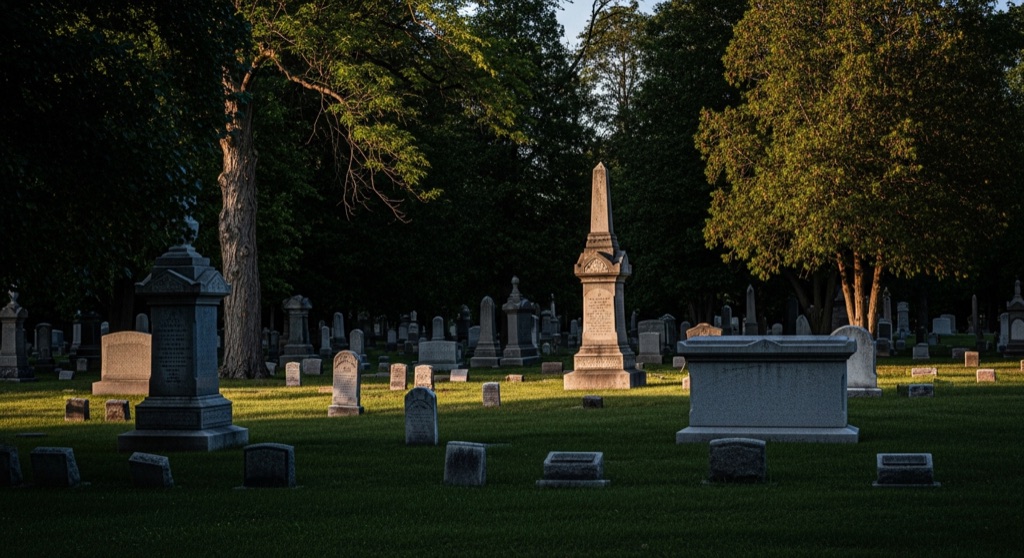 Bohemian National Cemetery
Founded in 1877 after a Czech Catholic woman was refused burial elsewhere for skipping her Easter Duty, this NRHP-listed cemetery now holds a ship's-wheel memorial to the 844 dead of the 1915 Eastland disaster, assassinated mayor Anton Cermak's tomb, and 5-year-old murder victim Elsie Paroubek, whose unsolved 1911 killing haunted a young Henry Darger and shaped his outsider-art epic.
Bohemian National Cemetery
Founded in 1877 after a Czech Catholic woman was refused burial elsewhere for skipping her Easter Duty, this NRHP-listed cemetery now holds a ship's-wheel memorial to the 844 dead of the 1915 Eastland disaster, assassinated mayor Anton Cermak's tomb, and 5-year-old murder victim Elsie Paroubek, whose unsolved 1911 killing haunted a young Henry Darger and shaped his outsider-art epic.
-
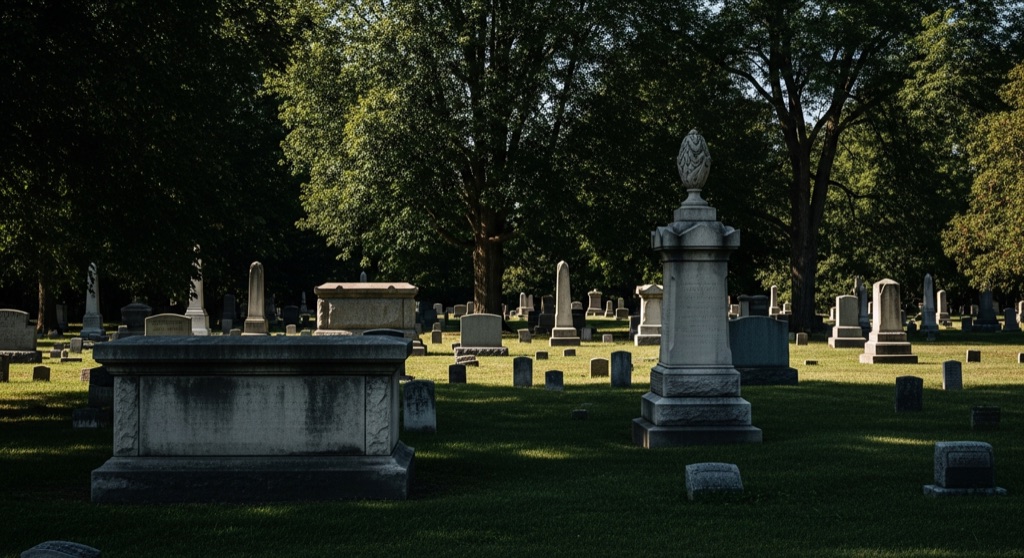 Read-Dunning Memorial Park
This quiet 3-acre park sits on top of roughly 38,000 unmarked dead -- 19th-century Cook County poorhouse residents, insane-asylum patients, Great Chicago Fire victims, and Civil War veterans -- a potter's field that vanished from public memory until 1989, when construction crews digging nearby hit bone and uncovered three separate burial grounds.
Read-Dunning Memorial Park
This quiet 3-acre park sits on top of roughly 38,000 unmarked dead -- 19th-century Cook County poorhouse residents, insane-asylum patients, Great Chicago Fire victims, and Civil War veterans -- a potter's field that vanished from public memory until 1989, when construction crews digging nearby hit bone and uncovered three separate burial grounds.
-
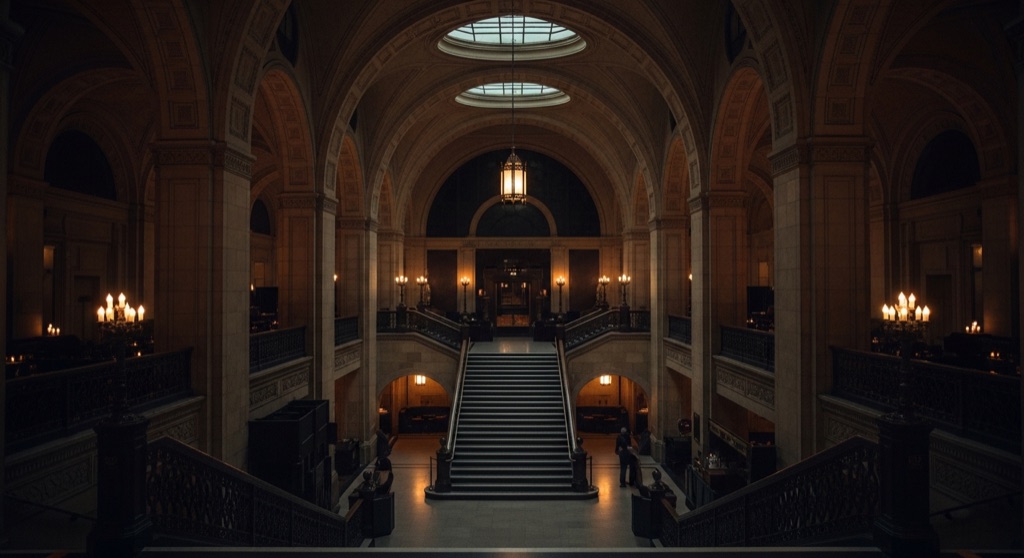 Tao Chicago (former Chicago Historical Society Building)
This Richardsonian Romanesque landmark at 632 N Dearborn, designed by Henry Ives Cobb and completed in 1892 as the Chicago Historical Society's headquarters (replacing the building lost in the Great Fire), was reborn as a nightclub — the Limelight in the mid-1980s, then Excalibur from 1989 — a building long rumored to have cold spots and grand-staircase apparitions, now the Tao Asian bistro and nightclub.
Tao Chicago (former Chicago Historical Society Building)
This Richardsonian Romanesque landmark at 632 N Dearborn, designed by Henry Ives Cobb and completed in 1892 as the Chicago Historical Society's headquarters (replacing the building lost in the Great Fire), was reborn as a nightclub — the Limelight in the mid-1980s, then Excalibur from 1989 — a building long rumored to have cold spots and grand-staircase apparitions, now the Tao Asian bistro and nightclub.
-
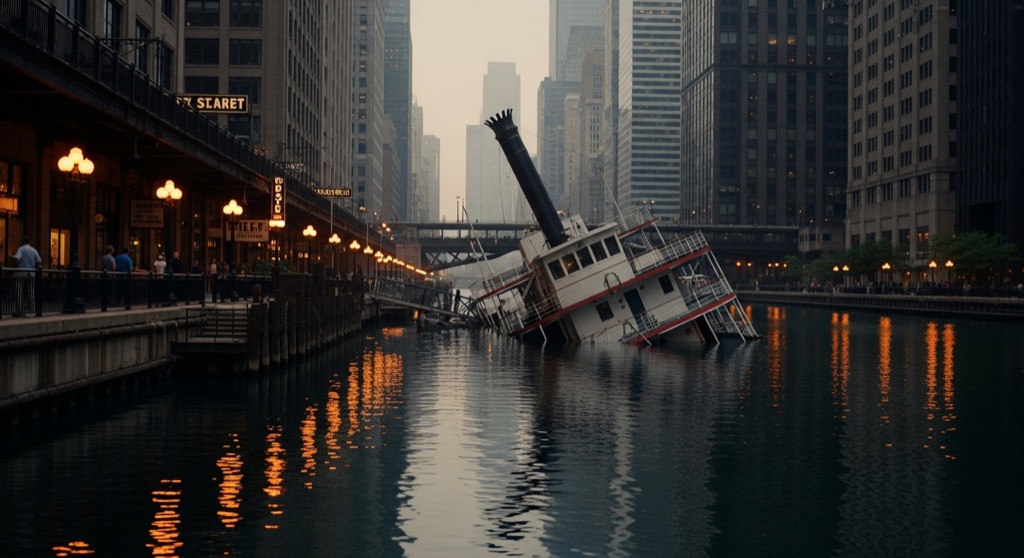 Eastland Disaster Site & Memorial Marker
On the morning of July 24, 1915, the SS Eastland rolled onto its side right here in barely 20 feet of water, 20 feet from the wharf, drowning 844 passengers -- more deaths than any single disaster in Chicago history -- an event now marked only by a small plaque along the river that most Loop commuters walk past without a second look.
Eastland Disaster Site & Memorial Marker
On the morning of July 24, 1915, the SS Eastland rolled onto its side right here in barely 20 feet of water, 20 feet from the wharf, drowning 844 passengers -- more deaths than any single disaster in Chicago history -- an event now marked only by a small plaque along the river that most Loop commuters walk past without a second look.
Haunted things to do in Chicago — FAQ
Which haunted places & dark-history spots in Chicago are the strangest?
Ranked by how strange they actually are: Graceland Cemetery and Arboretum, Resurrection Cemetery (Resurrection Mary) and Congress Plaza Hotel. Graceland Cemetery and Arboretum — Founded in 1860, Graceland is the resting place of Chicago titans and the source of two of the city's most famous eerie monuments: Lorado Taft's hooded bronze 'Eternal Silence,' whose eyes legend says reveal your own death, and the glass-encased statue of young Inez Clarke, rumored to vanish during thunderstorms.
Where in Chicago are they?
Across South Loop, Lincoln Park, Uptown, Justice and South Shore and 6 more. Each listing gives the neighborhood and address so you can cluster a couple into one outing.
Is this a good weird date in Chicago?
That's what the list is built for. Every entry has a specific move rather than a vague recommendation — at Graceland Cemetery and Arboretum, for instance: Pick up a free map at the office and hunt down 'Eternal Silence' and the Inez Clarke statue on a slow afternoon ramble through the tombs.
How were these haunted places & dark-history spots chosen?
An agentic research system digs for the genuinely obscure — the spots even locals miss — and every one is verified against real sources before it makes the list. We deliberately skip the landmarks already on every Chicago guide.