Entry No. 11 — the Charleston file — filed under: history
Old Slave Mart Museum
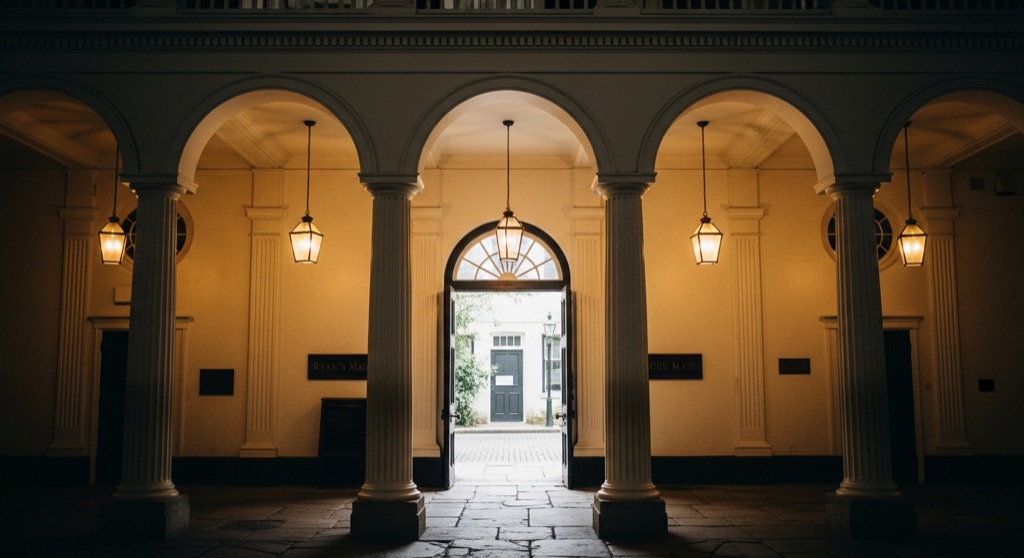
The last surviving building in South Carolina constructed specifically as an indoor slave auction gallery, opened in 1859 inside Ryan's Mart after the city banned public slave sales — its octagonal pillars and arched entrance once framed the sale of human beings on a cobblestone alley a block off Meeting Street.
→ Three more unusual museums & collections in Charleston — never the same twice
The story
Before 1856, Charleston didn't bother hiding its slave market—auctions took place in plain sight on the open street north of the Old Exchange. But when the city council passed an ordinance banning public slave sales, brokers didn't stop trading human beings; they simply moved behind brick walls. Councilman Thomas Ryan bought up a sprawling plot between Chalmers and Queen Streets, building a private compound complete with a four-story barracoon (a slave jail), an infirmary, a morgue, and a kitchen. In 1859, slave trader Ziba Oakes updated the Chalmers Street salesroom with two 20-foot octagonal pillars and an arched entrance, creating an indoor showroom engineered to shield the reality of the domestic trade from casual passersby.
Inside, enslaved men, women, and children were forced onto three-foot-high, ten-foot-long auction tables running down the center of the room so buyers could inspect them before bidding. Union bombardment forced the mart to close in 1863, and federal troops ended sales for good when they occupied Charleston in 1865. In the decades following emancipation, the building cycled through startlingly mundane uses: it served as tenement housing for local Black families and later as a commercial auto repair shop.
In 1938, an Ohio transplant named Miriam B. Wilson bought the surviving salesroom and opened the Old Slave Mart Museum—creating one of the earliest museums in the United States dedicated to African American history and the domestic slave trade. Acquired by the City of Charleston in 1988 and reopened after extensive restoration in 2007, the room remains South Carolina's last surviving indoor auction gallery.
What it's like
Walking down the cobblestones of Chalmers Street, you step through the arched entrance framed by octagonal pillars into a single, high-ceilinged hall that immediately feels heavy. This is a text-focused museum rather than an artifact gallery: narrative panels, historical posters, and recorded testimonies line the room, detailing how Charleston served as a primary hub for the domestic slave trade. You will likely see visitors moving slowly and quietly from panel to panel, with a back window offering a look toward the former enclosed yard. The space is small and can get crowded quickly; plan for an hour visit, and try going on a weekday morning to read the history at your own pace without rubbing elbows.
The move: Walk Chalmers Street's cobblestones to the museum, go through the auction-gallery exhibits together, then sit with what you learned over coffee nearby before talking it through.
- 📍 French Quarter, Charleston
- 💸 $$
- ⚡ Up for anything
- 🌗 Indoors
Where: 6 Chalmers St, Charleston, SC 29401
Hours: Added 2026-07-20 — confirm current hours before you go.
Pair it with
- Circular Congregational Church Graveyard — A two-minute walk away on Meeting Street, Charleston's oldest cemetery offers a quiet, shadow-dappled walk among slate gravestones dating back to 1690.
- The Powder Magazine — Just around the corner on Cumberland Street, South Carolina's oldest public building from 1713 provides another rare look at original 18th-century masonry engineered for survival.
- Bar Vauté (beneath Brasserie La Banque) — Descend the historic staircase into this former bank vault off Broad Street when you need a quiet, secluded space to sit with what you learned over a drink.
- Confederate Museum at Market Hall — Located three blocks north, this 1899 relic room inside Market Hall presents a stark historical contrast in how Charleston remembered the Civil War.
More weird in Charleston

Good to know
Is this the actual building where slave auctions occurred?
Yes. It is considered South Carolina's last surviving building constructed specifically as an indoor slave auction gallery, operating from 1859 until Union bombardment forced its closure in 1863.
How long does a visit to the Old Slave Mart Museum take?
Most visitors take about 45 to 60 minutes to thoroughly read through the narrative panels and exhibits housed within the single historic room.
Why was the indoor market built away from the main streets?
An 1856 Charleston ordinance banned open-air slave sales near the Old Exchange Building, prompting slave brokers to build enclosed private auction halls along Chalmers, State, and Queen Streets.
Who owns and operates the museum today?
The museum was founded as a private institution in 1938 by Miriam B. Wilson. The City of Charleston purchased the building in 1988, renovated it, and currently owns and operates the site.
Plan a visit & invite your people →
Further reading: Wikipedia · Official site · nps.gov · Reddit
last checked: 2026-07-20