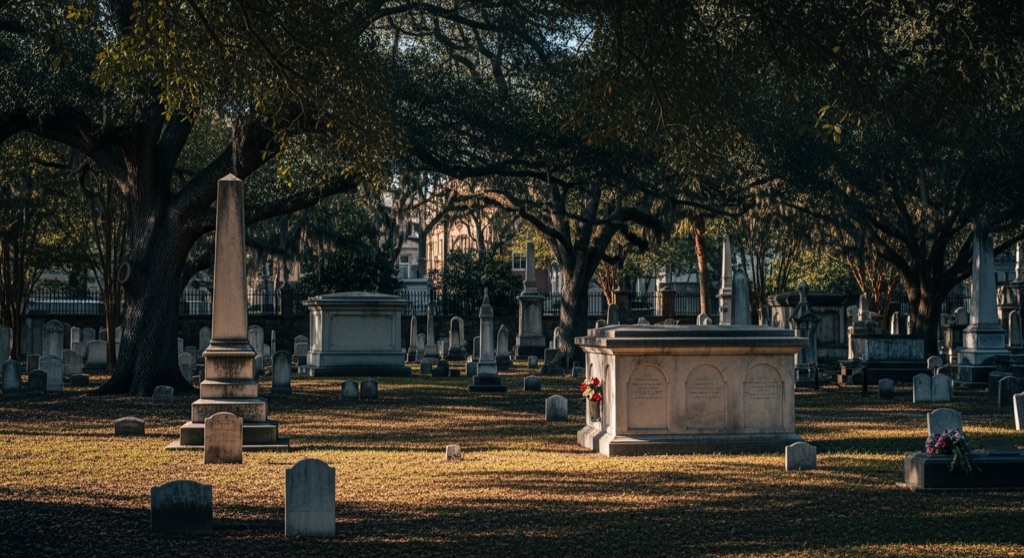
Entry No. 2 — the Charleston file — filed under: cemetery
Circular Congregational Church Graveyard
Charleston's oldest cemetery, with a tombstone dating to 1690 and intricately carved death's-head stones tilting under crepe myrtles. Rows of children's graves clustered within a few months of each other are a mute, undersold record of the yellow fever epidemics that periodically emptied the city.
→ Three at a time, never the same twice — explore weird Charleston
The story
When English Dissenters put down roots on this parcel in 1681, their wooden meeting house gave Meeting Street its name and established Charleston's oldest surviving English burial ground. Look closely at the dark slate slabs tilting under the crepe myrtles: wealthy 18th-century Charlestonians didn't trust local stonemasons with their eternity, paying top dollar to have Massachusetts carvers chisel grim iconography into Boston slate and ship the heavy slabs down the Atlantic coast by sea. Walk row by row and you can trace the exact decade early American culture stopped fearing damnation and started romanticizing the afterlife, watching harsh colonial death's-head skulls gradually soften into winged soul effigies and eventually willow-and-urn motifs.
The graveyard's darkest history isn't written in grand mausoleums, but in the small, tightly packed markers lining the soil. During the 18th and 19th centuries, periodic yellow fever epidemics tore through low-country swamp heat and routinely emptied entire city blocks. Look for the small slate headstones marking the Savage children—John, Dandridge, and William—who all perished within days of each other during a single disease season. Between British cannonball scars from the 1780 siege of Charleston, earthquake cracks, and over 500 surviving headstones, these grounds remain a raw, unvarnished ledger of early colonial survival right in the French Quarter.
What it's like
Step past the iron gate on Meeting Street and the downtown noise gives way to mossy brick paths and slanting slate markers. It is unstaffed and free to walk during daylight hours, so you can explore without anyone rushing you through. Scan the QR code on the entrance sign if you want a detailed breakdown of the stone carvers' symbols, and watch your step around the sunken footstones hidden in the grass. Ghost tours crowd the sidewalk outside after dark, but if you drop in on a quiet weekday afternoon, you will likely have three centuries of Charleston's dead all to yourself.
The move: Wander the churchyard together at dusk tracing the worn 17th- and 18th-century carvings, then find the clustered children's graves and talk through what a single epidemic season here must have looked like.
- 📍 Downtown Charleston / French Quarter
- 💸 $$
- ⚡ Up for anything
- 🌗 Indoors
Where: 150 Meeting St, Charleston, SC 29401
Hours: Added 2026-07-20 — confirm current hours before you go.
Pair it with
- The Powder Magazine — Just a two-minute walk away, South Carolina's oldest public building (1713) offers another gritty, unvarnished look at early colonial defense.
- Old Slave Mart Museum — Head two blocks east to examine the quiet, sobering history of Charleston's 19th-century domestic slave trade inside a former auction gallery.
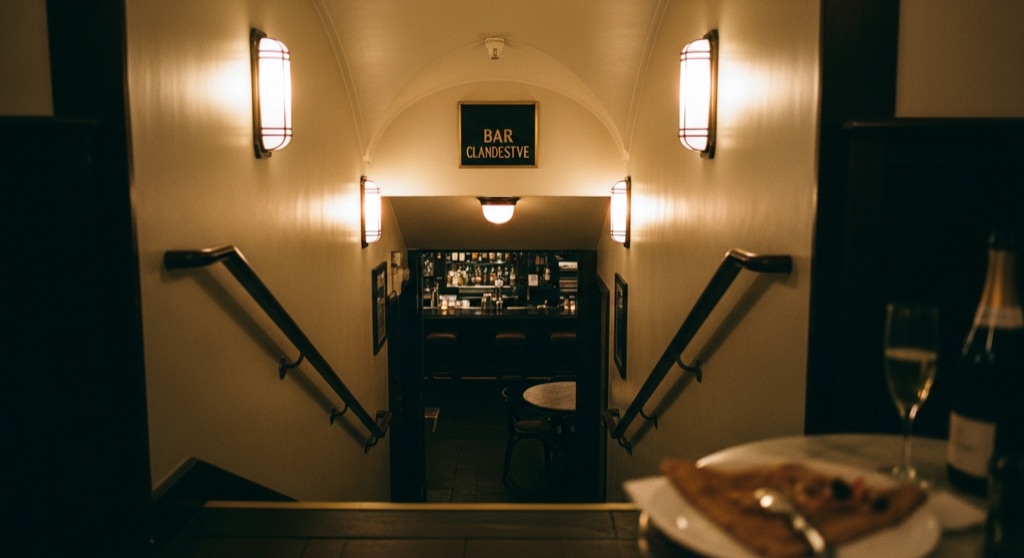
- Bar Vauté (beneath Brasserie La Banque) — Walk south to Broad Street after dusk and descend the original historic staircase into a subterranean former bank vault for a quiet drink.
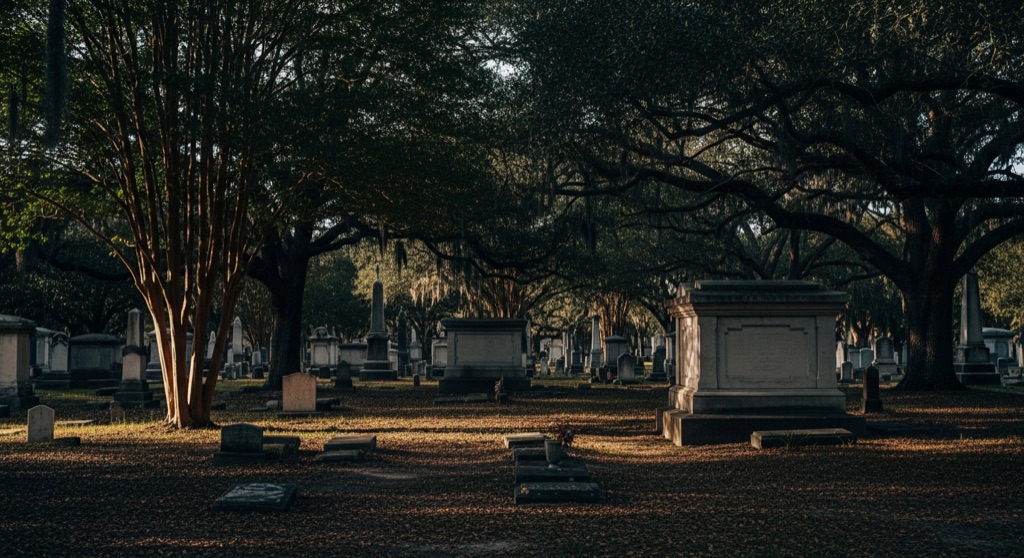
- Coming Street Cemetery — Head a mile northwest to compare colonial burial traditions at the South's oldest Jewish cemetery, founded in 1762 behind locked iron gates.
More weird in Charleston

Good to know
Is there an admission fee to visit the graveyard?
No, access to the churchyard is free and open to the public during daytime hours.
Why are so many gravestones made of dark New England slate?
In the 18th century, affluent Charleston families commissioned finished tombstones directly from carvers in Boston and Massachusetts, shipping the carved slate south by sea.
What do the winged skull carvings on the early tombstones mean?
Known as 'death's-heads,' these 17th- and early 18th-century Puritan carvings emphasized physical mortality, with wings added to represent the soul departing the earth.
Is the graveyard connected to any walking paths?
Yes, it is a key stop along Charleston's Gateway Walk, a scenic pedestrian trail that connects several historic downtown churchyards, gardens, and museum walkways.
Plan a visit & invite your people →
Further reading: scpictureproject.org · Wikipedia · Official site · Reddit
last checked: 2026-07-20