Entry No. 26 — the Charleston file — filed under: civil war relics
Confederate Museum at Market Hall
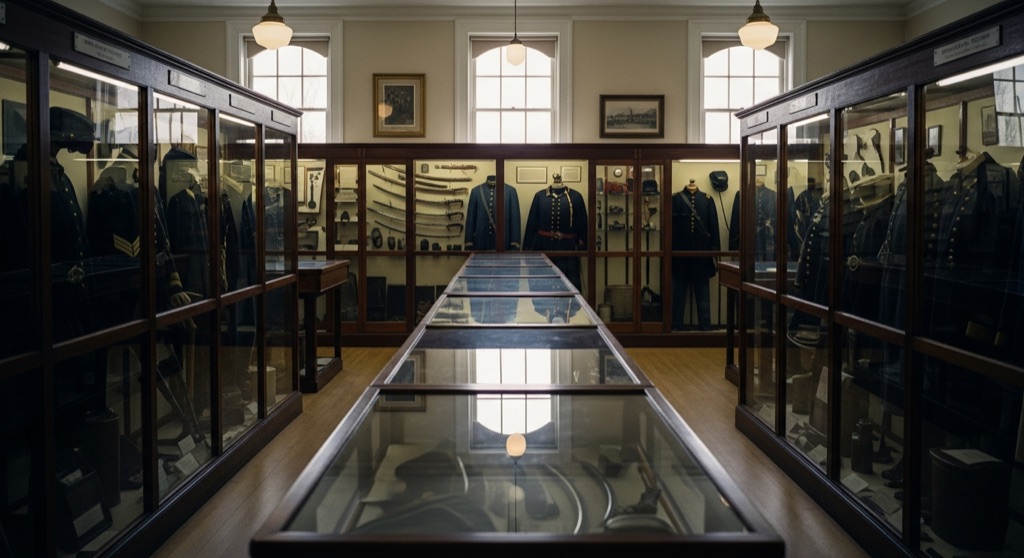
Upstairs in a Greek Revival market hall, the United Daughters of the Confederacy has run a single-subject relic room since 1899 — uniforms, swords, and personal effects donated by soldiers' families straight after the war, arranged in glass cases that have barely changed in a century. It's only open four days a week, and the (unofficial) rule locals repeat is "when the flag's out front, they're open."
→ Three more unusual museums & collections in Charleston — never the same twice
The story
Before it became a repository for 19th-century war relics, Market Hall was a Greek Revival civic portal designed in 1841 by local architect Edward Brickell White, built high above the cobbles of Meeting Street to house municipal offices while produce and meat vendors traded in the open-air sheds stretching behind it. When April 1861 arrived, the city turned the second-floor meeting room into an official Confederate recruiting station where local men collected equipment, weapons, and military orders. Thirty-eight years later, following a 1899 United Confederate Veterans reunion in Charleston, veterans handed over their personal gear to Charleston Chapter #4 of the United Daughters of the Confederacy, who converted the room into a single-subject museum.
Step past the portico today and you are walking into an artifact room that has resisted modern museum design for over a century. There are no digital touchscreens, sleek pedestals, or revised narrative boards here; instead, floor-to-ceiling glass display cases house handwritten soldier diaries, tattered wool uniforms, swords, muskets, and South Carolina secession flags preserved exactly as they were arranged at the turn of the 20th century.
You didn't hear it from us, but don't count on standardized posted hours when planning a visit. Local guidance centers on a visual cue: if the flag is hanging over the Meeting Street portico, the doors upstairs are unlocked. If it isn't out front, the room remains closed.
What it's like
Climb the exterior double staircase at 188 Meeting Street to reach the second floor. Inside, expect narrow aisles flanked by crowded wooden glass cabinets filled with raw, unpolished personal effects donated directly by soldiers' families. The atmosphere is quiet, claustrophobic, and strictly Victorian, watched over by hostesses who manage the single room. Tip: look at the front of the building from the street before taking the steps; if the flag isn't out, save yourself the walk.
The move: Climb the narrow stairs on a Thursday or Sunday afternoon, spend twenty minutes with the case of soldiers' letters and personal artifacts, then debate downstairs at the market over what to make of a museum that hasn't updated its approach since the Victorian era.
- 📍 Downtown Charleston
- 💸 $
- ⚡ Up for anything
- 🌗 Indoors
Where: 188 Meeting Street, Charleston, SC 29401
Hours: Added 2026-07-20 — confirm current hours before you go.
⚠ Seasonal or scheduled — always check before you go.
Pair it with
- Old Slave Mart Museum — Located 0.3 miles away on Chalmers Street, this 1859 former auction building provides an unpolished, essential historical counterweight to the UDC's 1899 relic room.
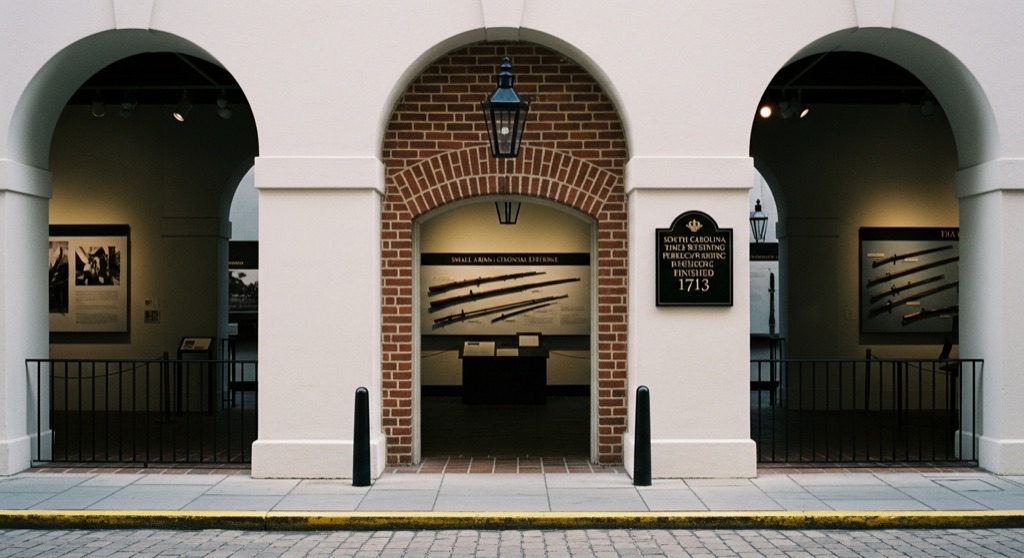
- The Powder Magazine — Walk 0.1 miles down the block to visit South Carolina's oldest public structure, constructed in 1713 with three-foot-thick walls engineered to store gunpowder.
- Circular Congregational Church Graveyard — Head 0.1 miles down Meeting Street for a quiet walk among 17th-century slate tombstones carved with skull motifs.
More weird in Charleston
Good to know
How do you know if the Confederate Museum is open?
Locals rely on a simple rule: look for the flag displayed outside Market Hall on Meeting Street. When the flag is out front, the museum upstairs is open to visitors.
Is Market Hall the site where enslaved people were sold?
No. Market Hall was constructed in 1841 as a municipal building for meat and produce market administration. Enslaved human beings were never auctioned at the City Market; public slave sales occurred at private auction rooms like the Old Slave Mart on nearby Chalmers Street.
What artifacts are displayed inside the museum?
The single-room collection includes uniforms, swords, muskets, cannons, personal letters, handwritten soldier diaries, and regional flags donated directly by veterans and families starting in 1899.
Where do you enter the museum?
You reach the museum by walking up the front exterior double staircase facing Meeting Street at the front entrance of Market Hall.
Plan a visit & invite your people →
Further reading: Wikipedia · charlestoncvb.com · nps.gov
last checked: 2026-07-20