Entry No. 22 — the Charleston file — filed under: art
Halsey Institute of Contemporary Art
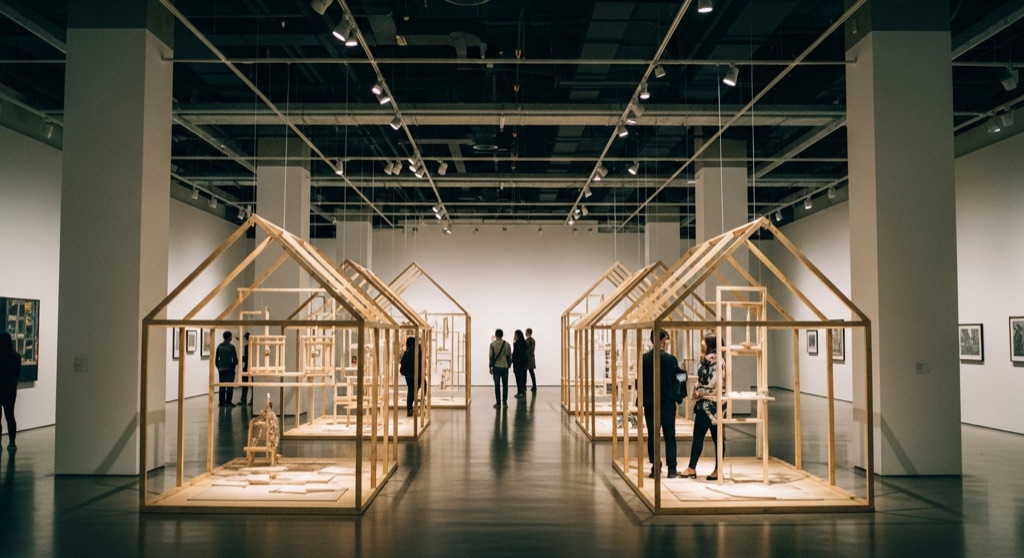
A free, noncollecting kunsthalle inside College of Charleston's Cato Center that has spent over 40 years and 275+ exhibitions handing full rooms to mid-career artists to reshape however they want. The current show, In Kyoung Chun's "Make Room" (through July 25, 2026), fills the gallery with transparent house frames and suspended structures visitors walk between rather than around — an immigrant artist's meditation on home built as walk-through architecture, not paintings on a wall.
→ Three at a time, never the same twice — explore weird Charleston
The story
Charleston likes its art behind heavy gilded frames—preferably depicting historic church steeples or antebellum gardens. The Halsey Institute of Contemporary Art exists to quietly subvert all of that. Operating inside the College of Charleston’s Cato Center on Calhoun Street, it runs on a noncollecting kunsthalle model. That means no permanent collection taking up vault space, no dusty acquisitions, and zero obligation to play it safe for traditional museum donors. For over forty years and across more than 275 exhibitions, the gallery has handed its entire floor plan directly to mid-career artists, giving them complete license to reconfigure the rooms however they want.
Because the Halsey doesn't hoard or store art, every exhibition is temporary, physical, and aggressive about occupying real space. You aren't standing three feet back from a wall staring at framed canvases; you're usually stepping inside the work itself. In Kyoung Chun’s installation *Make Room* (running through July 25, 2026), the artist transformed the gallery into a walk-through architectural landscape filled with transparent house frames and suspended geometric structures. It operates as an immigrant artist's meditation on home and belonging, built not as flat pictures on drywall, but as a spatial environment you physically walk through.
What it's like
Stepping off Calhoun Street into the Cato Center feels like dipping out of Charleston’s usual tourist flow and into a quiet lab. The gallery space is expansive, silent, and completely visually overhauled every few months. Because admission is entirely free, you can slip in for twenty minutes between errands or spend an hour navigating an installation without committing a dime. The catch is timing: when an installation closes, that environment is completely dismantled and gone forever. Check their calendar before showing up, as the gallery goes dark during turnarounds while artists build out the next room-scale show.
The move: Catch the current site-specific installation before it closes and rotates to the next artist, then keep debating what "home" means over a drink on Calhoun Street.
- 📍 Downtown Charleston / College of Charleston campus
- 💸 $$
- ⚡ Up for anything
- 🌗 Indoors
Where: 161 Calhoun Street, Charleston, SC 29401 (Cato Center, College of Charleston)
Hours: Added 2026-07-20 — confirm current hours before you go.
⚠ Seasonal or scheduled — always check before you go.
Pair it with
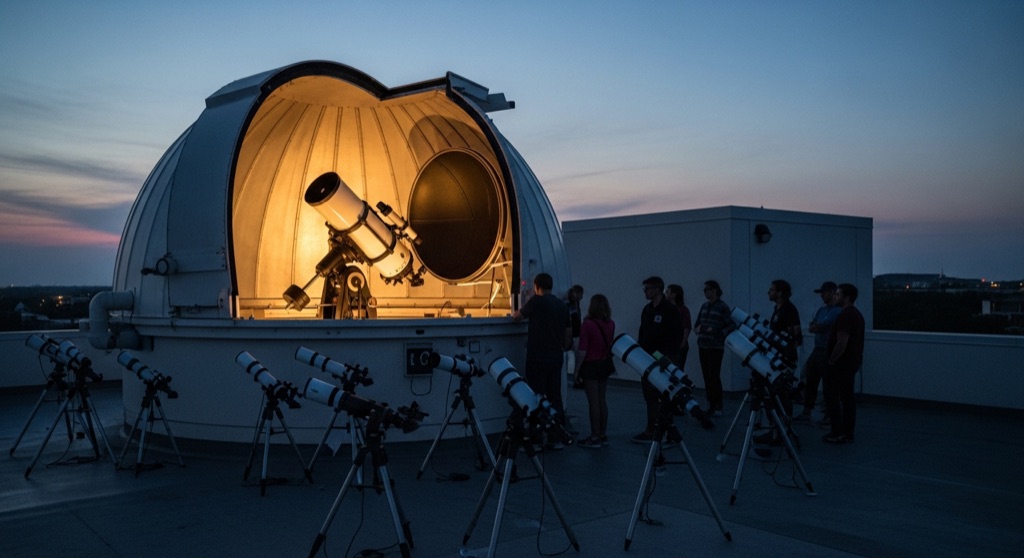
- College of Charleston Observatory — Located right on the same campus, you can trade room-scale contemporary installations for a look at deep space through a 24-inch telescope on open dome nights.
- Coming Street Cemetery — A short five-minute walk down the road brings you from modern spatial art to the locked iron gates and colonial Sephardic headstones of the South's oldest Jewish burial ground.
- The Charleston Museum — Early Days Gallery — Pair the Halsey's modern architectural experiments with the cabinet-of-curiosities relics resting just a few blocks away inside America's oldest museum.
- Prohibition — After debating what home or spatial art means inside the gallery, head down Upper King Street to debrief over craft cocktails in a 1920s speakeasy environment.
More weird in Charleston
Good to know
How much does admission cost?
It is completely free and open to the public.
Where inside the College of Charleston is it located?
You will find it inside the Cato Center at 161 Calhoun Street, right on the downtown campus.
What does a 'noncollecting kunsthalle' mean?
It means the Halsey does not maintain a permanent collection or display historical works. Instead, it operates as an agile gallery space dedicated entirely to rotating, site-specific contemporary art installations.
Why is the gallery closed sometimes?
Because each artist completely redesigns and constructs new site-specific environments inside the gallery, the Halsey closes to the public between exhibition runs for installation and build-out.
Plan a visit & invite your people →
Further reading: halsey.charleston.edu · Wikipedia
last checked: 2026-07-20