Entry No. 22 — the Washington, D.C. file — filed under: observatory
George Mason University Observatory
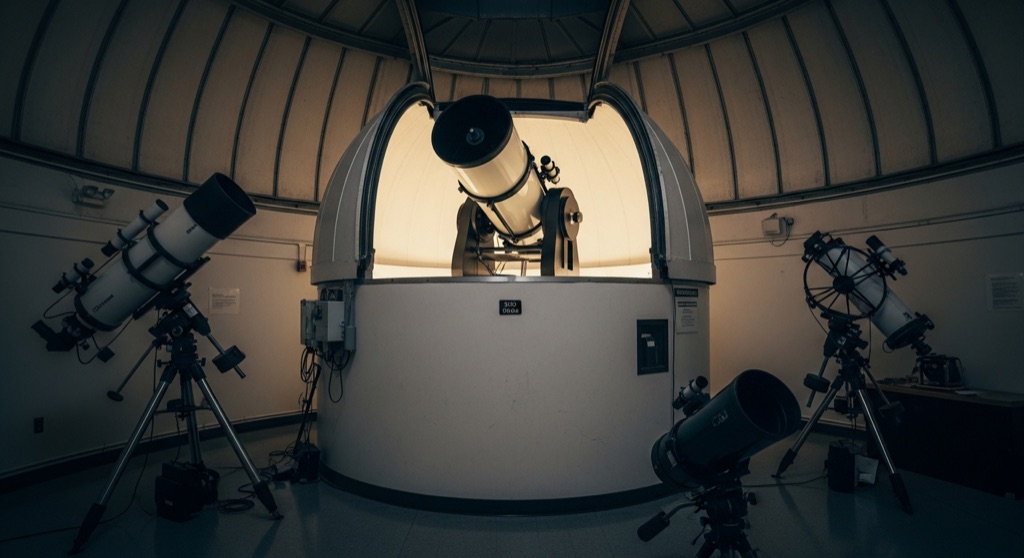
Above a university research building sits a 32-inch Ritchey-Chretien reflector — one of the largest campus telescopes on the East Coast open to the public — alongside a 152mm hydrogen-alpha solar scope, a 16-inch Dobsonian, and a CCD camera rig, all free to walk up and use, no ticket or reservation required, on public nights (Mondays, Wednesdays, and Saturdays) through the academic year, weather permitting.
→ Three more after-dark & night-sky spots in Washington, D.C. — never the same twice
The story
Rooftop research labs rarely invite the public inside, but perched on top of Research Hall on George Mason’s suburban campus sits a full-blown astronomical observatory that does just that. At its center is a 32-inch Ritchey-Chrétien reflector—one of the largest public-access campus telescopes on the East Coast—housed beneath a classic revolving dome. This isn't just an educational toy; the instrument actively contributes to real-world astronomical data, including follow-up observations for NASA’s TESS exoplanet mission.
What makes the site remarkable is the complete lack of gatekeeping. On scheduled public nights throughout the academic year, the physics and astronomy department opens the roof access doors, powers up the big scope, and rolls out portable backup gear—including a 16-inch Dobsonian, a specialized 152mm hydrogen-alpha solar telescope, and CCD camera rigs. Anyone who shows up gets to peer straight into deep space for free, guided by student researchers who use the equipment for their daily work.
What it's like
You'll park on campus, navigate into Research Hall, and take the elevator up to the top floor before following hand-printed signs out onto the exposed rooftop deck. On clear semester nights, the atmosphere is low-key and deeply geeky: students rotate visitors through the dome eyepiece to look at planetary rings, binary star systems, or nebulae, while outdoor scopes handle wide-field targets. Lines move surprisingly fast, but dress noticeably warmer than the ground temperature—the roof catches every scrap of wind, and the dome itself isn't heated.
The move: Show up on a clear Wednesday night during the academic year (it's closed for summer), take turns at the eyepiece of the 32-inch reflector on the rooftop dome, then grab a late dinner nearby before driving home.
- 📍 Fairfax, VA
- 💸 $
- ⚡ Low-key
- 🌗 Outdoors
Where: Research Hall, 10401 York River Rd, Fairfax, VA 22030
Hours: Added 2026-07-19 — confirm current hours before you go.
⚠ Seasonal or scheduled — always check before you go.
Pair it with
- Turner Farm Observatory (Analemma Society) — Compare a high-tech university roof scope with an open-air park observatory run by local volunteers 11 miles north.
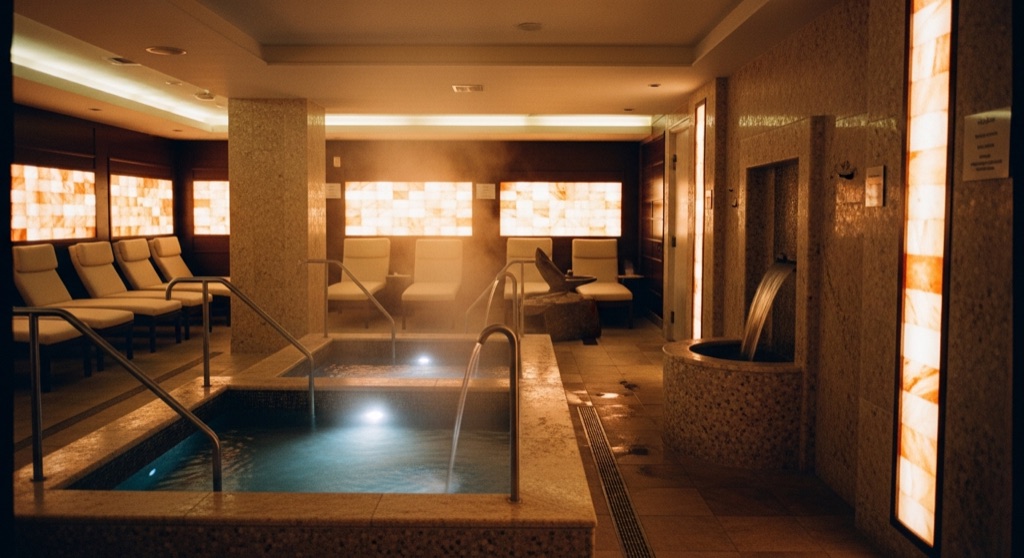
- King Spa Virginia — Thaw out after an hour on a cold rooftop deck with an late-afternoon steam and soak in Chantilly.
- Captain Gregory's — Trade stars for speakeasy cocktails hidden behind a donut shop wall down in Old Town Alexandria.
More weird in Washington, D.C.
Good to know
Do I need tickets or a reservation?
No. Public nights are completely free, drop-in events with no tickets, registrations, or gate fees required.
When is the observatory open to the public?
Public viewing sessions run on Mondays, Wednesdays, and Saturdays during the university academic year. The public program shuts down during the summer.
How do I know if a public night is cancelled?
Operations are strictly weather-dependent. Heavy cloud cover, rain, or extreme conditions force cancellation, so check the observatory's official web page or social channels before making the drive.
Where is the telescope located on campus?
It sits on the roof of Research Hall at 10401 York River Road on GMU's main Fairfax campus.
Plan a visit & invite your people →
Further reading: science.gmu.edu · Wikipedia · wtop.com · schar.gmu.edu · Reddit
last checked: 2026-07-19