Entry No. 53 — the Seattle file — filed under: after-dark
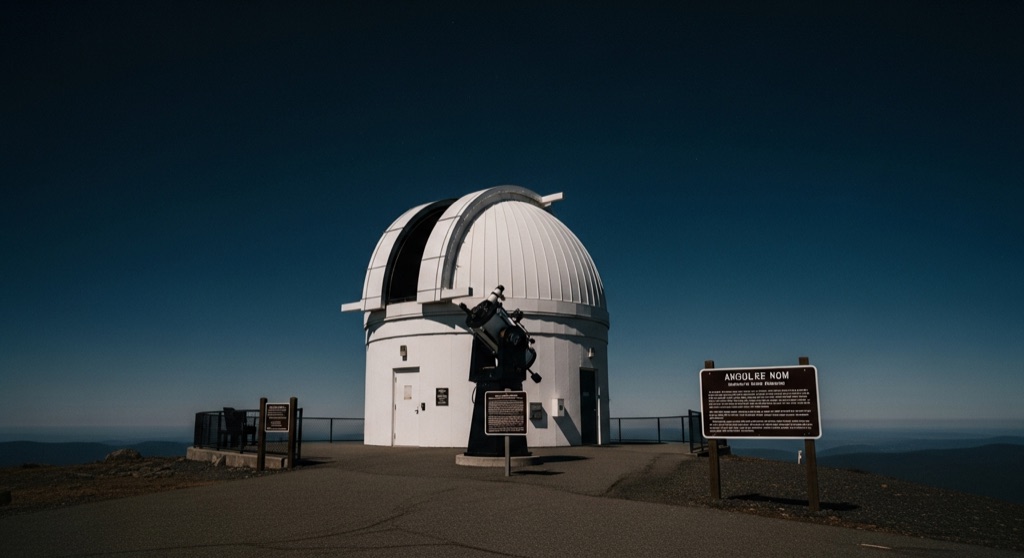
Goldendale Observatory State Park
On a 2,100-foot hilltop north of Goldendale sits one of the largest public telescopes in the country, a 24.5-inch Newtonian reflector, inside a state park built around genuinely dark eastern-Washington skies. Free evening programs run Thursday through Sunday from 9 p.m. to midnight (spring and summer), with live views of planets, nebulae, and star clusters when it's clear, but visits are by appointment only, so reserve ahead and bring a Discover Pass for parking. Strict dark-sky lighting protects your night vision, and the unheated dome can be cold and windy even in summer.
→ Three more after-dark & night-sky spots in Seattle — never the same twice
The story
If you live on the wet side of the Cascades, you get used to a night sky choked by cloud cover and Seattle's orange light-pollution haze. Escape three and a half hours southeast over the mountains to a 2,100-foot ridge north of Goldendale, and the sky opens up like a slab of dark slate. Washington didn't just drop an observatory here by accident—they built an entire state park heritage site around this specific patch of eastern Washington dark sky.
The crown jewel of the ridge is a 24.5-inch Newtonian reflector telescope resting inside a dedicated dome. It ranks among the largest public-access telescopes in the country, set up not for off-limits university research, but so anyone who books a slot can line up at the eyepiece and stare straight into planetary rings, gas nebulae, and star clusters thousands of light-years away.
Because ambient light ruins the night vision required to actually see anything faint through the glass, the park enforces strict dark-sky conditions on the hill. Outside lighting is tightly restricted, so once you step off the gravel, you're navigating by red-spectrum flashlights while the giant dome rotates overhead into position.
What it's like
Expect an unheated dome that gets surprisingly cold and windy after dark, even in mid-summer—bring a heavy jacket you'd normally reserve for high mountain hikes. You can't just stroll up to the telescope on a whim; visits are strictly by appointment, so lock down your free evening reservation online before making the trip, and make sure a Discover Pass is hanging from your rearview mirror. The line moves steadily as staff dial in deep-space targets, but keep in mind that cloud cover or bad weather will scrub the viewing, so check the ridge forecast before you hit the highway.
The move: Make the long drive out of the wet west side for a clear-night evening show, reserve a free slot, and queue at the big Cassegrain for views the Seattle sky never delivers.
📍 Before you go About 3.5 hours from Seattle; free but reservations required and a Discover Pass needed to park; evening shows Thu-Sun, 9 p.m.-midnight; dress for cold/wind; views weather-permitting.
- 📍 Goldendale, WA
- 💸 $
- ⚡ Low-key
- 🌗 Outdoors
Where: 1602 Observatory Drive, Goldendale, WA 98620
Hours: Added 2026-06-24 — confirm current hours before you go.
⚠ Seasonal or scheduled — always check before you go.
Pair it with
- Dick and Jane's Spot — Pair a daytime walk past a house encrusted with thousands of light-reflecting bottle caps in Ellensburg with an evening catching deep-space starlight in Goldendale.
- Ape Cave Lava Tube — Trade the pitch-black subterranean void of a 2,000-year-old basalt lava tube for the wide-open darkness of an eastern Washington mountaintop.
- Recycled Spirits of Iron (Ex Nihilo Sculpture Park) — Break up the long drive east past Mount Rainier by exploring a forest filled with towering scrap-metal sculptures before nightfall.
More weird in Seattle
Good to know
Is admission free, and do I need a reservation?
Yes, evening stargazing programs are free, but reservations are strictly required ahead of time. You will also need a Washington State Discover Pass to park.
When are the evening shows hosted?
During spring and summer, free evening programs run Thursday through Sunday from 9 p.m. to midnight, assuming the weather stays clear.
How far is the observatory from Seattle?
It is roughly a 3.5-hour drive southeast from Seattle, taking you across the Cascades into the drier, dark-sky terrain above the Columbia River.
Why is it so cold inside the dome during summer?
The dome remains unheated so the telescope mirror doesn't warp from temperature imbalances between indoor air and the outside night. Dress warmly in layers.
Plan a visit & invite your people →
Further reading: Official site · parks.wa.gov · Wikipedia · cloudynights.com · Reddit
last checked: 2026-06-24