Entry No. 38 — the Pueblo file — filed under: labor-history
Ludlow Massacre Site
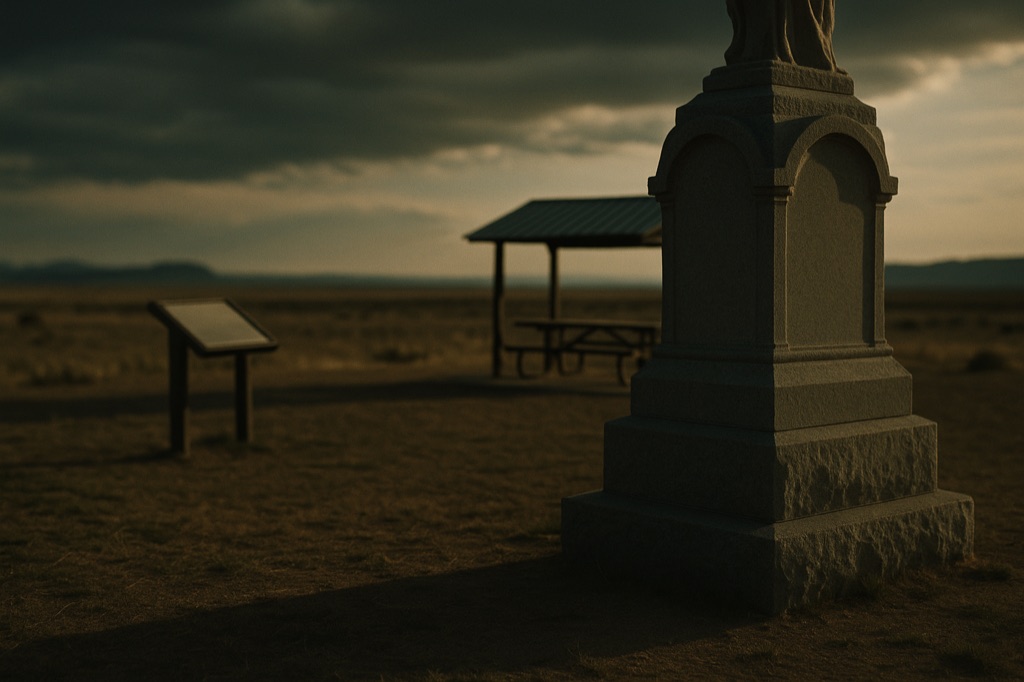
On April 20, 1914, Colorado National Guard soldiers machine-gunned and torched a tent city of striking coal miners; eleven children and two women suffocated in a hand-dug pit beneath a burning tent they thought would protect them. The United Mine Workers bought the land two years later and have held it ever since — making this the only National Historic Landmark in America owned by a labor union. A 1918 granite monument, covered picnic tables, and interpretive panels sit on the old tent-camp footprint, largely bypassed by the I-25 traffic humming a quarter-mile away.
→ Three more abandoned & forgotten places in Pueblo — never the same twice
The story
On April 20, 1914, this windswept flatland was a tent city of 1,200 striking coal miners and their families, evicted from company housing and fighting for basic labor rights. When tension boiled over, Colorado National Guard troops and company guards brought out machine guns and poured fire into the canvas colony before setting it ablaze. Eleven children and two women crawled into a hand-dug pit beneath a tent for protection, only to suffocate in the dark as the burning canvas collapsed above them.
Two years after the tragedy, the United Mine Workers bought the entire footprint of the tent camp to ensure the site couldn't be paved over or forgotten. That decision makes this the only National Historic Landmark in the United States owned directly by a labor union. In 1918, they raised a granite monument depicting a miner, a woman, and a child standing vigil over the ground.
Today, the site remains almost unsettlingly raw. Aside from interpretive panels, covered picnic tables, and the stone monument itself, the plain looks much as it did a century ago, with the hum of eighteen-wheelers on I-25 drifting across the prairie just a quarter-mile to the west.
What it's like
Take Exit 27 off I-25 and follow County Road 44 east until you reach the open footprint of the former colony. You'll find a quiet, unstaffed site where you can walk up to the 1918 granite monument and peer into the preserved cellar pit where the women and children hid. The wind off the plain is relentless, and there are zero amenities—no running water, no restrooms, and no gift shop—just open sky, labor history, and the distant drone of highway traffic. The site is gated from dusk to dawn, so plan a daylight visit.
The move: Drive the 18 miles north from Trinidad on County Road 44, read every interpretive panel at the monument, then sit at one of the covered picnic tables and look out at the empty plain where 1,200 people once camped.
📍 Before you go Take I-25 Exit 27 (about 12 miles north of Trinidad), then east on CR 44. Site may be gated dusk to dawn. No restrooms or water on site.
- 📍 Ludlow
- 💸 Free
- ⚡ Up for anything
- 🌗 Outdoors
Where: CR 44, Ludlow, CO 81023
Hours: Added 2026-06-21 — confirm current hours before you go.
Pair it with
- Cokedale Coke Ovens — Connect the violent labor conflict at Ludlow with the industrial infrastructure down Highway 12, where 350 abandoned beehive ovens processed the coal dug by southern Colorado miners.
- Simpson's Rest — Head twelve miles south into Trinidad to stand at George Simpson's grave on the bluff for a high-altitude view over the coal country landscape.
- FAROUT Murals of Walsenburg — Drive twenty miles north up the highway to see how modern artists have revitalized another former coal-corridor town with large-scale wall murals.
More weird in Pueblo


Good to know
How do you get to the Ludlow Massacre Site?
Take Exit 27 off I-25 (roughly 12 miles north of Trinidad), then drive east on County Road 44 until you reach the monument grounds.
Are there restrooms or water at the site?
No. The site has no running water, no restrooms, and no visitor center staff. Bring what you need and use facilities before exiting the highway.
Who owns and maintains the property?
The United Mine Workers of America purchased the land in 1916 and still own it today, making it a rare union-owned National Historic Landmark.
Can you see the death pit where the families suffocated?
Yes, the underground cellar pit beneath the former tent footprint is preserved as part of the memorial grounds adjacent to the granite monument.
Plan a visit & invite your people →
Further reading: Wikipedia · Roadside America · canyonsandplains.org · hmdb.org · historycolorado.org · cpr.org
last checked: 2026-06-21