Entry No. 39 — the Pueblo file — filed under: witchy
Crestone Spiritual Centers Cluster
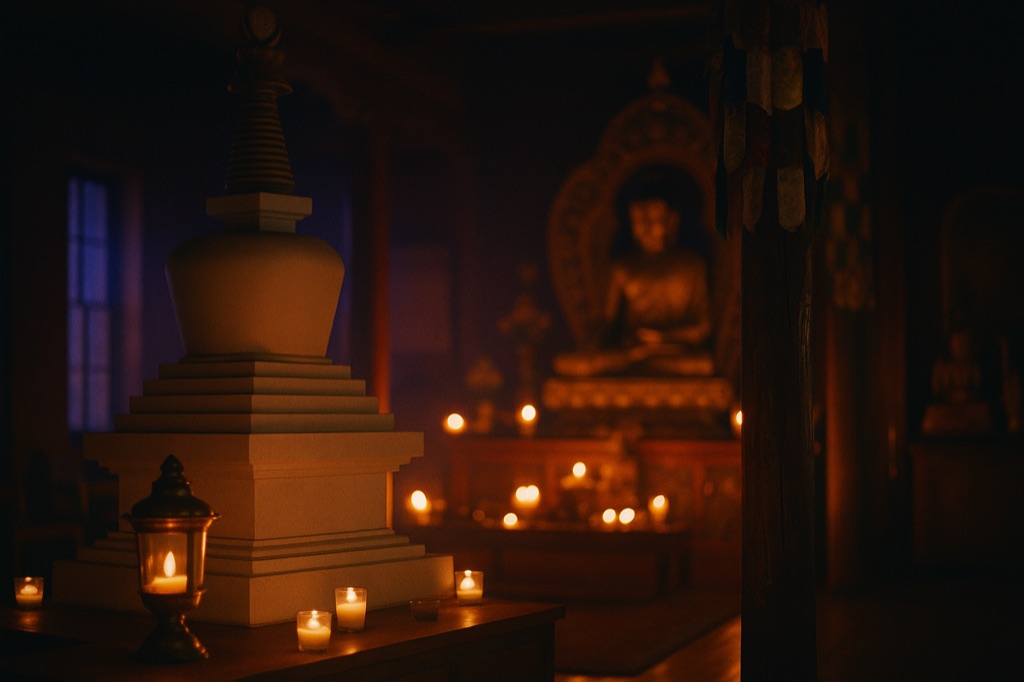
A single foundation donated land outside a mountain town of roughly 150 people, and somehow 24 active ashrams, Tibetan Buddhist stupas, Zen monasteries, and Hindu temples all took root on it — the highest concentration of spiritual centers per capita anywhere in North America. The Karma Kagyu stupa alone sits in an open field with a 360-degree view of the Sangre de Cristo range, no gate, no admission, just wind and prayer flags. Wander the unpaved roads long enough and you'll round a bend to find a full Tibetan temple, then a domed Carmelite monastery a quarter mile later. The town itself has one main road; the centers fan out into the foothills above it.
→ Three more occult & metaphysical spots in Pueblo — never the same twice
The story
In a high-desert mountain pocket where the Sangre de Cristo range abruptly crashes into the San Luis Valley, a town of roughly 150 permanent residents holds the highest concentration of spiritual centers per capita in North America. The setup started when a single land foundation donated acreage in the foothills above Crestone at 8,000 feet, triggering an influx of global traditions. Today, more than two dozen active ashrams, Zen monasteries, Tibetan Buddhist stupas, and Carmelite retreats occupy the same handful of unpaved foothill roads.
There are no security gates, ticket booths, or tour buses. You simply drive or walk up washboard roads until a quarter-mile past a Babylonian-style ziggurat you bump into a full Tibetan temple, or find the Karma Kagyu stupa sitting completely unguarded in an open field. Wind whips through thousands of prayer flags against a backdrop of jagged 14,000-foot peaks, with panoramic views stretching clear across the valley floor.
You didn't hear it from us, but long-time locals and esoteric seekers contend that these specific mountain peaks act as massive natural energy batteries, anchoring a subtle vortex above the valley. Whether you put stock in ley lines or plain solitude, the actual experience on the ground is undeniably weird: miles of dirt trails where morning chants, temple bells, and absolute quiet co-exist without a single velvet rope in sight.
What it's like
Arriving means turning off CO-17, driving through the quiet town center, and navigating the dirt foothill roads above. There is no central parking lot or visitor office; you park in town or pull off carefully along the unpaved shoulders near individual sites. Visiting requires standard shrine etiquette: speak in whispers, slip off your shoes at temple entrances, and keep cameras stowed inside sacred spaces. The dirt roads get washboarded and turn slick after mountain rains, so drive slowly, and carry plenty of water for the thin 8,000-foot air.
The move: Drive up from Pueblo on a clear morning, park in town, and spend the afternoon walking between stupa gardens and temple grounds — most are open to quiet visitors on foot.
📍 Before you go Crestone sits at 8,000 ft at the end of a long paved road off CO-17 — the last miles into the foothills above town are unpaved dirt and passable by most vehicles in dry weather but rough after rain. No central parking lot; pull over near the town center and walk or drive slowly between sites. Most grounds are open to respectful visitors without appointment, but individual centers vary — some request silence or no photography inside shrines.
- 📍 Crestone
- 💸 $$
- ⚡ Up for anything
- 🌗 Indoors
Hours: Added 2026-06-21 — confirm current hours before you go.
Pair it with
- Tashi Gomang Stupa — Follow the foothill dirt road to its end to see this 42-foot Tibetan stupa overlooking the vast San Luis Valley.
- Crestone Ziggurat — A short drive through the same foothill cluster leads to a strange copper-capped Babylonian ziggurat built in 1978.
- Haidakhandi Universal Ashram — Located right within the cluster, this active Hindu ashram offers a close-up look at daily morning fire rituals and quiet grounds.
- UFO Watchtower — Head 17 miles south down into the valley floor to shift from foothill monasticism to high-desert alien lore.
More weird in Pueblo
Good to know
Is there an admission fee to visit the spiritual centers?
No. Most grounds, stupas, and outdoor shrines are open to quiet visitors free of charge, though individual centers welcome donations to maintain their facilities.
How do I navigate between all the different sites?
The centers fan out into the foothills above town along unpaved roads. You can pull over near the town center and explore nearby grounds on foot, or drive slowly between outlying stupas and temples.
Do I need a four-wheel-drive vehicle to reach them?
In dry weather, standard passenger cars can manage the unpaved foothill roads if you take them slow. After heavy rain or snow melt, the dirt gets deeply rutted and muddy, making higher clearance helpful.
Are indoor shrines open to the public at all times?
Outdoor grounds and stupas are generally open during daylight hours, but indoor shrine rooms and monasteries keep specific meditation schedules and may request silence or no photography.
Plan a visit & invite your people →
Further reading: denvergazette.com · Official site · patheos.com · karmapastupa.org · bonanzaroad.com
last checked: 2026-06-21