Entry No. 34 — the Pueblo file — filed under: folk-art
A.R. Mitchell Museum of Western Art
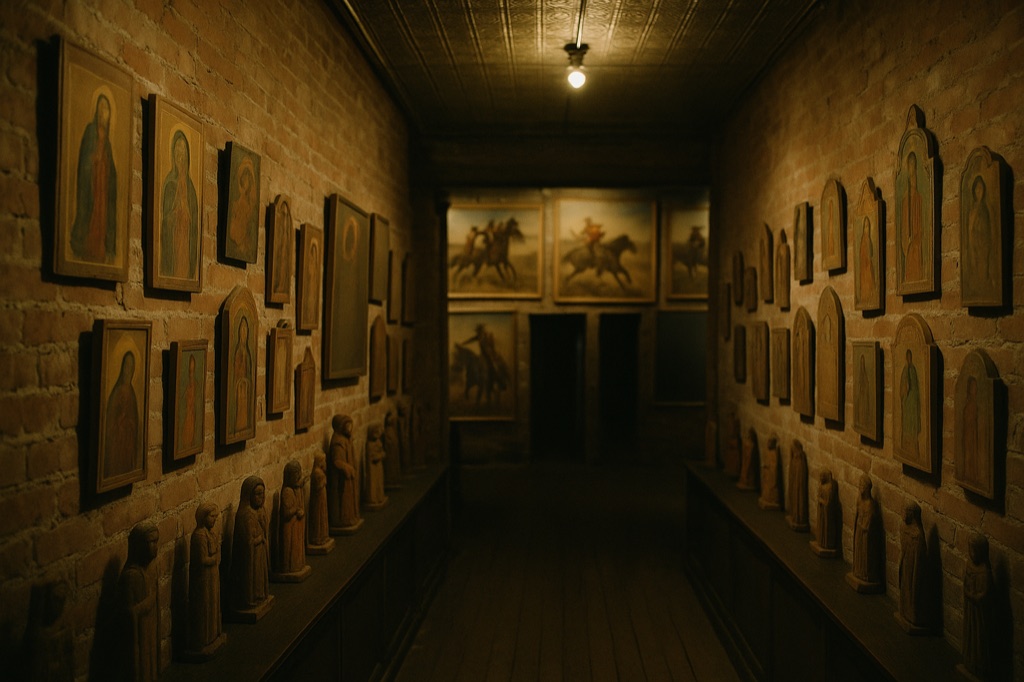
The building itself tips you off: a 1906 dry-goods store on Trinidad's Main Street, pressed-tin ceiling intact, that quietly became the unlikely home for over 350 original pulp Western magazine cover paintings. Mitchell's cowboys and desperados fill the upstairs, but the locals-only open secret is the basement — a separate gallery of Hispanic santos and retablos folk art, the devotional objects of the families who actually built this corner of Colorado, almost never mentioned in the tourism brochures. Spend fifteen minutes down there and the slick cowboy art upstairs starts to mean something different.
→ Three more unusual museums & collections in Pueblo — never the same twice
The story
Start with the architecture: 150 East Main Street was built in 1906 as a dry-goods store, complete with a soaring pressed-tin ceiling that still stretches over the ground floor. Arthur Roy Mitchell wasn't just a Western art collector; he was a prolific working illustrator whose vivid oil paintings adorned the covers of pulp Western magazines distributed across mid-century America. More than 350 of those original oil paintings fill the upstairs space—dramatic, saturated scenes of quick-draw desperados, lone cowboys, and romanticized frontier myth.
The upstairs art is slick and theatrical, but the real reason you drive to Trinidad is tucked out of sight. Down in the basement sits a separate, quietly preserved gallery of traditional Hispanic folk art, including hand-carved *santos* (devotional statues of saints) and painted *retablos*. These weren't painted in studios for newsstand sales back East; they were the personal devotional objects of the Hispanic families who actually settled and built Southern Colorado.
Spend fifteen minutes down in that low-lit basement and the cowboy art upstairs starts to look entirely different. The pulp covers represent a manufactured frontier fantasy tailored for distant magazine stands, while the carved folk art below records the real, lived spiritual culture of the region.
What it's like
Stepping inside feels like walking into a preserved 1906 department store, wide open with historic floorboards and original tin overhead. You won't face crowds or loud tour groups here. Take your time with Mitchell's dramatic pulp canvases, but make a point to head downstairs—or ask the staff to point you toward the Hispanic folk art gallery if the stairwell isn't obvious. Downtown Trinidad is flat and walkable, with straightforward street parking right out front on Main Street, but keep the seasonal hours in mind before planning the drive.
The move: Drive down from Pueblo on a Thursday or Saturday, work through the pulp-cover paintings upstairs, then ask specifically about the basement folk art gallery before you leave.
📍 Before you go Open seasonally May through October, Thursday through Saturday only. Street parking on Main Street. No steep terrain — flat historic downtown block.
- 📍 Trinidad
- 💸 $
- ⚡ Up for anything
- 🌗 Indoors
Where: 150 East Main Street, Trinidad, CO 81082
Hours: Added 2026-06-21 — confirm current hours before you go.
⚠ Seasonal or scheduled — always check before you go.
Pair it with
- Louden-Henritze Archaeology Museum — Trade the manufactured pulp cowboy legends of Main Street for real 80-million-year-old ocean fossils just half a mile away.
- Simpson's Rest — Follow up the museum's painted frontier stories by driving a mile up to the bluff where real-life scout George Simpson is buried.
- Tarabino Inn — Stay two blocks away in a 1907 Italianate home constructed during the exact same downtown boom as the museum's 1906 dry-goods building.
More weird in Pueblo
Good to know
When is the museum open?
It operates seasonally from May through October, open Thursday through Saturday only. Always verify current operating hours before making the trip.
Where is it located and how is parking?
The museum is at 150 East Main Street in historic downtown Trinidad. Street parking is available directly along Main Street.
What is the basement gallery?
The basement gallery houses a collection of Hispanic folk art, specifically devotional *santos* and *retablos* made by local families, offering a stark contrast to the commercial pulp Western paintings upstairs.
How do I make sure I don't miss the folk art collection?
Because it's located on the basement level and rarely highlighted in standard travel write-ups, simply ask the staff on duty to direct you to the Hispanic folk art display.
Plan a visit & invite your people →
Further reading: colorado.com · visittrinidadcolorado.com · cowboysindians.com · Yelp · Official site
last checked: 2026-06-21