Entry No. 48 — the Philadelphia file — filed under: ruins
Rolling Hill Park Ruins
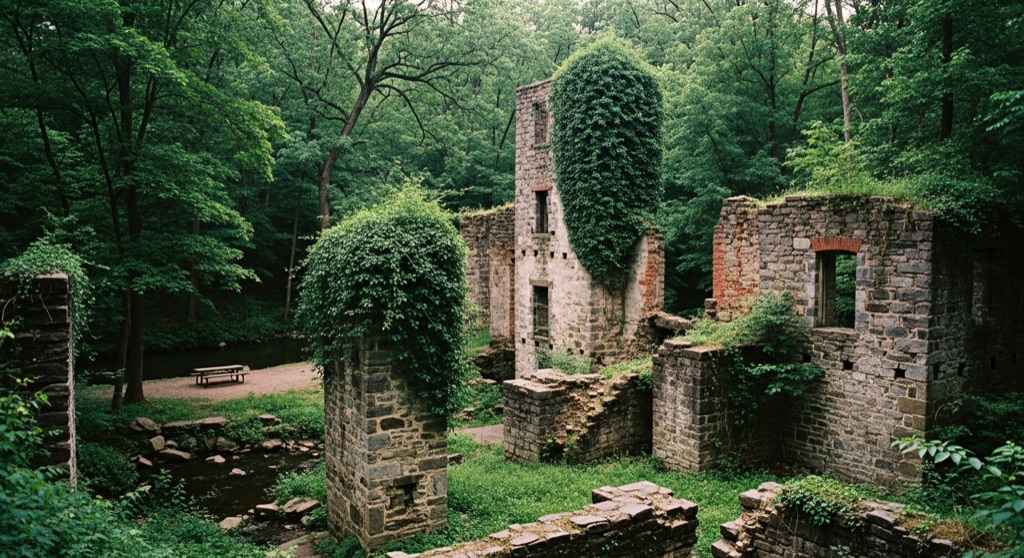
Tucked away in the woodlands of Rolling Hill Park are the crumbling stone skeletons of 19th-century mill worker tenements and industrial structures. These ruins, including the three-story Toddtown Tenement built around 1849, once housed the workforce for nearby cotton and paper mills along Mill Creek. Today, hikers can explore the roofless, vine-covered stone walls and historic foundations that stand as a testament to the area's early industrial history.
→ Three more abandoned & forgotten places in Philadelphia — never the same twice
The story
Before Gladwyne turned into a quiet enclave of secluded estates, Mill Creek was a noisy, soot-streaked industrial sluice lined with paper and cotton operations. Squeezed down into the creek ravine around 1849, multi-story masonry buildings like the Toddtown Tenement were built to stack mill workers right next to their machinery. When steam and electric power eventually rendered the creek-powered mills obsolete, the workforce moved on, but the thick stone walls proved too stubborn to vanish quickly.
What remains inside Rolling Hill Park are heavy stone skeletons stripped clean of their roofs, joists, and floorboards. Tree trunks now push through open doorways, and thick blankets of ivy hold together window arches that used to look out on 19th-century factory work. It isn't a manicured living-history museum with velvet ropes or explanatory audio guides—you didn't hear it from us, but you're essentially walking through the unpolished, roofless remains of an industrial company town slowly being digested by the forest.
What it's like
To reach the ruins, head into the 103-acre preserve and take the marked Blue Trail down toward the banks of Mill Creek. The ground near the water gets slick, muddy, and covered in exposed roots, so wear shoes with actual tread. You'll stumble across multi-story roofless stone walls like Toddtown standing open to the canopy. The park is free and popular with local dog walkers, so expect to share the trail on sunny afternoons, but the dense ravine canopy keeps the ruins feeling detached from the surrounding suburbs.
The move: Hike the scenic Blue Trail down to the banks of Mill Creek to photograph the towering, vine-draped stone ruins of the historic tenements before enjoying a peaceful picnic by the water.
📍 Before you go The ruins are located within Rolling Hill Park, a public 103-acre nature preserve with marked hiking trails that lead directly to the historic structures.
- 📍 Gladwyne
- 💸 Free
- ⚡ Low-key
- 🌗 Outdoors
Where: Rolling Hill Park, Mill Creek Rd, Gladwyne, PA 19035, USA
Hours: Added 2026-07-20 — confirm current access before you go.
Pair it with
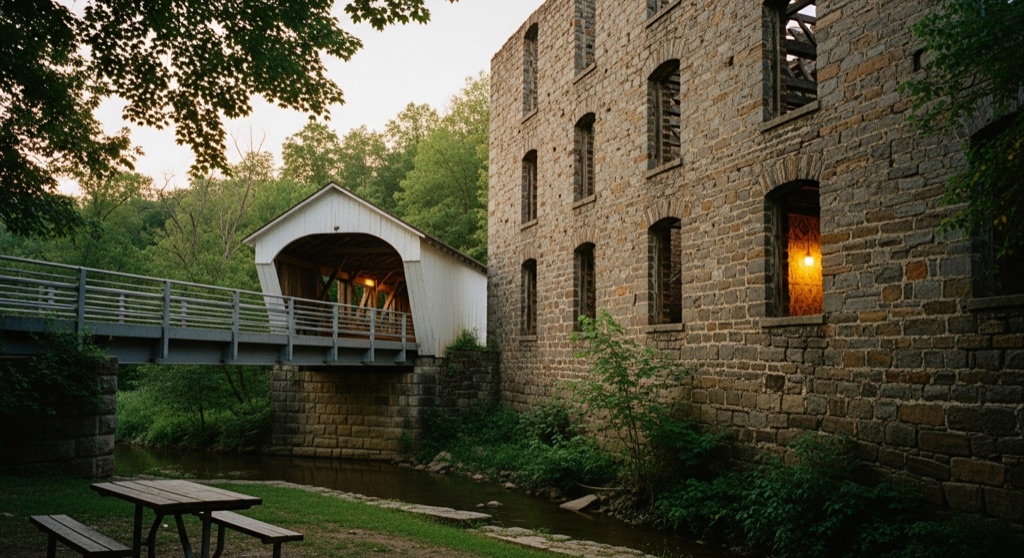
- Barker's Mill (aka Nippes Armory) — Located less than a quarter-mile away, this early 19th-century stone mill supplied firearms for the War of 1812 and completes the picture of Mill Creek's industrial past.
- Fingerspan Bridge — Trade 19th-century mill worker ruins for woodland weirdness by crossing a 59-foot steel bridge shaped like a giant human finger suspended over a Wissahickon ravine.
- Grumblethorpe — Trade abandoned stone mill housing for a preserved 1744 Germantown farmhouse where British General James Agnew bled out during the Revolutionary War.
More weird in Philadelphia
Good to know
Where inside the park are the ruins located?
They are situated down along the banks of Mill Creek. Following the marked Blue Trail from the park entrance leads you straight down into the creek valley where the stone foundations stand.
Do I need to pay an entrance fee or reserve a permit?
No, Rolling Hill Park is a free, public 103-acre township nature preserve open daily from sunrise to sunset.
How old are the stone structures?
The worker housing, including the three-story Toddtown Tenement, was constructed around 1849 to support the cotton and paper mills lining Mill Creek.
Are dogs allowed at the park?
Yes, dogs are permitted on the park trails, though you should keep them on a leash around the open masonry and uneven stone foundations.
Plan a visit & invite your people →
Further reading: lowermerionhistory.org · theconstitutional.com · Only In Your State
last checked: 2026-07-20