Entry No. 82 — the New York City file — filed under: ruins
Heyerdahl Ruins
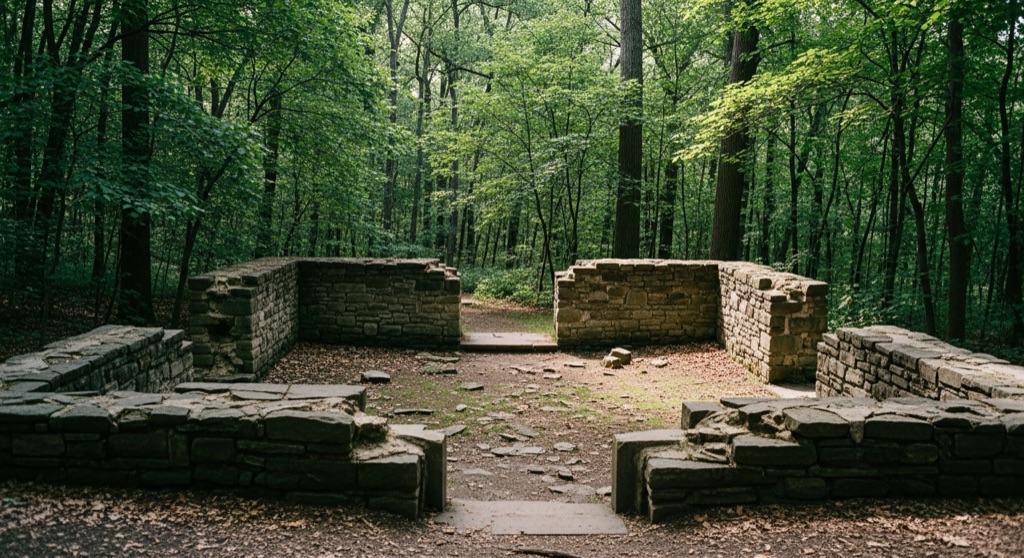
Tucked away in the Staten Island Greenbelt, these stone ruins are the remnants of a home built by Thorwald Heyerdahl in 1861. Heyerdahl attempted to establish a grape orchard on the surrounding acres, but the high magnesium content of the underlying serpentine rock doomed the agricultural venture. Today, only the crumbling stone foundations of the house remain, quietly reclaimed by the forest.
→ Three more abandoned & forgotten places in New York City — never the same twice
The story
In 1861, Thorwald Heyerdahl set out to construct a home and establish a flourishing grape orchard on the high, quiet ridges of central Staten Island. He raised a sturdy stone house and cleared acres for agricultural cultivation, expecting the island's soil and sun exposure to yield a profitable vineyard. What Heyerdahl didn't anticipate was the unseen chemical trap sitting directly beneath his property: the Staten Island serpentine rock belt.
Deep underneath the topsoil lay dense serpentine rock, laden with magnesium concentrations high enough to poison the root systems of grapevines. Season after season, the crops withered, doomed by the bedrock's chemistry before they could produce a single viable harvest. Defeated by the hostile soil, Heyerdahl abandoned the homestead, leaving the stone house behind to slowly collapse under the elements.
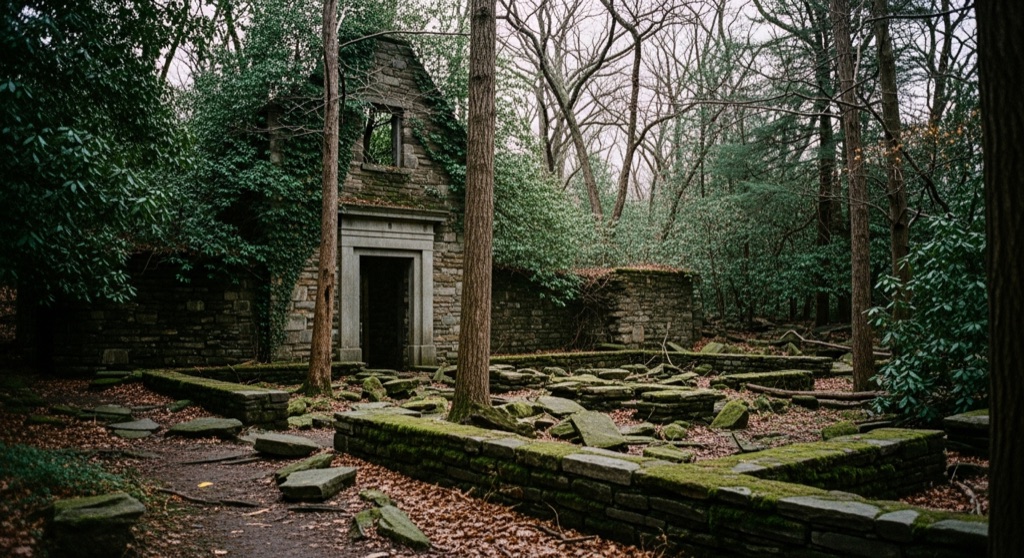
Over a century later, the surrounding forest of the Staten Island Greenbelt has swallowed what was left of his venture. There are no historical markers, paved walkways, or velvet ropes here—just crumbling, roofless fieldstone foundations quietly being reclaimed by moss and tree roots in LaTourette Park. It stands as a eerie monument to human agricultural ambition thwarted by hyper-local geology.
What it's like
Finding the ruins requires a brief hike into the woods off the Red Trail in LaTourette Park, accessible from the Greenbelt Visitor Center. The site itself consists of low, fragmented stone foundation walls hidden beneath the canopy, thick with moss and fallen leaves. Visit in late autumn, winter, or early spring when the trees are bare—dense summer foliage obscures the masonry, and tick season makes the narrow side-paths far less inviting.
The move: Hike the Red Trail in LaTourette Park to locate the historic stone foundations, and enjoy a quiet afternoon photographing the ruins and exploring the peaceful surrounding woods.
📍 Before you go The ruins are located on public parkland within the Staten Island Greenbelt and are legally accessible via a short detour off the marked Red Trail.
- 📍 Staten Island
- 💸 Free
- ⚡ Low-key
- 🌗 Outdoors
Where: HVM5+CV, Staten Island, NY 10306, USA
Hours: Added 2026-07-20 — confirm current access before you go.
Pair it with
- Staten Island Boat Graveyard (Witte Marine Scrapyard) — Follow up a ruin swallowed by woods with a graveyard of rusting tugboats and ferries rotting in the tidal salt marshes of Rossville.
- Conference House (Billopp Manor) — Compare Heyerdahl's doomed 1861 homestead with Staten Island's most famous surviving 17th-century stone manor on the island's southern tip.
- Morbid Anatomy — Trade forgotten outdoor fieldstone ruins for a curated cabinet of oddities, taxidermy, and obscure natural history across the bay in Brooklyn.
- Green-Wood Cemetery Catacombs (After Hours Tour) — Swap Staten Island's overgrown foundation walls for Victorian mausoleums and subterranean burial vaults in Greenwood Heights.
More weird in New York City
Good to know
How do you reach the Heyerdahl Ruins?
You can locate the foundations by hiking the marked Red Trail in LaTourette Park within the Staten Island Greenbelt and taking a short, unpaved detour near Heyerdahl Hill.
Is there an entry fee or permit required?
No. The ruins are located on public NYC Parks land and are freely accessible year-round.
Why did the farm fail in the 1800s?
The soil rests on serpentine rock containing toxic levels of magnesium, which prevented grapevines from taking root and doomed the orchard.
Is any part of the original house still standing?
Only the crumbling stone foundation walls remain; all wooden superstructures decayed over a century ago.
Plan a visit & invite your people →
Further reading: nycgovparks.org · forgotten-ny.com · geocaching.com
last checked: 2026-07-20