Entry No. 26 — the New Orleans file — filed under: art-immersive
Chauvin Sculpture Garden
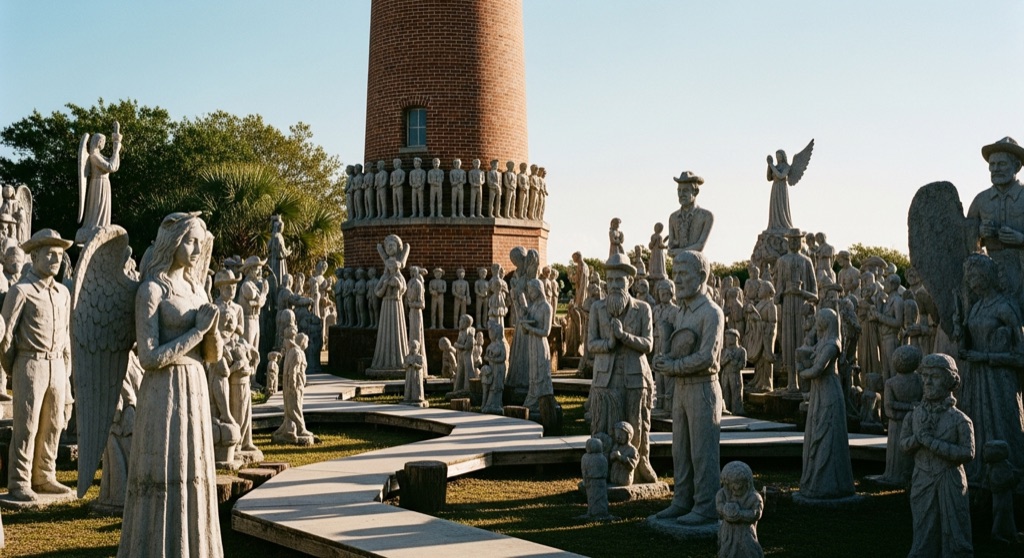
An outsider-art environment on the bayou where former bricklayer Kenny Hill, working alone from 1990 until he abandoned the site in 2000, built about 100 concrete figures: angels, cowboys, maidens, and self-portraits. They crowd a winding path between platforms, clustered around a 45-foot brick lighthouse whose sides are studded with sculpted men. Saturated with his private religious vision, the site was rescued and restored by the Kohler Foundation; Nicholls State University now keeps it free and open to the public.
→ Three at a time, never the same twice — explore weird New Orleans
The story
In 1990, a former bricklayer named Kenny Hill set up on a plot along Bayou Petit Caillou and started pouring concrete. For ten years, working completely alone without blueprints or public fanfare, he populated the bank with roughly 100 life-sized statues: towering angels, cowboys, maidens, and numerous self-portraits bearing his own face. At the center of the yard, he laid brick for a 45-foot lighthouse, plastering its outer walls with sculpted figures of men clinging to the sides as if escaping rising waters.
The property became an intense, unfiltered document of Hill's private spiritual vision—a crowded tapestry of faith, fear, and apocalyptic symbolism. Then, in 2000, Hill simply walked away from the site and never returned. Recognizing the rare scale of the environment, the Kohler Foundation stepped in to preserve the concrete works, eventually transferring the site to Nicholls State University to keep it preserved and open to anyone willing to make the drive. Even after suffering severe storm damage from Hurricane Ida, ongoing restoration efforts—including painted repairs and rebuilt wooden elements—have kept Hill's bayou sanctuary standing.
What it's like
The drive takes you roughly 75 miles southwest of New Orleans, following narrow bayou roads deep into Terrebonne Parish. You park right along Bayouside Drive in Chauvin, step off the pavement, and immediately find yourself on a winding concrete path squeezed between dense clusters of statues staring down at you. It is entirely outdoors, unstaffed, and completely free to walk through during daylight hours. Bring bug spray, respect the fragile concrete, and budget enough time to examine the details etched into the figures around the lighthouse base.
The move: Make the bayou drive south, walk the winding path together, and try to read Kenny Hill's hidden personal story in the angels and climbing figures.
📍 Before you go Roughly 75 miles southwest of New Orleans deep in bayou country; free, open daytime, outdoors.
- 📍 Chauvin (Bayou Petit Caillou)
- 💸 $$
- ⚡ Up for anything
- 🌗 Indoors
Where: 5337 Bayouside Dr, Chauvin, LA 70344
Hours: Added 2026-06-22 — confirm current hours before you go.
Pair it with
- Whitney Plantation — Pair two distinct, unvarnished outdoor sites in south Louisiana by combining your trip with a stop along the river route.
- Cure — After ninety minutes of backroads and concrete angels, head back into Uptown New Orleans for a quiet craft cocktail in a converted firehouse.
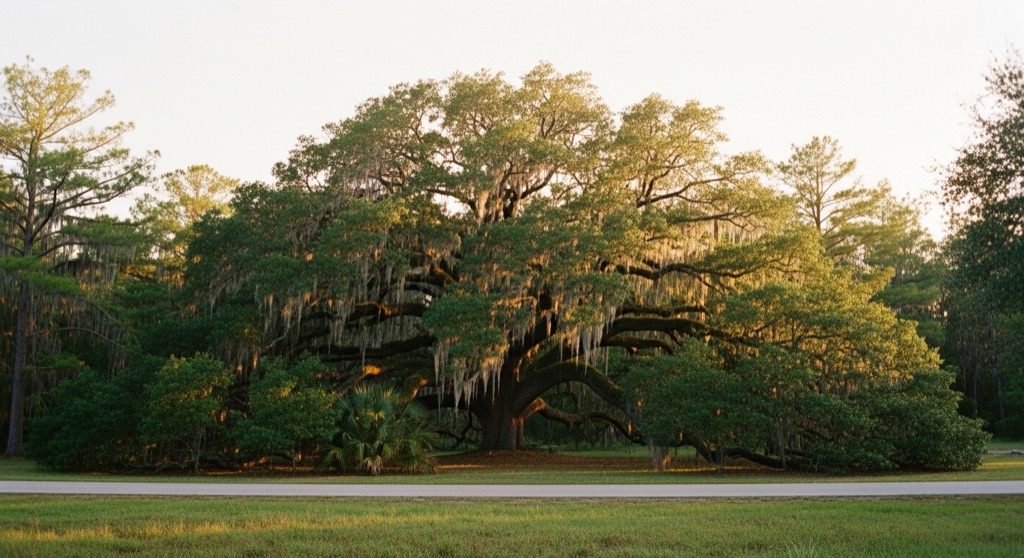
- The Tree of Life (Etienne de Boré Oak) — Continue the theme of monumental outdoor oddities by stopping under the low-slung limbs of this colossal Uptown live oak.
- Prytania Theatre Midnight Movies — Cap off a long day trip south to the bayou with a late-night screening at Louisiana's oldest single-screen cinema.
More weird in New Orleans
Good to know
How much does it cost to visit?
It is completely free. The site is open during the daytime and maintained for public access by Nicholls State University.
How long is the drive from New Orleans?
It is about 75 miles southwest of New Orleans, which typically takes around 90 minutes by car depending on traffic.
Who was Kenny Hill?
Kenny Hill was a bricklayer who transformed his bayou property into a massive outsider-art environment between 1990 and 2000 before abandoning the site.
Is the site accessible after major storms?
The garden suffered significant damage from Hurricane Ida in 2021, but dedicated repair and restoration projects began in 2023 to keep the grounds open to visitors.
Plan a visit & invite your people →
Further reading: nicholls.edu · nps.gov · countryroadsmagazine.com · Atlas Obscura · wwno.org · heartoflouisiana.com
last checked: 2026-06-22