Entry No. 25 — the Nashville file — filed under: African American history
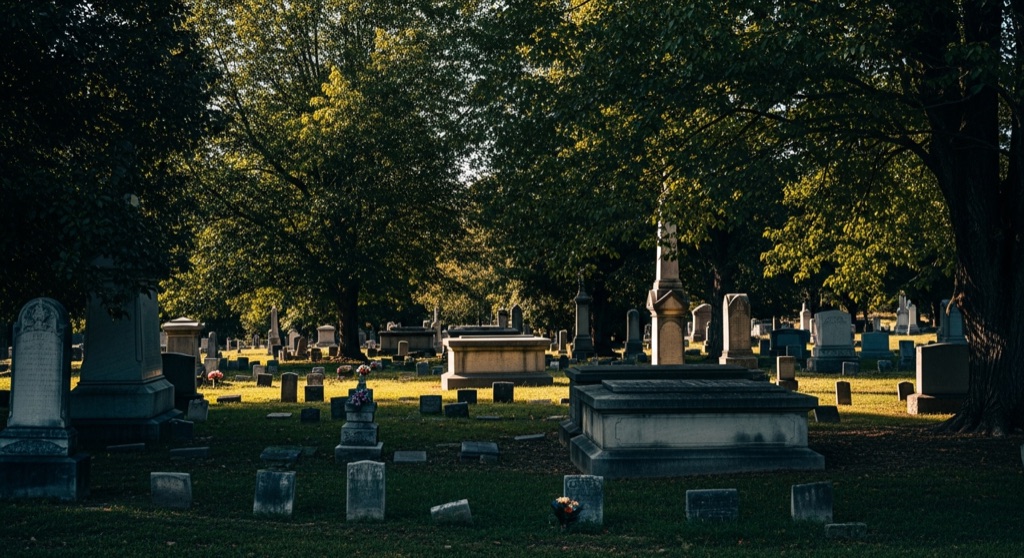
Greenwood Cemetery
Preston Taylor, born enslaved in Louisiana in 1849, bought 37 acres at Elm Hill Pike and Spence Lane in 1887 to found only Nashville's second cemetery for African Americans — then built Greenwood Park next door, the city's first public park Black Nashvillians were allowed to use, and was himself buried here after his death in 1931.
→ Three more haunted places & dark-history spots in Nashville — never the same twice
The story
In 1887, Preston Taylor—who had been born into slavery in Louisiana in 1849—bought 37 acres near the corner of Elm Hill Pike and Spence Lane. A year later, Greenwood Cemetery opened as only the second cemetery in Nashville open to African Americans. Taylor wasn't finished securing space for Black Nashvillians in a segregated city, though; he turned forty adjacent acres into Greenwood Park, complete with park grounds and amusement rides, creating the city's first public green space where Black residents were actually permitted.
If you know where to look among the headstones, you'll trace a shadow history of American culture that municipal planners tried to ignore. Sculptor William Edmondson lies here, the self-taught artist who became the first African American to get a solo exhibition at the Museum of Modern Art. Down another path rests DeFord Bailey, the harmonica genius who coined the phrase 'Grand Ole Opry' on air before being quietly sidelined by music executives. Taylor himself joined them when he died in 1931, leaving behind a 115-plus-year non-profit sanctuary that outlived the Jim Crow laws meant to isolate it.
What it's like
Pulling off Elm Hill Pike, you'll leave South Nashville's commercial crawl behind for a surprisingly wide, quiet expanse of lawn and stone. It is still an active non-profit cemetery, so you won't find signposts or tour docents pointing you toward high-profile headstones; finding Edmondson, Bailey, or the Napier family plots requires paying attention and doing a little legwork on your feet. Keep your voice down, watch for mourners, and walk the quiet periphery before taking a turn around what remains of the old Greenwood Park property nearby.
The move: Walk the grounds to find sculptor William Edmondson's and Grand Ole Opry harmonica pioneer DeFord Bailey's graves, then read up on Taylor's own life story before crossing into what remains of Greenwood Park.
- 📍 South Nashville
- 💸 $$
- ⚡ Up for anything
- 🌗 Indoors
Where: 1428 Elm Hill Pike, Nashville, TN 37210
Hours: Added 2026-07-20 — confirm current hours before you go.
Pair it with
- Lane Motor Museum — Less than a mile west on Elm Hill Pike, switch from quiet historic headstones to 500 wildly odd European microcars and propeller-driven vehicles housed in a former bakery.
- Nashville City Cemetery — Head two and a half miles west to examine Nashville's oldest public burial ground, which contains roughly 6,000 graves of early Black Nashvillians, many of whom were enslaved.
- Fort Negley — Pair Greenwood with the stone fortifications built by thousands of conscripted Black workers during the Civil War, connecting the city's wartime emancipation history to its post-war community founders.
More weird in Nashville

Good to know
Who was Preston Taylor?
Born enslaved in Louisiana in 1849, Taylor became a minister, businessman, and philanthropist in Nashville who bought the land for Greenwood Cemetery in 1887 and built Greenwood Park next door.
Who are the most famous people buried at Greenwood?
Notable graves include harmonica pioneer DeFord Bailey, MoMA-exhibited stone sculptor William Edmondson, civic leader J.C. Napier, and founder Preston Taylor.
What was Greenwood Park?
It was a 40-acre park and amusement space created by Preston Taylor beside the cemetery—predating municipal sites like Hadley Park as the first public green space Black Nashvillians were allowed to use.
Is there an admission fee?
No, visiting the cemetery grounds is free, though it operates as an active cemetery and non-profit corporation.
Plan a visit & invite your people →
Further reading: Wikipedia · tennesseeencyclopedia.net · Official site · tnstate.libguides.com · blacknashville.wordpress.com
last checked: 2026-07-20