Entry No. 12 — the Nashville file — filed under: forced labor history
Fort Negley
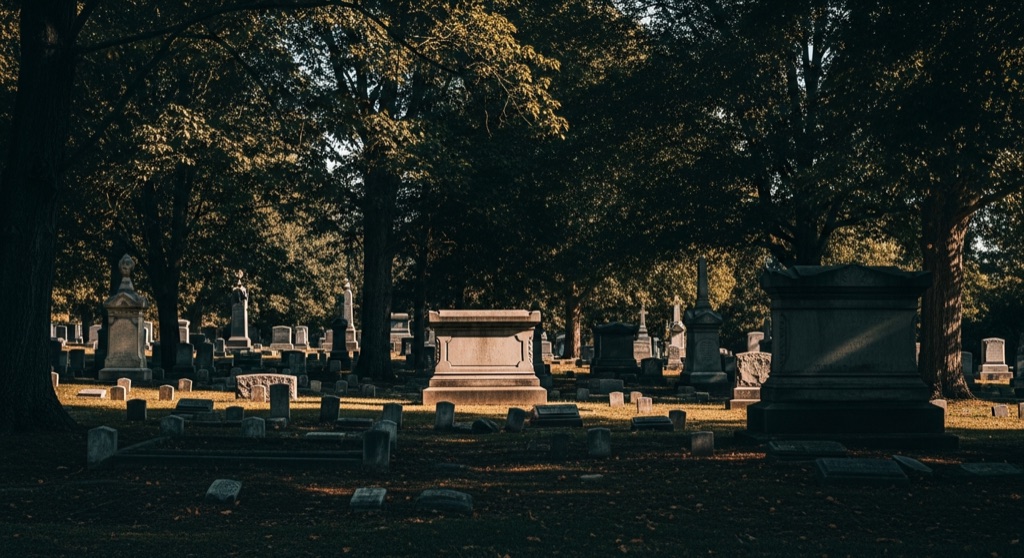
Union forces made roughly 2,768 Black Nashvillians — enslaved people, newly freed men who'd come to the city expecting liberty, and free men conscripted off the street — build this hilltop stone fort in 1862; in January 2018 archaeologists halted a planned redevelopment after finding what may be their unmarked graves beneath the site, which is now a UNESCO Slave Route Project Site of Memory.
→ Three more haunted places & dark-history spots in Nashville — never the same twice
The story
Two miles south of Lower Broadway's neon corridor, Old Saint Cloud Hill holds the largest inland stone fortification built during the Civil War—and one of Nashville's most heavily guarded truths. In 1862, occupying Union forces conscripted roughly 2,768 Black residents to haul limestone and construct the hilltop fort. The workforce was forced: enslaved people pressed into labor, self-emancipated refugees arriving in the city with expectations of freedom, and free Black men plucked directly off Nashville streets. They labored under brutal conditions, and hundreds perished before the ramparts were even finished.
For decades, the city treated the hilltop as disposable real estate, cycling through periods of neglect and proposals for commercial redevelopment. That trajectory stopped abruptly in January 2018 when archaeologists discovered evidence of what may be unmarked graves of those very conscripted laborers buried at the base of the site. The discovery halted development plans cold and led to Fort Negley being designated a UNESCO Slave Route Project Site of Memory—shifting its public identity from a standard military ruin to an outdoor site of forced labor and remembrance.
What it's like
Park at the base along Fort Negley Boulevard and head into the visitor center first to catch the 20-minute orientation film, which lays out the human cost of the hill before you set foot on it. From there, take the half-mile trail loop that climbs up toward the stone ramparts around dusk. Keep in mind that Master Plan Phase 1 construction and ongoing restoration mean sections of the fort proper periodically cycle in and out of direct access, but the perimeter trail and hilltop views remain open.
The move: Walk the half-mile trail up to the stone ramparts around dusk, then check the visitor center's hours before you go, since parts of the fort itself cycle in and out of access during ongoing restoration.
- 📍 Wedgewood-Houston / South Nashville
- 💸 $$
- ⚡ Up for anything
- 🌗 Indoors
Where: 1100 Fort Negley Blvd, Nashville, TN 37203
Hours: Added 2026-07-20 — confirm current hours before you go.
Pair it with
- Nashville City Cemetery — Located less than a half-mile away, Nashville's 1822 public cemetery contains around 6,000 African American burials, offering a direct spatial link to early Black history in South Nashville.
- Sudekum Planetarium at Adventure Science Center — Sitting right next door on Old Saint Cloud Hill, you can walk straight from 1860s stone ramparts to a 63-foot optical star projector dome.
- COOP Gallery — Head 0.3 miles down the hill into Wedgewood-Houston to check out Nashville's longest-running artist-run project space inside The Packing Plant.
More weird in Nashville


Good to know
Is Fort Negley free to visit?
Yes, access to Fort Negley Park, the half-mile trail, and the visitors center is completely free.
Can you walk inside the stone fort itself?
The half-mile park trail is open, but access to specific stone structures inside the fort can be gated off during ongoing restoration and Master Plan Phase 1 construction work.
Why is Fort Negley listed as a UNESCO Site of Memory?
It earned the designation because Union forces built the fort using forced labor from nearly 2,800 Black Nashvillians—including free, enslaved, and self-emancipated workers—many of whom died on site.
How far is Fort Negley from downtown Nashville?
It sits roughly two miles south of downtown and the Lower Broadway entertainment district in Wedgewood-Houston.
Plan a visit & invite your people →
Further reading: nashville.gov · Wikipedia · battleofnashvilletrust.org · Tripadvisor
last checked: 2026-07-20