Entry No. 13 — the Nashville file — filed under: Civil War
Carnton
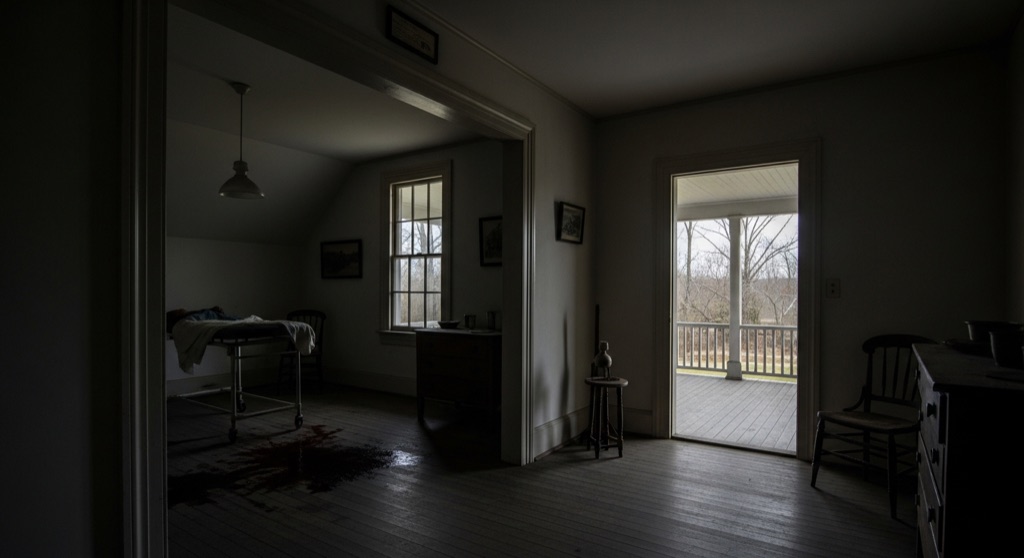
After the Battle of Franklin on November 30, 1864, this plantation house became the Confederate Army's primary field hospital; at least 150 wounded men died there the first night, and blood soaked so deep into the floorboards of the upstairs bedroom used as an operating room that the stains are still visible today, while the bodies of four dead Confederate generals were laid out on the back porch.
→ Three more haunted places & dark-history spots in Nashville — never the same twice
The story
Before November 30, 1864, Carnton was simply a prosperous 1,420-acre plantation built by former Nashville Mayor Randal McGavock in 1826. By nightfall on that late autumn evening, the catastrophic Battle of Franklin crashed directly onto the McGavock family's manicured grounds, leaving more than 9,500 casualties scattered across the area and transforming the mansion into the Confederate Army's primary field hospital.
Surgeons commandeered the upper floors, performing hasty amputations through the night. Blood pooled on the floorboards in such massive volume that it soaked deep into the grain, leaving thick, dark stains that no amount of scrubbing over the next century and a half could lift. Meanwhile, four dead Confederate generals pulled from the wreckage of the battle were laid out side by side along the house's back porch.
At least 150 wounded soldiers died inside the house during that first night alone. While plenty of Southern historic sites rely on vague rumors of ghosts, Carnton keeps the literal, physical evidence of its darkest night stamped permanently right into the wood beneath your feet.
What it's like
Arriving at 1345 Eastern Flank Circle feels deceptively calm, with green fields surrounding the historic house. The real reality check happens once you take the guided tour upstairs: your guide will point out the unmistakable, dark discoloration running along the original bedroom floorboards where surgeon tables stood. Book a 90-minute specialty or walking tour to get the full historical context, then step out onto the back porch to process the space before taking off. Aim for an early weekday slot if you want to avoid tour groups and catch the house at its quietest.
The move: Book the 90-minute Behind the Scenes or Battlefield walking tour, find the original stained floorboards for yourselves, then sit on the back porch where the generals' bodies were placed and talk through the story before dinner in Franklin.
- 📍 Franklin, TN
- 💸 $$
- ⚡ Up for anything
- 🌗 Indoors
Where: 1345 Eastern Flank Circle, Franklin, TN 37064
Hours: Added 2026-07-20 — confirm current hours before you go.
⚠ Seasonal or scheduled — always check before you go.
Pair it with
- Boyd Mill Ruins — Drive six miles west after your tour to decompress along the West Harpeth River at the stone ruins of an 1840 grist mill.
- Travellers Rest Historic House Museum — Continue exploring Middle Tennessee's unsettling home sites at John Overton's 1799 farmhouse, famously nicknamed 'Golgotha' after human skulls were unearthed on-site.
- Fort Negley — Contrast Carnton's field hospital narrative with a trip to Fort Negley, constructed by thousands of conscripted Black Nashvillians during the Union occupation.
More weird in Nashville


Good to know
Why are there visible blood stains inside Carnton?
During the Battle of Franklin on November 30, 1864, upstairs bedrooms were used as emergency operating rooms where surgeons performed endless amputations, soaking the wood deep enough to permanently stain the floor.
What happened on Carnton's back porch?
After the battle concluded, the bodies of four Confederate generals killed during the clash were placed side by side along the back porch.
Who built Carnton and when?
Carnton was built in 1826 by former Nashville Mayor Randal McGavock on what was originally a 1,420-acre farm.
How can you visit Carnton today?
Carnton is operated by The Battle of Franklin Trust, offering daily guided house tours and specialized battlefield walking tours.
Plan a visit & invite your people →
Further reading: boft.org · Wikipedia · visitfranklin.com
last checked: 2026-07-20