Entry No. 23 — the Monterey file — filed under: jail
Colton Hall
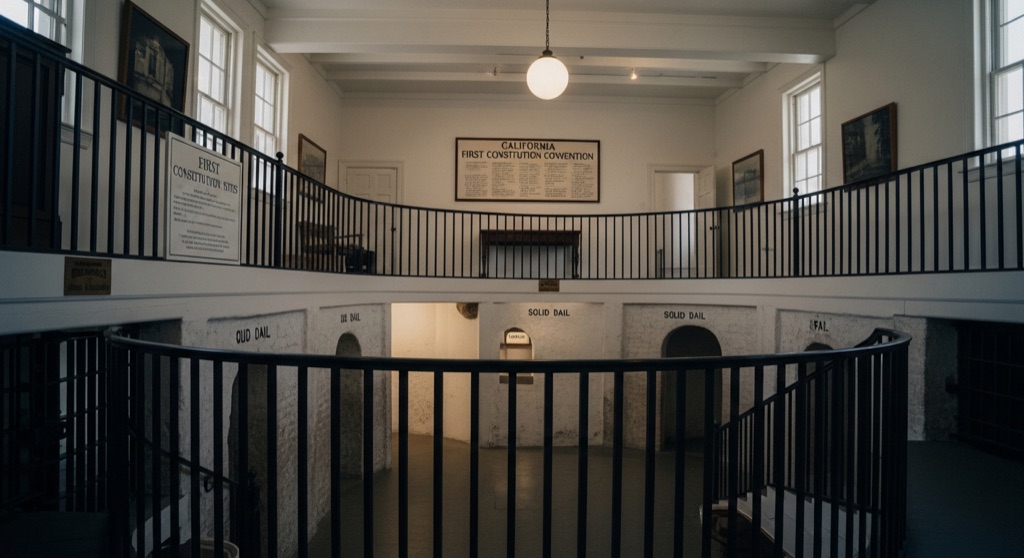
California's first constitution was drafted upstairs here by 48 delegates who met Sept 1-Oct 15, 1849. A solid-granite jail was attached to the building's east side and served as the city jail until 1956. Ghost lore attaches to the old jail — visitors report cold spots, footsteps, and bangs on the jail door with no one there. (The second-floor-balcony hanging story is local legend, not documented history.)
→ Three more unusual museums & collections in Monterey — never the same twice
The story
In the late 1840s, Walter Colton set out to raise a prominent stone civic building in Monterey, which was then operating as the capital of Alta California. Between September 1 and October 15, 1849, forty-eight delegates crammed into the upper hall to draft California's very first state constitution. Stand upstairs today and you will find the assembly room restored to that precise constitutional convention setup, looking as if the framers just stepped out into the Monterey air for lunch.
The building never went dormant after statehood, holding down duties as Monterey’s City Hall, a public school, and county offices over the decades—earning it a reputation as the longest continuously used public office building in Monterey County. The real shift in tone happens on the east side, where a solid-granite municipal jail was appended to hold the town's miscreants, remaining in active police service clear through 1956.
That heavy granite extension is where the atmosphere gets distinctly strange. Quiet visitors and staff report sudden drops in temperature inside the stone cells, heavy phantom footsteps, and unexplainable thumps against the iron cell doors when the corridor is empty. Ghost tour operators will gladly whisper that condemned men swung from the second-floor balcony, but local records prove that execution story is pure local mythology. The cold, enclosed reality of the 1950s-era cellblock is odd enough on its own without the tall tales.
What it's like
You climb the double exterior stairs directly into the second-floor assembly room, where tables laid with period writing supplies reproduce the 1849 constitutional floor. Once you have surveyed the assembly hall, head around back to poke around the stone interior and heavy doors of the Old Jail. It is quiet, self-guided, and entirely free to enter—just verify current museum hours before trekking over, as operating schedules can shift.
The move: Walk the free second-floor museum, restored to its exact 1849 constitutional-convention appearance, then circle around back to the stone jail cells before the museum shuts for the day.
- 📍 Old Town Monterey
- 💸 $$
- ⚡ Up for anything
- 🌗 Indoors
Where: 570 Pacific St, Monterey, CA 93940
Hours: Added 2026-07-20 — confirm current hours before you go.
⚠ Seasonal or scheduled — always check before you go.
Pair it with
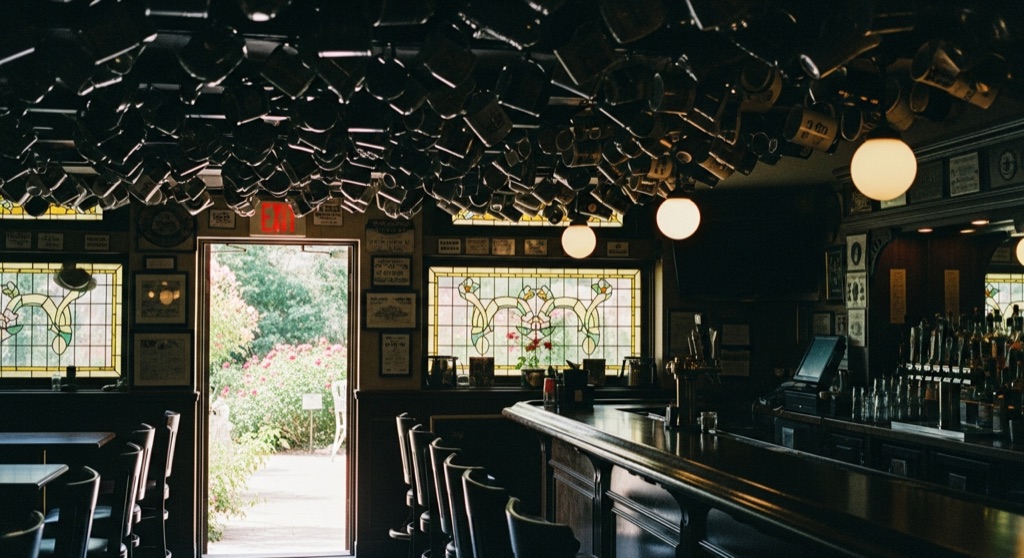
- Stokes Adobe Restaurant & Bar (formerly Restaurant 1833) — Walk a single block south to this 1830s adobe for a drink inside another piece of Monterey's early civic history.
- Robert Louis Stevenson House — Head two blocks east to tour the 1830s boarding house where Robert Louis Stevenson stayed during his 1879 visit.
- Hellam's Tobacco & Wine Shop — Pair your civic history stop with a wine pour at Monterey's oldest continuously operating business, located on nearby Alvarado Street.
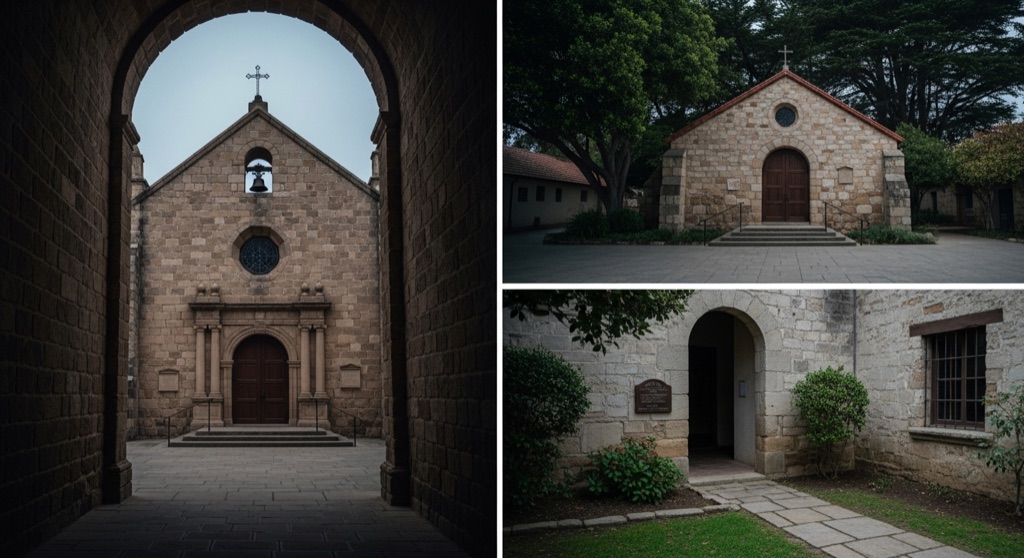
- Cathedral of San Carlos Borromeo (Royal Presidio Chapel) — Walk less than half a mile southeast to visit California's oldest stone building, founded in 1770.
More weird in Monterey
Good to know
Is Colton Hall free to visit?
Yes, admission to both the upstairs constitutional museum and the Old Jail cells is completely free.
Did executions actually take place from the second-floor balcony?
No. The story of balcony hangings is popular local folklore, but documented historical records show no executions took place there.
How long was the attached granite jail in use?
The solid-granite jail attached to the east side of the building served as Monterey's active city jail until 1956.
What historical event happened inside Colton Hall?
Forty-eight delegates met upstairs from September 1 to October 15, 1849, to draft California's first state constitution.
Plan a visit & invite your people →
Further reading: Wikipedia · hauntedplaces.org
last checked: 2026-07-20