Entry No. 51 — the Grand Junction file — filed under: industrial-ruins
Redstone Coke Oven Historic District
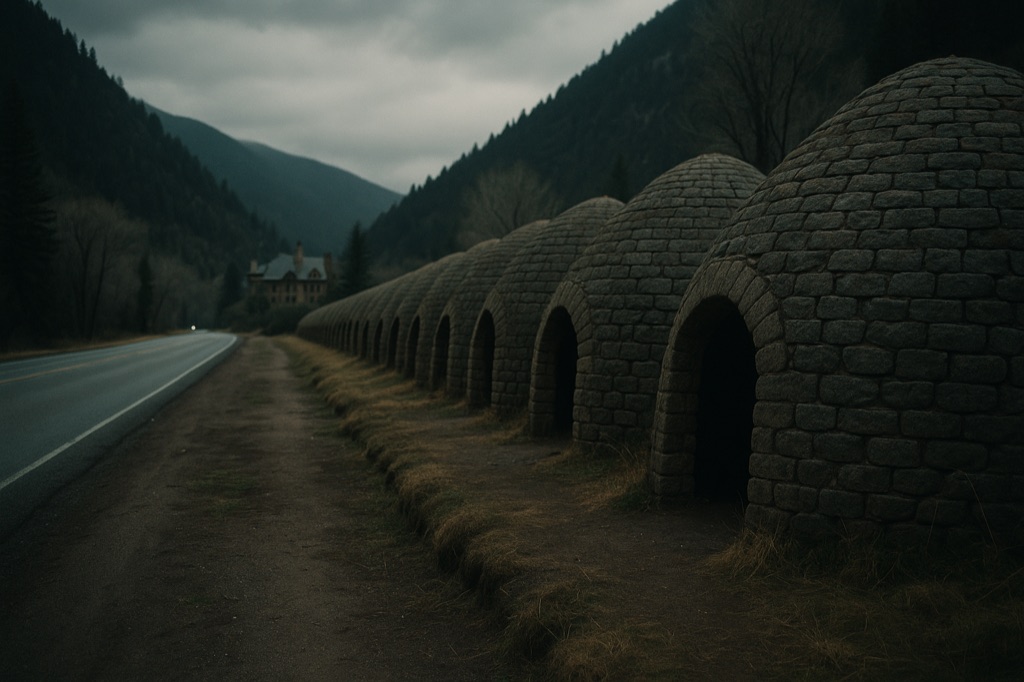
In the 1970s, countercultural youth actually moved into the hollow domes — 84 stone beehive coke ovens strung along Highway 133, built in 1899 to turn Crystal River coal into fuel for the Colorado Fuel and Iron steelworks in Pueblo. Most drivers today do exactly what they did back then: glance, maybe slow down, keep going. The Redstone Historical Society is opening a new museum inside one of the original worker homes on the property in 2026, which means the window to see this as a quiet roadside curiosity is closing.
→ Three more oddity shops & curiosities in Grand Junction — never the same twice
The story
In 1899, industrial titan John Osgood built these stone beehive ovens to cook raw coal from the nearby mountains into purified coke, feeding the blast furnaces of the Colorado Fuel and Iron steelworks down in Pueblo. Coal was packed inside, ignited, and choked of oxygen until the volatile gases burned off, leaving behind a glowing carbon fuel. What remains along Highway 133 is a sprawling masonry graveyard of those operations.
When the fires died and the coal company walked away, the ovens sat cold until the 1970s, when local counterculture youth realized that hollow, heat-trapping stone domes make surprisingly viable shelter. Squatters moved straight into the soot-stained bellies of the beehives, turning industrial ruin into off-grid living along the highway.
Most people driving the Crystal River canyon today barely tap their brakes as they pass the line of dark stone arches. But that unmonitored, roadside-curiosity status is shifting: the Redstone Historical Society is converting one of the property's original worker homes into a dedicated museum in 2026. If you want to experience the site as a quiet, strange piece of uncurated roadside archaeology, don't wait too long.
What it's like
Pulling into the long gravel turnoff right beside Highway 133, you'll immediately smell highway exhaust mixed with damp stone. The row of domed beehives stretches right alongside the pavement—you can walk right up to the masonry arches and stare into the soot-blackened interiors where coal once scorched. Traffic hums by at 50 mph just feet away, but if you step up to the curved stone walls, it feels curiously isolated. Expect to spend 15 to 20 minutes pacing the line; bring sturdy shoes if you're stepping off the gravel onto uneven dirt.
The move: Pull over on Highway 133, walk the row of ovens up close, then drive into Redstone village for a look at the Redstone Castle before doubling back.
📍 Before you go The ovens sit directly alongside Highway 133 with a gravel pullout; no gate or fee to view them from outside. Road to Redstone is paved but narrow through the Crystal River canyon — trailers and wide vehicles should check clearance. New museum (2026) may require appointment or set hours once open.
- 📍 Redstone
- 💸 Free
- ⚡ Up for anything
- 🌗 Outdoors
Where: Highway 133, Redstone, CO 81623
Hours: Added 2026-06-21 — confirm current hours before you go.
⚠ Seasonal or scheduled — always check before you go.
Pair it with
- Redstone Castle (Cleveholm Manor) — John Osgood built the coke ovens to generate his wealth, then retreated less than a mile down the road to his 42-room Tudor revival estate.
- Avalanche Ranch Hot Springs — After pacing the cold stone industrial ruins, head four miles north to soak in tiered mineral pools overlooking the same mountain valley.
- Basalt Charcoal Kilns — Compare these coal coke ovens to seven 1884 stone charcoal kilns located 17 miles away in Basalt, built to fuel Aspen's silver smelters.
More weird in Grand Junction
Good to know
Is there an entry fee or a gate to view the ovens?
No. The ovens sit immediately beside Highway 133 with an open gravel pullout, making them free to view from the exterior at any time.
Can you go inside the stone domes?
No, you should view them from the outside. While 1970s squatters famously lived inside the hollow chambers, the structures are historic ruins and entering them is restricted to protect both you and the masonry.
Where are the coke ovens located?
They sit directly along Highway 133 in the Crystal River Valley, just outside the village of Redstone, roughly 16 miles south of Carbondale.
When is the new museum opening on site?
The Redstone Historical Society is restoring an original worker cottage on the property with plans to open it as a museum in 2026.
Plan a visit & invite your people →
Further reading: cpr.org · Wikipedia · historycolorado.org · carbondale.com
last checked: 2026-06-21