Entry No. 30 — the Grand Junction file — filed under: historic
Basalt Charcoal Kilns
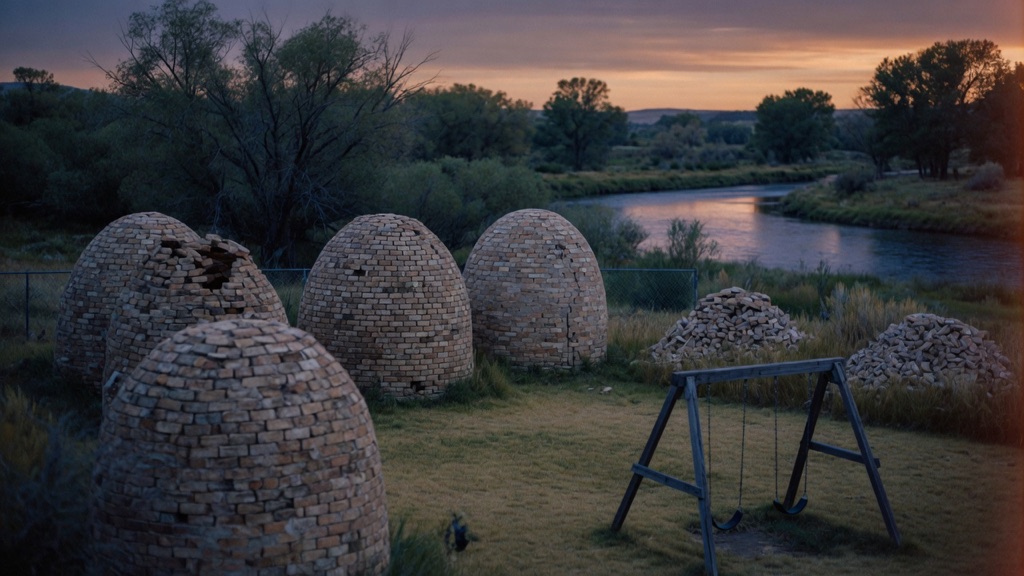
Seven beehive-shaped kilns built in 1884 by the Aspen Silver Company stand at the edge of Arbaney Park in east Basalt, a short walk from the Roaring Fork River. Constructed from unfired brick and native stone with a mortar exterior coat, each kiln burned piñon and pine—plentiful at this river confluence—to produce the charcoal that Aspen's silver smelters ran hotter than any firewood could. Operations ceased by 1887, supplanted by coal from the Crystal Valley and the arriving Colorado Midland Railroad. Two kilns have since collapsed; four remain upright after a $341,000 stabilization effort completed around 2010, their domed silhouettes improbably intact beside a neighborhood park nobody seems to visit.
→ Three at a time, never the same twice — explore weird Grand Junction
The story
In 1884, Aspen was hungry for silver, and its smelters required fires hotter than raw timber could produce. To supply that intense heat, the Aspen Silver Company built seven domed, beehive-shaped kilns at the confluence of the Roaring Fork and Fryingpan Rivers, where piñon pine and Douglas fir covered the hillsides. Workers stacked cords of dense pine inside the unfired brick and native stone structures, coated the exterior in mortar, lit the wood, and choked off the draft holes to let the timber smolder for days into dense carbon charcoal.
The enterprise was brutal, dirty, and brief. By 1887—just three years after construction—coal arrived via the Colorado Midland Railroad and from mines in the nearby Crystal Valley. Coal burned hotter, cost less to transport, and rendered the brick beehives obsolete almost instantly. The woodcutters moved on, the smoke cleared, and the kilns were left standing at the edge of town while Basalt grew around them.
Today, two of the original seven kilns have crumbled into rubble heaps, but four remain intact after a $341,000 community stabilization campaign completed around 2010. They sit at the edge of Arbaney Park, looking less like nineteenth-century industrial equipment and more like forgotten monastic cells or alien outposts dropped beside a suburban swing set.
What it's like
You walk up off Elk Run Drive right into Arbaney Park, where these massive stone domes sit completely unenclosed at ground level. There are no velvet ropes or turnstiles; you can step right up to the thick masonry walls and inspect the weathered brick mortar. The vibe is quietly incongruous—neighborhood kids play on the grass nearby while you peer into soot-stained arched doorways that fueled Colorado's silver boom. Visit in late afternoon when the sun hits the stone faces, and bring a warm drink if you're taking the historic walking loop down toward the river.
The move: Walk the Basalt historic loop from Arbaney Park down to Riverside Drive: the kilns anchor one end, the Fryingpan–Roaring Fork confluence anchors the other. Bring a thermos, read the interpretive signs aloud to each other, and marvel that a silver-rush industrial site now backs up to a swing set.
📍 Before you go Free and open year-round as part of a public town park; no fees or reservations required. The kilns sit at ground level with no barrier — walk right up. Some brick faces remain fragile from weathering; do not climb on the structures. Parking is available at Arbaney Park. The Basalt Regional Heritage Society walking tour map (free, available at the Chamber) ties the kilns into a longer historic loop. Snow can make the grass path slippery in winter but the site remains accessible. Phone: 970-927-4799 (seasonal parks line).
- 📍 Basalt
- 💸 Free
- ⚡ Up for anything
- 🌗 Outdoors
Where: Arbaney Park, off Elk Run Drive, Basalt, CO 81621 (search "Basalt Kilns" — end of Elk Run Drive near the park entrance)
Hours: Added 2026-06-11 — confirm current hours before you go.
Pair it with
- Powers Art Center — Pair nineteenth-century industrial brickwork in Basalt with a sleek red sandstone cube nine miles down the valley dedicated to Jasper Johns' works on paper.
- Woody Creek Tavern — After exploring silver-boom industrial ruins, head up-valley for strong margaritas and Gonzo memorabilia at Hunter S. Thompson's old local haunt.
- True Nature Healing Arts Peace Garden — Follow up the rugged charcoal-smelting history with a quiet walk through a free sandstone labyrinth and zen garden in nearby Carbondale.
More weird in Grand Junction
Good to know
How much does it cost to visit the Basalt Charcoal Kilns?
It is completely free. The kilns are situated inside a public town park and open year-round with no reservations or admission fees.
Can you go inside or climb on the kilns?
You can walk right up to the kilns and look inside the arched openings, but climbing on the structures is strictly prohibited because the historic bricks remain fragile.
How do you get to the site?
Drive to the end of Elk Run Drive in Basalt, near the entrance to Arbaney Park. Free parking is available right at the park.
How many kilns are left standing?
Four of the original seven kilns remain upright and stabilized, while two have collapsed into stone remnants.
Plan a visit & invite your people →
Further reading: aspentrailfinder.com · Official site · vaildaily.com
last checked: 2026-06-11