Entry No. 93 — the Durango file — filed under: ruins
San Bernardo Mine
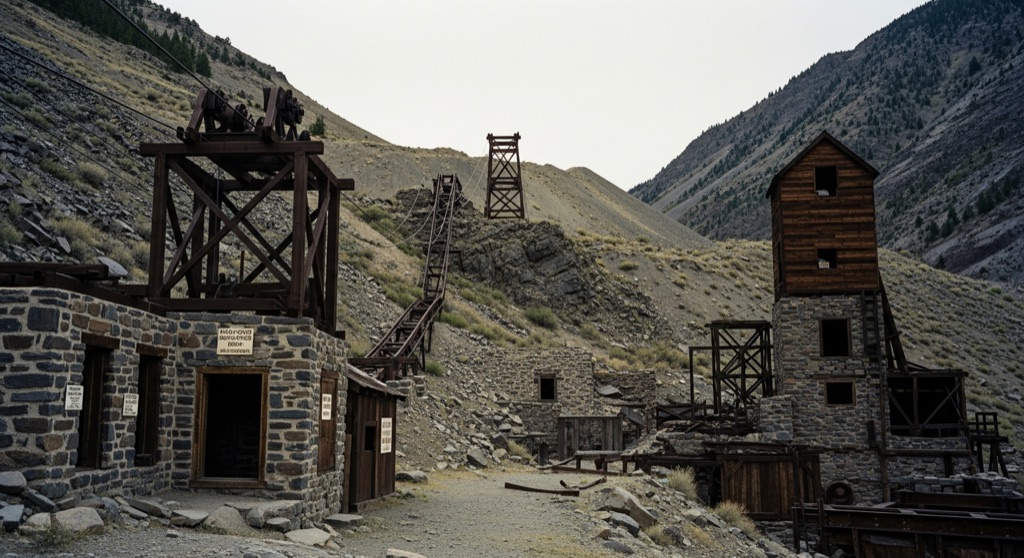
Established in the late 1880s, the San Bernardo Mine was a gold, silver, and lead producer located on the slopes of San Bernardo Mountain. It operated sporadically until the late 1960s, utilizing an aerial tramway to transport ore across the Lake Fork of the San Miguel River to the nearby Matterhorn Mill. Today, the mine workings are abandoned, leaving behind structural ruins, waste rock piles, and historic tramway remnants.
→ Three more abandoned & forgotten places in Durango — never the same twice
The story
Look closely at the steep slopes above Highway 145 south of Ophir, and you will spot what is left of the San Bernardo Mine. Sticking out from San Bernardo Mountain at 9,819 feet, this late-1880s gold, silver, and lead operation did not bother hauling ore down the mountain by wagon—it slung it through midair. In 1920, the miners extended a 1,700-foot aerial tramway system directly from the level 2 adit, suspending heavy iron buckets high over the Lake Fork of the San Miguel River.
Those aerial cables dumped raw rock straight into the 96-foot-tall timber framed Matterhorn Mill waiting on the valley floor. San Bernardo operated in fits and starts for nearly eight decades before the machinery finally went quiet in the late 1960s, back when managers like Otto Beselack were still attempting to wring a profit from the mountain. Today, the cables hang slack, leaving structural skeletons, collapsed timber workings, and grey piles of waste rock clinging to the high-alpine scree.
What it's like
You cannot go scrambling up into the mine portals—the original workings sit on unstable private land and present severe structural hazards, while the adjacent Forest Service-owned Matterhorn Mill is locked under safety closures. But you can inspect the operation without trespassing. Pull off Highway 145 near the historic Ophir Loop or trek along a section of the Galloping Goose Trail. From the public trail, you can trace the overhead line where the 1,700-foot tramway once crossed the river canyon and get clean sightlines of the massive 96-foot mill structure.
The move: Take a scenic drive along Highway 145 to the historic Ophir Loop area, then hike a section of the Galloping Goose Trail to safely view and photograph the towering 96-foot Matterhorn Mill and the rugged mountain slopes where the mine once operated.
📍 Before you go The mine workings and associated ruins are located on private property and are structurally hazardous, while the adjacent Forest Service-owned Matterhorn Mill is subject to safety closures, but the historic site can be viewed safely from nearby public trails and Highway 145.
- 📍 San Bernardo Mine
- 💸 Free
- ⚡ Low-key
- 🌗 Outdoors
Where: San Bernardo Mine, Colorado 81426, USA
Hours: Added 2026-07-20 — confirm current access before you go.
Pair it with
- Ames Hydroelectric Generating Station — Drive 1.3 miles down the canyon to see the pioneering 1891 stone powerhouse that first generated high-voltage AC electricity to run high-altitude mining gear in this valley.
- Ophir Town & Post Office — Head under two miles up the road to check out an isolated high-mountain mining settlement perched at 9,700 feet where winter avalanches physically bisect the town.
- Alta Ghost Town — Ascend further up into the high basin to explore another set of preserved industrial mining ruins and mill site structures.
More weird in Durango
Good to know
Can you go inside the San Bernardo Mine ruins or Matterhorn Mill?
No. The mine workings sit on private property and are structurally hazardous, while the adjacent Matterhorn Mill is owned by the Forest Service and subject to safety closures. Both must be viewed from nearby public trails and roads.
Where is the best place to safely view the site?
Park near the historic Ophir Loop off Highway 145 and hike a section of the Galloping Goose Trail for clear views of the 96-foot mill and the mine ruins on the mountain slope.
How did the mine move ore down to the river?
In 1920, an aerial tramway system was built to transport ore 1,700 feet from the level 2 adit down across the Lake Fork of the San Miguel River directly into Matterhorn Mill.
When was the San Bernardo Mine active?
It was established in the late 1880s and operated sporadically as a producer of gold, silver, and lead until closing in the late 1960s.
Plan a visit & invite your people →
Further reading: Wikipedia · westernmininghistory.com · historycolorado.org · yellowmaps.com · spl.cde.state.co.us
last checked: 2026-07-20