Entry No. 90 — the Durango file — filed under: ghost town
Animas Forks Mine and Ghost Town
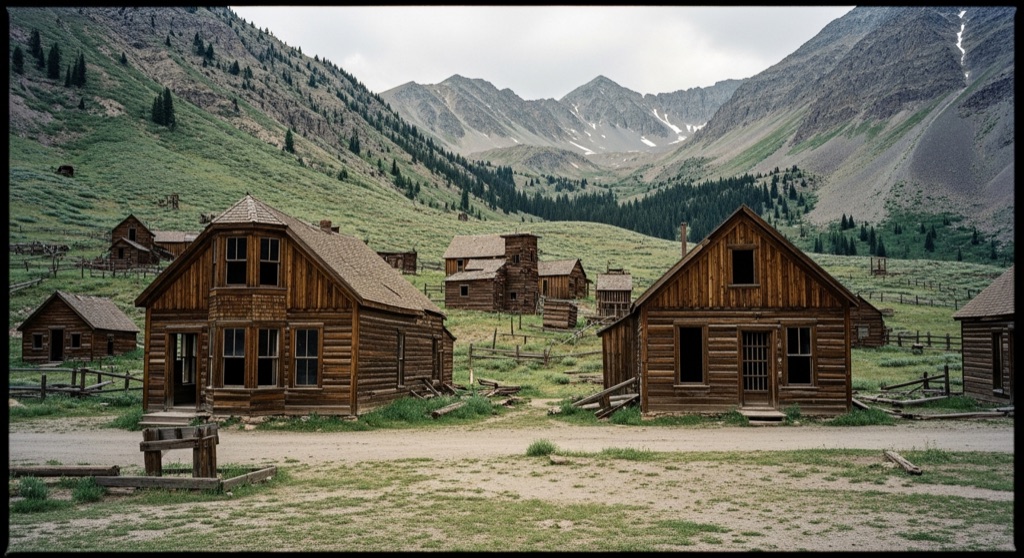
Perched at 11,200 feet in the San Juan Mountains, Animas Forks is a remarkably well-preserved ghost town that boomed during the late-1800s silver and gold rush. Established in 1874, the mining camp once housed hundreds of residents who famously dug tunnels through 25 feet of snow to navigate brutal winters. Today, visitors can explore several standing wooden structures managed by the BLM, including the iconic Duncan House with its distinct bay window, a small jail, and nearby mill ruins.
→ Three more abandoned & forgotten places in Durango — never the same twice
The story
At 11,200 feet up in the San Juan Mountains, 12 miles northeast of Silverton, Animas Forks sits well above the tree line where late-1800s silver fever outran common sense. First pitched in 1874 under the name Three Forks of the Animas, the camp grew into a full-fledged town by 1876. Hundreds of prospectors hauled timber up the gulch to build a life on sheer alpine rock, betting everything on the veins of silver and gold running through the granite.
Living at this altitude meant battling winters that stretched for eight months. When 25-foot snowdrifts routinely buried the townsite, residents didn't stay indoors—they dug a network of subterranean snow tunnels connecting their cabins, the jail, and the saloons. The most glaring sign of optimistic permanence here is the Duncan House, built with a distinct bay window that looked out over the treeless expanse, a jarring touch of Victorian domesticity miles away from civilization.
Eventually, the mills closed, the silver crashed, and the heavy snow wins every long game. Today, the Bureau of Land Management keeps what's left from tumbling down the gulch, leaving a cluster of hollowed-out timber shells and mill ruins silhouetted against the San Juans.
What it's like
Getting here requires navigating the rough gravel of the Alpine Loop, and you will need a high-clearance 4WD vehicle—do not attempt this drive in a standard highway car. Once you arrive at 11,200 feet, the air is cold and thin, so pace yourself as you wander past the standing wooden structures. You can walk right up to the Duncan House and peek through the empty window frames, but keep your boots firmly on marked ground: old mining shafts here are unstable, treacherous, and off-limits for good reason.
The move: Rent a high-clearance 4WD vehicle in Silverton and drive up the scenic Alpine Loop to explore the historic townsite, taking photos of the weathered wooden cabins and enjoying a picnic surrounded by dramatic alpine peaks.
📍 Before you go The townsite is a designated historic site managed by the Bureau of Land Management (BLM) and is legally open to the public during the summer and fall, though visitors must not enter any blocked-off or structurally unstable mining shafts.
- 📍 Animas Forks Mine
- 💸 Free
- ⚡ Low-key
- 🌗 Outdoors
Where: Animas Forks Mine, Colorado 81433, USA
Hours: Added 2026-07-20 — confirm current access before you go.
Pair it with
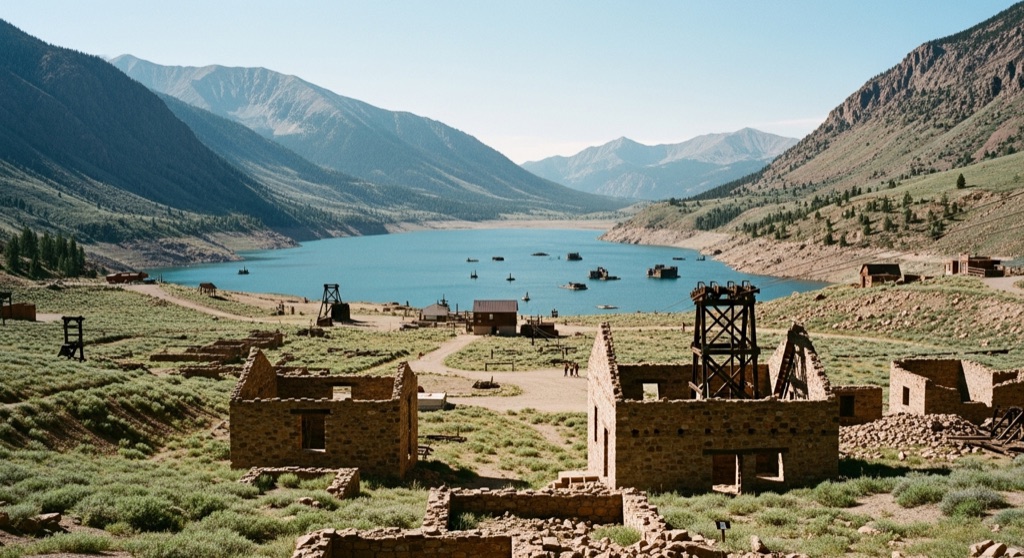
- Gold Prince Mill at Animas Forks - building foundation — Located just 0.1 miles away, this massive 1905 concrete foundation shows the sprawling industrial mill that once powered the local boom.
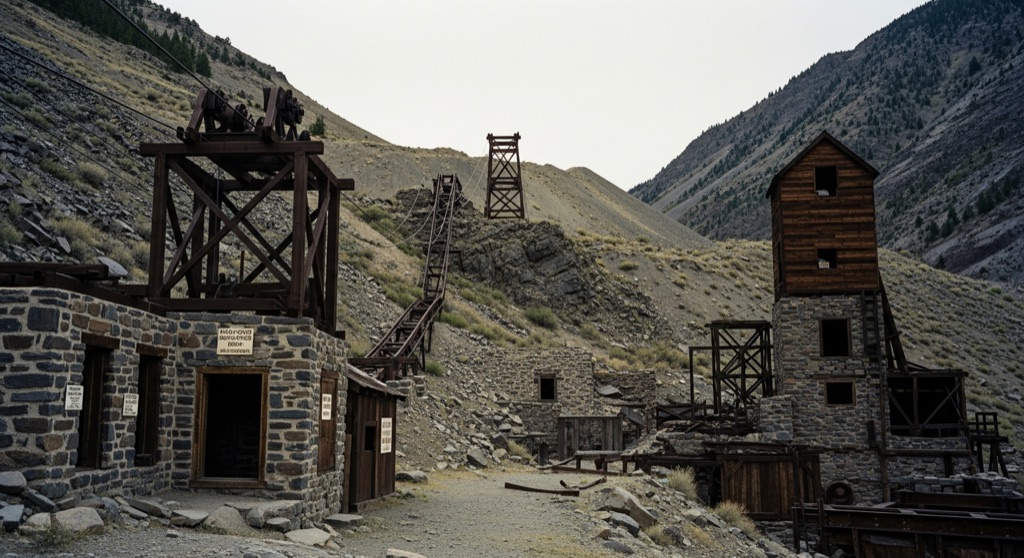
- Frisco Mill at Bagley Tunnel — A half-mile down the trail, this 1912 prefabricated timber mill offers a rare look at early modular construction adapted for high-altitude mines.
- Sunnyside Mill foundation & ruins — Situated 3.5 miles away near Eureka, these sprawling mill foundations reflect the massive industrial operations that dominated the valley.
- Ironton Townsite — Drive 5.9 miles over the pass to explore another preserved 1880s supply town that once held over a thousand residents.
More weird in Durango
Good to know
How do I get to Animas Forks?
Drive 12 miles northeast from Silverton along the dirt Alpine Loop road. A high-clearance 4WD vehicle is strongly recommended due to rough, unpaved conditions.
When is the ghost town open to visitors?
Access is seasonal, legally open to the public during summer and fall once snow clears the Alpine Loop passes. Heavy snow shuts down vehicle access during winter.
Can you go inside the buildings or mine shafts?
You can explore around the standing wooden buildings like the Duncan House, but stay out of any blocked-off, boarded, or unstable mining shafts.
Why is the Duncan House famous?
Built by a wealthy prospector, it features an elaborate bay window that stands in absurd contrast to the brutal, high-alpine wilderness around it.
Plan a visit & invite your people →
Further reading: Wikipedia · historycolorado.org · durango.com · uncovercolorado.com
last checked: 2026-07-20