Entry No. 208 — the Denver file — filed under: after-dark
Chamberlin Observatory (Denver Astronomical Society Public Nights)
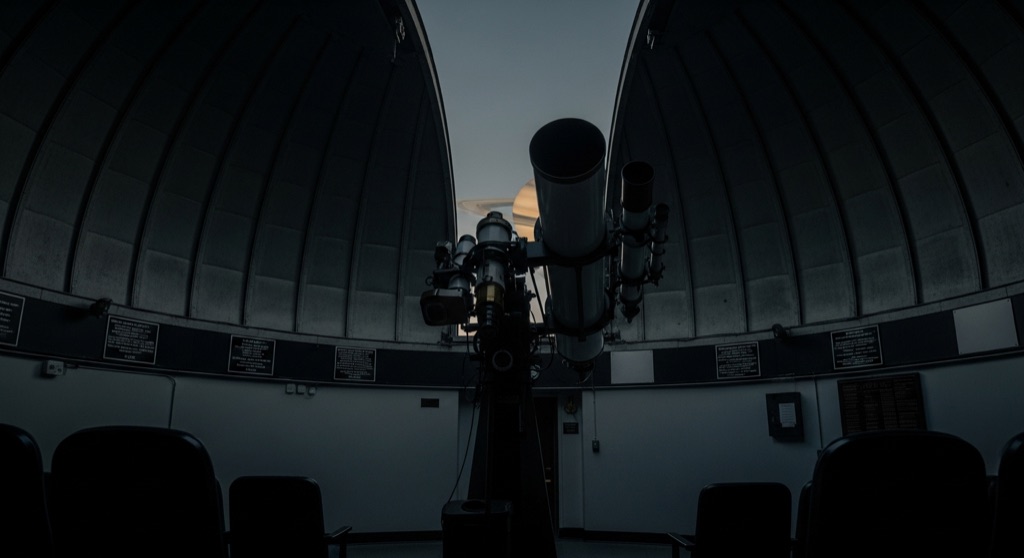
Denver's historic red-sandstone Chamberlin Observatory still opens its dome on Tuesday and Thursday evenings, run by the all-volunteer Denver Astronomical Society. After a short live talk by a DAS lecturer, you climb to the eyepiece of an 1894 20-inch Alvan Clark-Saegmuller refractor and look at the Moon, planets, clusters, and nebulae. The fee is famously tiny and seats are limited, so you reserve ahead. Weather can cancel viewing, but a tour of the historic interior happens regardless.
→ Three more after-dark & night-sky spots in Denver — never the same twice
The story
In 1888, real estate developer Humphrey Chamberlin pledged $50,000 to build an observatory at what was then the quiet edge of Denver, only to go broke when the Panic of 1893 wiped out the local land market. The building got finished anyway in 1894—a massive Richardsonian Romanesque fortress constructed from rusticated Lyons red sandstone, harvested from the same quarry that built the Brown Palace Hotel. At its core sits a 26-foot-long brass-and-steel telescope anchored to a 4.5-ton cast-iron pillar, which rests on a 320-ton sandstone column sunk deep into the earth. In the late 19th century, before synchronized national clocks, astronomers here spent their nights tracking star transits across the meridian line just to tell the city—and the regional railroads—what time it actually was.
Metropolitan light pollution long ago ended the observatory's usefulness for deep-space academic research, but the 1894 machine never retired. Every Tuesday and Thursday evening, the all-volunteer Denver Astronomical Society unlocks the iron dome, hand-cranks the mechanism, and opens the heavy shutter to the public. You are climbing up to look through a 20-inch doublet lens hand-ground by Alvan Clark & Sons—an optic priced at $11,000 in 19th-century money and virtually irreplaceable today. You didn't hear it from us, but peering at Saturn's rings or lunar craters through 130-year-old brass and glass in a dark neighborhood park feels less like an educational presentation and more like operating a stolen Victorian machine.
What it's like
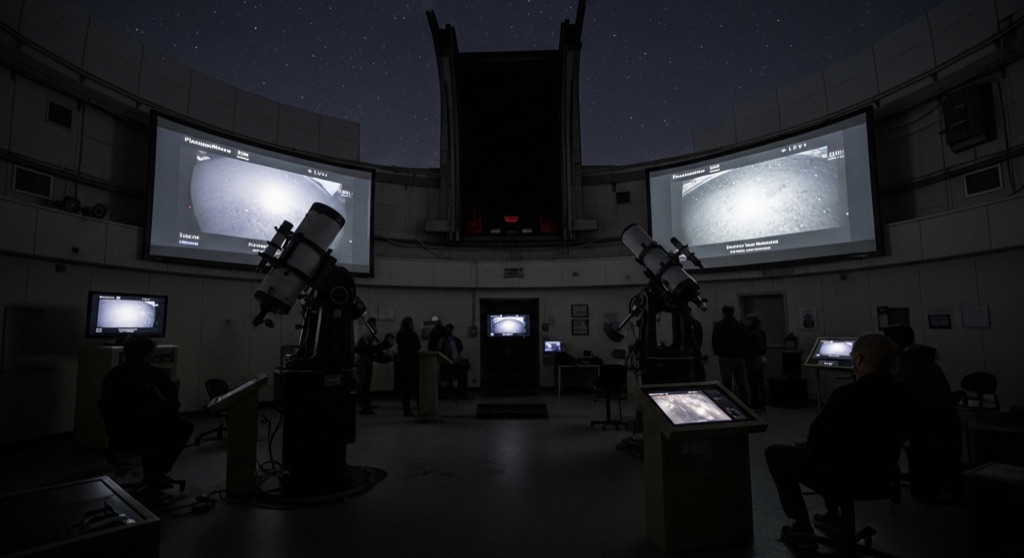
You will park along the quiet perimeter of Observatory Park and walk into a dimly lit rotunda smelling of old wood and brass polish. The evening starts with a brief sky lecture from a volunteer astronomer before the group climbs into the shadowy dome room. Because heat currents escaping a warm building would warp the image in the lens, the dome is left completely unheated—bundle up accordingly in the winter. If thick cloud cover rolls in, telescope viewing gets canceled, but volunteers still lead you through the inner clockwork, the meridian room, and the basement pier. Seats are strictly limited and tickets routinely sell out weeks in advance, so reserve your spot long before you go.
The move: Reserve a Tuesday slot, sit through the short sky talk, then take turns peering at Saturn's rings through the antique refractor in the dark dome.
📍 Before you go Reserve ahead via the Denver Astronomical Society; small per-person/per-family fee; telescope viewing is weather-dependent.
- 📍 Observatory Park, Denver
- 💸 $
- ⚡ Low-key
- 🌗 Outdoors
Where: 2930 E Warren Ave, Denver, CO 80210
Hours: Added 2026-06-23 — confirm current hours before you go.
⚠ Seasonal or scheduled — always check before you go.
Pair it with
- Buried 1893 Streetcar Tracks Under South Pearl Street — Pair two relics of Denver's 1890s boom era by stopping to see the streetcar tracks that laid South Pearl Street's foundations before heading to the 1894 observatory.
- Garibaldi Mexican Bistro — Follow up Victorian stargazing under the iron dome with late-night Mexico City street food served out of an operating Conoco gas station down South Broadway.
- The Oddemporium — Trade 19th-century skywatching equipment for a dense floor-to-ceiling collection of Victorian medical oddities and physical curiosities on Antique Row.
- Spectra Art Space — Swap the cold void of deep space for a colorful, hand-crafted, multi-sensory immersive art installation just ten minutes away on South Broadway.
More weird in Denver
Good to know
Do I need to reserve tickets in advance?
Yes, Public Night slots are strictly capped and require booking ahead online through the Denver Astronomical Society website.
What happens if it rains or is overcast?
Telescope viewing depends entirely on clear skies and won't happen if it's cloudy, but the indoor tour of the historic building and the sky lecture take place regardless of weather.
Is the dome heated during winter public nights?
No, the observatory dome is kept at ambient outdoor temperature so warm air currents don't blur the view through the lens, so bring heavy winter layers.
Who actually runs the stargazing nights?
The events are hosted and run by volunteers from the Denver Astronomical Society in partnership with the University of Denver.
Plan a visit & invite your people →
Further reading: science.du.edu · Wikipedia · nightsky.jpl.nasa.gov · Official site
last checked: 2026-06-23