Entry No. 211 — the Denver file — filed under: after-dark
Smokey Jack Observatory & Wet Mountain Valley Dark Skies
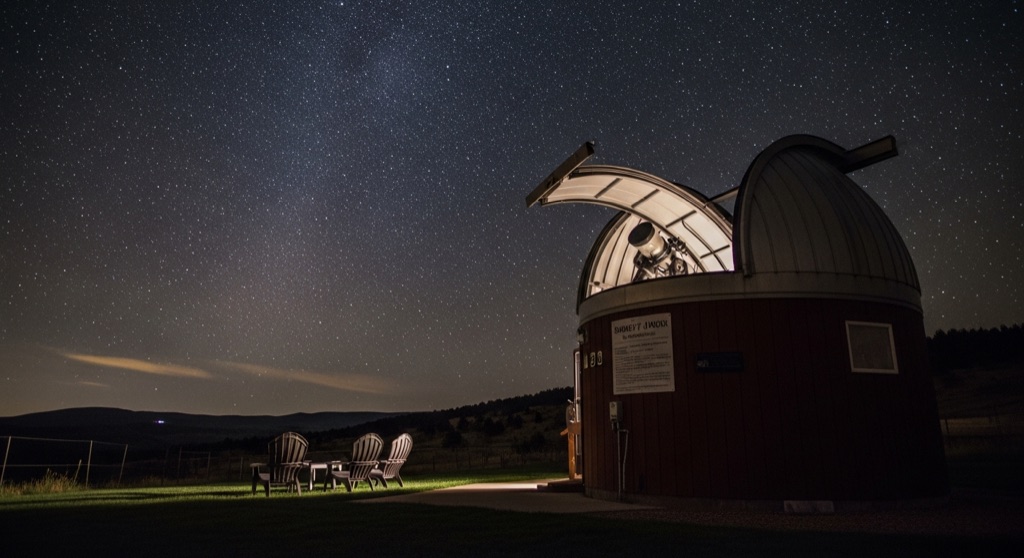
Westcliffe and neighboring Silver Cliff form Colorado's first International Dark Sky Community, and the little 12-by-12 Smokey Jack Observatory sits at the heart of it as the highest-elevation dark-sky observatory in the world. Its retractable roof opens over a 14-inch computer-guided telescope, and from May through October volunteer Star Guides run free star parties tracing the Milky Way, planets and clusters. The valley's near-total absence of light pollution makes the naked-eye sky almost overwhelming on its own. You can book a free public or private star party online.
→ Three more after-dark & night-sky spots in Denver — never the same twice
The story
In 2015, the neighboring towns of Westcliffe and Silver Cliff became Colorado’s first certified International Dark Sky Community—a designation won through years of persistent lobbying by local Suzanne “Smokey” Jack. Jack founded Dark Skies of the Wet Mountain Valley to protect the sky standard between the Wet Mountains and the Sangre de Cristo range. After her passing, local residents, hardware store owners, and concrete suppliers donated labor and supplies to construct a 12-by-12-foot wooden shed with a roll-off roof at the edge of Bluff Park to house a donated 14-inch Schmidt-Cassegrain computer-guided telescope in her honor.
Sitting at nearly 8,000 feet, Smokey Jack Observatory claims the title of the highest-elevation dark-sky observatory on Earth. Because the municipality aggressively enforces strict dark-sky lighting ordinances—requiring downward-shielded streetlights across town—you can stand right on Main Street and see the galactic core of the Milky Way with the naked eye. Once the shed roof slides back during summer observing sessions, volunteer Star Guides steer the 14-inch optic to pull in Saturn's rings, the Andromeda galaxy, and distant star clusters while the jagged silhouettes of the Sangre de Cristo peaks frame the valley.
What it's like
Arrive at Bluff Park before sunset to catch the twilight colors over the Sangre de Cristo mountains, then walk the town's true-to-scale Planet Walk before full darkness hits. The observatory itself is intentionally understated—just a 12-by-12 shed—so expect to queue up on the grass while volunteer Star Guides align the telescope. Nighttime at 8,000 feet is punishingly cold even in July; bring heavy thermal layers, a winter coat, and a blanket or camp chair. If you bring a light source, ensure it has a red filter, as white flashlight beams are strictly forbidden on the grounds.
The move: Book a free summer star party, let the Star Guide swing the 14-inch telescope onto Saturn, then lie back on the lawn under one of Colorado's darkest skies.
📍 Before you go Free star parties run May-October and require booking; weather-dependent. Roughly 150mi southwest of Denver, best as an overnight.
- 📍 Westcliffe
- 💸 $
- ⚡ Low-key
- 🌗 Outdoors
Where: S 4th St, Westcliffe, CO 81252
Hours: Added 2026-06-23 — confirm current hours before you go.
⚠ Seasonal or scheduled — always check before you go.
Pair it with
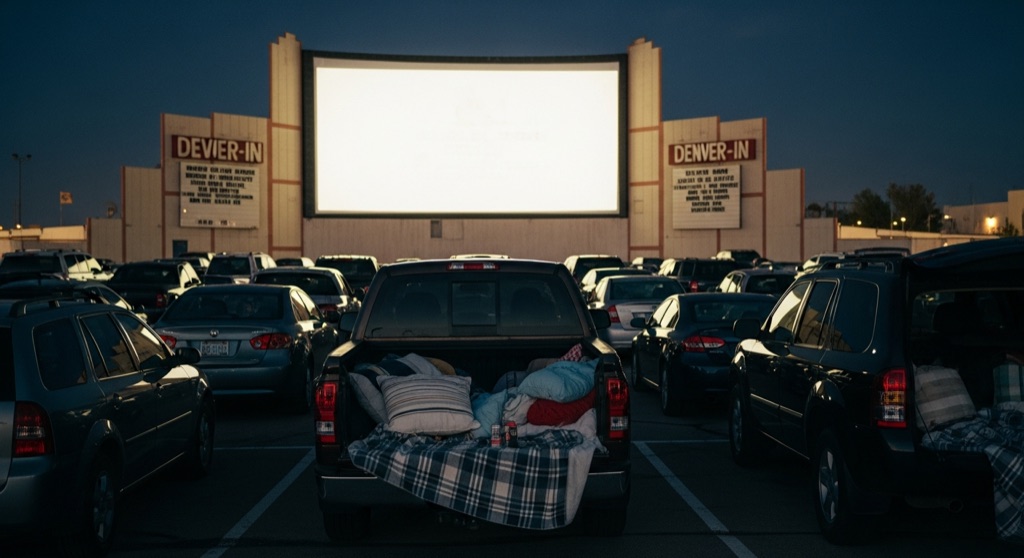
- Comanche Drive-In Theatre — Pair your high-altitude stargazing with movie-watching at another record-setting high-elevation spot 64 miles north in Buena Vista.
- South Park Coney Island — Grab a hot dog inside a 42-foot novelty bun diner along Highway 285 on your drive southwest from Denver to Westcliffe.
- The Legendary Silver Dollar Saloon — Extend your high-country night out up to Leadville to drink inside an 1879 saloon where Doc Holliday once dealt cards.
More weird in Denver
Good to know
Do I need a reservation to attend a star party?
Yes. While anyone can walk through Bluff Park at night, stepping inside the observatory or looking through the 14-inch telescope requires reserving a spot for a free public or private star party online.
When does the observatory operate?
Star parties run seasonally from May through October, weather permitting. Reservations open early in the year and private sessions fill up fast, so check the schedule well in advance.
How far is Westcliffe from Denver?
Westcliffe is roughly 150 miles southwest of Denver, which works out to about a 2.5 to 3-hour drive. It is best tackled as an overnight trip.
What equipment or gear should I bring?
Pack heavy cold-weather apparel, gloves, camp chairs, and a red-lens flashlight to protect your night-vision adaptation.
Plan a visit & invite your people →
Further reading: Official site · uncovercolorado.com · darksky.org · coloradosun.com · Atlas Obscura
last checked: 2026-06-23