Entry No. 77 — the Colorado Springs file — filed under: after-dark
Florissant Fossil Beds Night Sky Program
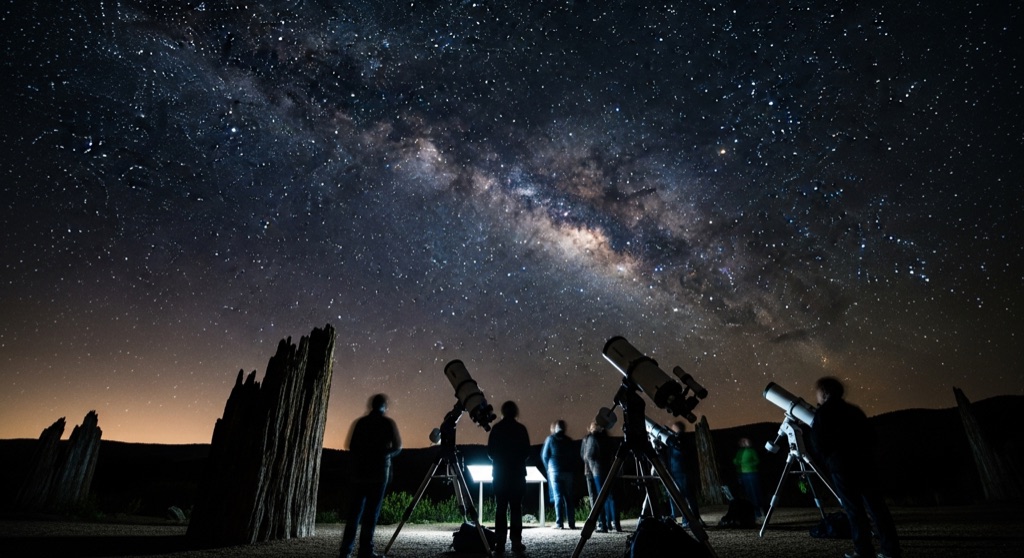
Certified an International Dark Sky Park in 2021, this high-meadow monument an hour west of the Springs goes pitch black enough to throw the Milky Way overhead in a bright band. The Park Service teams with the Colorado Springs Astronomical Society for a handful of summer-into-fall night programs (June 6, July 10, Aug 15, Oct 3 in 2026) with a fleet of telescopes and astronomers on hand. By day it preserves 34-million-year-old petrified redwood stumps, so the ancient and the cosmic share one valley.
→ Three more after-dark & night-sky spots in Colorado Springs — never the same twice
The story
An hour west of Colorado Springs, down Teller County Road 1, you hit a high-elevation mountain basin where two vastly different timelines intersect. Below your boots lie massive petrified redwood stumps, entombed 34 million years ago when volcanic mudflows choked the valley during the Eocene epoch. Above you, the sky drops into near-total darkness—dark enough that the park earned official International Dark Sky Park status in 2021.
On a handful of summer and early-fall nights, the Park Service kills the exterior lights and hands the Visitor Center overflow lot over to the Colorado Springs Astronomical Society. Local astronomers roll out serious optical glass, tracking deep-sky targets whose light left home long before humans walked the earth. You stand on asphalt built over prehistoric mud, looking up at ancient photons with people who can explain exactly what you're staring at.
What it's like
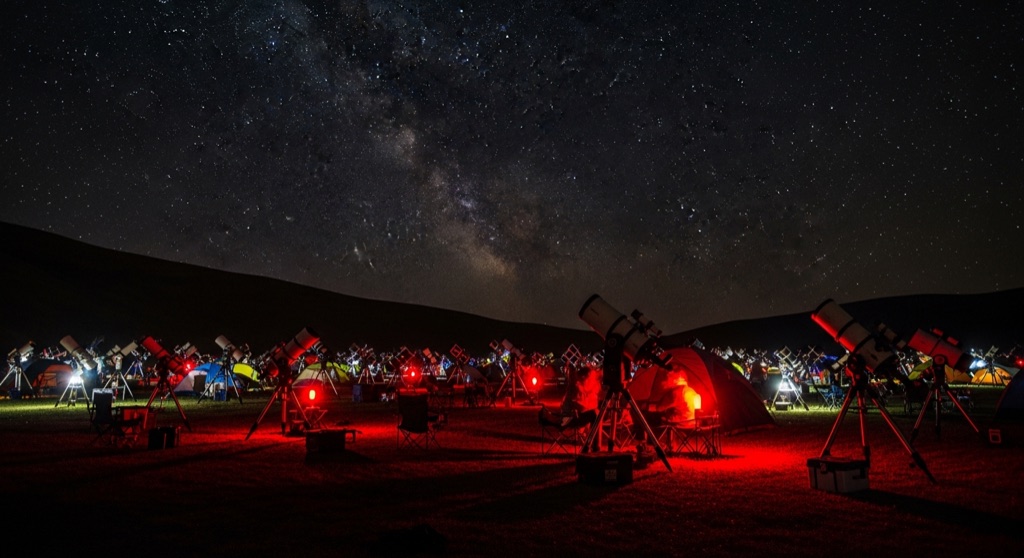
Drive out before dusk so you aren't navigating mountain roads in the dark, then pull straight into the Visitor Center overflow parking lot. Bring lawn chairs, heavy winter layers, and thick blankets—at 8,400 feet, mountain air turns icy the moment the sun dips. Volunteers from the astronomical society set up a fleet of telescopes across the pavement, queueing visitors up to see planetary rings, star clusters, and deep nebulae. Use a red-light setting or red cellophane on your flashlight so you don't ruin anyone's night vision, and check the park's status before driving out, as cloud cover or mountain storms will shut the scopes down.
The move: Drive out at dusk, let your eyes adjust on the dark prairie, and take turns at the volunteers' scopes hunting galaxies, planets, and satellites while an astronomer narrates the sky.
📍 Before you go $10 per person age 16+, scheduled dates only, weather-dependent. About 35-40 miles west; programs run roughly 9-11pm in summer, earlier in fall.
- 📍 Florissant
- 💸 $
- ⚡ Low-key
- 🌗 Outdoors
Where: Florissant Fossil Beds National Monument, 15807 Teller County Rd 1, Florissant, CO 80816
Hours: Added 2026-06-23 — confirm current hours before you go.
⚠ Seasonal or scheduled — always check before you go.
Pair it with
- Petrified Forest Loop at Florissant Fossil Beds National Monument — Walk the trail to see the 34-million-year-old petrified redwoods during the day before the stargazers take over the lot at dusk.
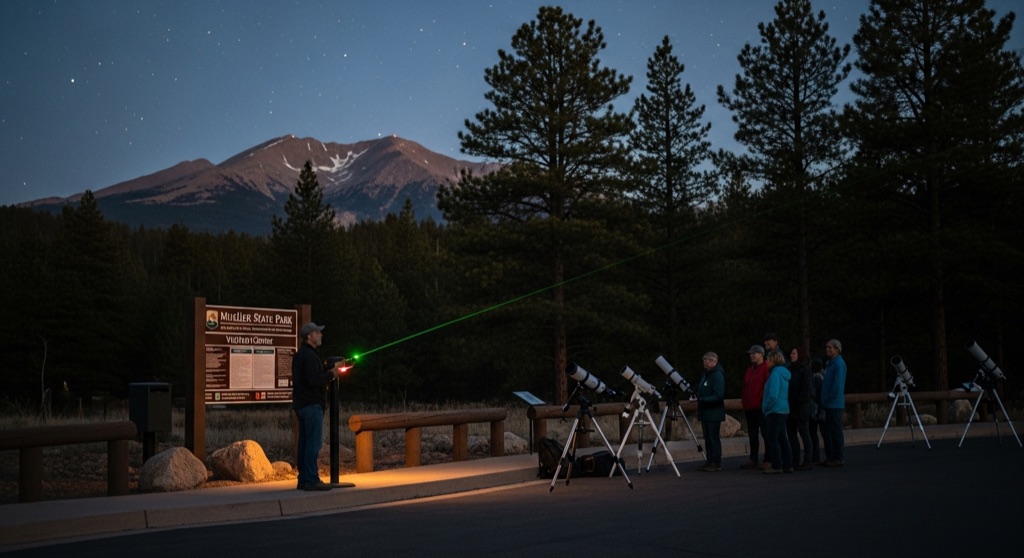
- Mueller State Park Star Party — Compare high-country dark skies six miles away at Mueller's forested overlook behind Pikes Peak.
- Horsethief Falls Trail — Hike past the old abandoned railroad tunnel near Divide ten miles away earlier in the afternoon.
- Cripple Creek Wild Donkey Herd — Explore the old mining town and spot the feral burro herd 13 miles south before driving north to Florissant for the night sky.
More weird in Colorado Springs
Good to know
How much does it cost and do I need reservations?
Park entry is $10 for adults age 16 and older; kids 15 and under enter free, and federal park passes are honored. You don't need advance tickets or reservations, but programs are weather-dependent.
Where do the telescopes set up?
Everything happens right in the Visitor Center overflow parking lot at 15807 Teller County Rd 1.
What gear should I bring?
Bring camp chairs, warm blankets, heavy coats, binoculars if you have them, and a red-beam flashlight to protect everyone's night-adjusted vision.
Plan a visit & invite your people →
Further reading: nps.gov · darksky.org · cpr.org · csastro.org · gazette.com
last checked: 2026-06-23