Entry No. 24 — the Boston file — filed under: typography
Museum of Printing
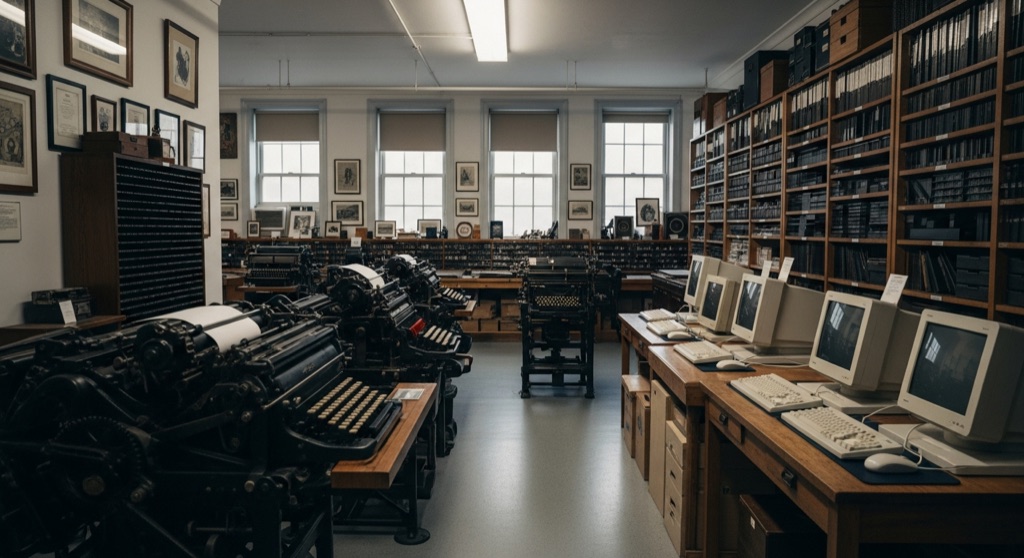
A single-obsession archive of printing and typography built from equipment rescued from the Boston Globe's hot-metal composing room, holding what it claims is the world's largest phototypesetting collection, a rare Chinese typewriter, 2,500 wooden display fonts, and a run of original Apple Macintosh computers and LaserWriter printers donated by Steve Jobs himself.
→ Three more hands-on workshops & classes in Boston — never the same twice
The story
In 1978, when the Boston Globe overhauled its composing room and kicked hot-metal typesetting to the curb, a small network of printers and publishers stepped in to save the heavy machinery before it hit the scrap heap [1.3.2]. For nearly two decades, that 52-ton horde of salvaged equipment floated between temporary storage spaces. It didn't land a permanent home until 2016, when printing historian and RIT professor emeritus Frank Romano acquired a former electrical supply building at 15 Thornton Avenue in Haverhill to combine his personal archive with the Globe's rescued iron.
Inside this 30,000-square-foot warehouse lies an obsessive archive documenting every mechanical pivot point of the printed word. You'll find 2,500 wooden display fonts, a rare Chinese typewriter, dozens of antique letterpresses, and what the venue claims is the largest phototypesetting collection on earth. Tucked among the heavy machinery is a line of early Apple Macintosh computers and LaserWriter printers—donated directly by Steve Jobs, who recognized desktop publishing as the direct descendant of hot-metal typography.
What it's like
You pull up to an unassuming commercial building on Thornton Avenue where the scent of machine oil and printer's ink hits you at the door. Saturdays are the only day the museum opens to the public from 10am to 4pm, and the floor is staffed by volunteer printmakers who will walk you past whirring equipment, let you set lead type in a hand composing stick, or demonstrate a working Linotype caster. Bring $15 for admission ($10 for seniors and kids, free with a Haverhill library card), and make sure to ask a volunteer to point out the Steve-Jobs-donated Mac setup before you leave.
The move: Spend a Saturday tracing the history of the printed word by hand — run the Linotype hot-metal casters, hunt down the Steve-Jobs-donated original Mac, and try setting a line of type in the museum's working type cases.
- 📍 Haverhill
- 💸 $
- ⚡ Up for anything
- 🌗 Indoors
Where: 15 Thornton Ave, Haverhill, MA 01832
Hours: Added 2026-07-20 — confirm current hours before you go.
Pair it with
- Tenney Castle ruins — Pair the industrial, hot-metal machinery of the printing museum with a four-mile drive to the Gilded Age stone estate ruins tucked inside Greycourt State Park.
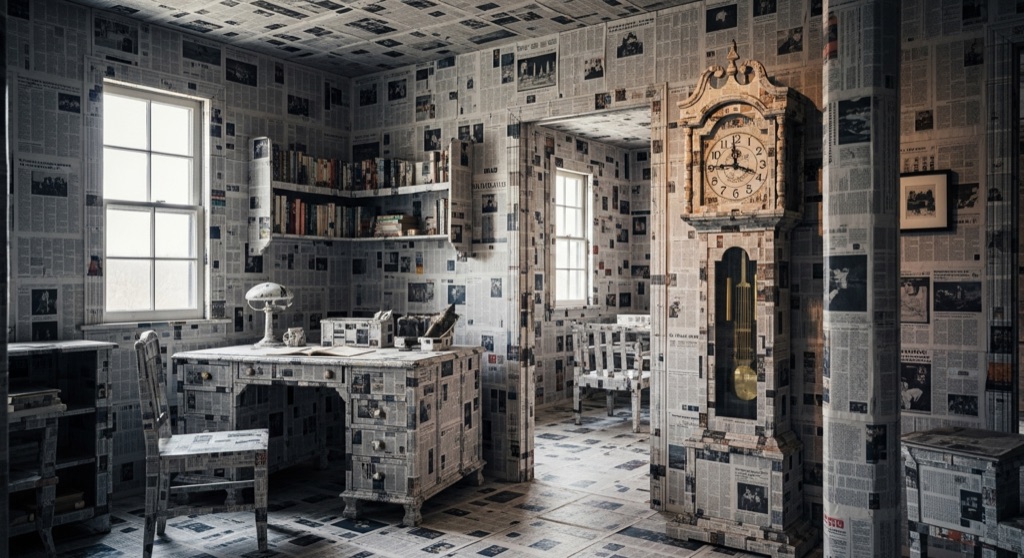
- Paper House — Follow up a lesson in printing on paper by driving out to Cape Ann to inspect a house built entirely out of pressed, varnished newspapers.
- Yin Yu Tang: A Chinese Home — Complement the museum's rare Chinese typewriter with a visit to Salem to walk through a reassembled 200-year-old Qing-dynasty merchant house.
- Wenham Museum (doll & model-train collection) — Match one massive archive of graphic arts technology with another hyper-focused North Shore collection holding thousands of antique dolls and model train layouts.
More weird in Boston
Good to know
When is the Museum of Printing open to visitors?
The museum is open to the public every Saturday year-round from 10:00 AM to 4:00 PM, with weekday access reserved for special group tours and classes [1.1.1].
How much does admission cost?
General admission is $15, tickets for children and seniors are $10, and entry is free for active military personnel and Haverhill Public Library cardholders.
Can you handle the equipment or set type yourself?
Yes, visitors get hands-on experience setting lines of metal type from working type cases, trying out vintage typewriters, and watching live press demonstrations.
What unique artifacts are in the collection?
Key highlights include hot-metal equipment saved from the Boston Globe, 2,500 wooden display fonts, a rare Chinese typewriter, a massive phototypesetting collection, and early Macintosh computers donated by Steve Jobs.
Plan a visit & invite your people →
Further reading: Official site · Wikipedia · harvardmagazine.com · whattheythink.com
last checked: 2026-07-20