Entry No. 62 — the Boise file — filed under: history
Idaho City & Boise Basin Museum
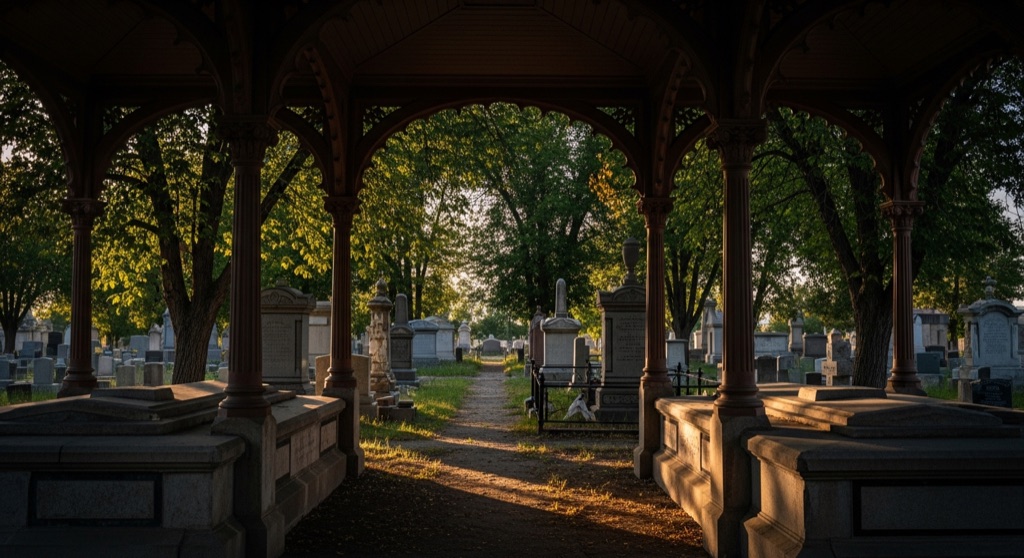
About an hour northeast of Boise on Highway 21, Idaho City was the largest town in the Pacific Northwest during the 1860s Boise Basin gold rush, with over 7,000 residents at its peak. Wooden boardwalks and restored 19th-century buildings still line Montgomery Street, including the old Pest House and county jail. The Boise Basin Museum sits in a building originally constructed as the post office in 1867 after a fire, and displays gold-rush artifacts and mining machinery. The hillside Pioneer Cemetery on the edge of town is full of weathered 1800s graves.
→ Three at a time, never the same twice — explore weird Boise
The story
In the mid-1860s, a patch of ponderosa pine an hour northeast of Boise swelled into the largest city in the Pacific Northwest. With over 7,000 residents crowding the basin at its peak—outsizing Portland at the time—Idaho City was a chaotic grid of sawmills, saloons, and feverish creek-bed panning. Fires wiped the town out twice in two years, but miners rebuild fast when there's gold in the dirt. The Boise Basin Museum sits inside an 1867 brick structure thrown up in 29 days flat to replace the burned-down post office, later doing double duty as a butcher shop and print house for the local newspaper.
Walk a few steps down the boardwalk and you'll hit the Pest House. It was built during the rush as a quarantine shed to lock away miners shivering with smallpox, cholera, or typhoid so their outbreaks wouldn't wipe out the entire camp. Once germ theory gained traction and the epidemics waned, the county recycled the building into the local jail, shoving claim-jumpers and drunks into the exact same timber holding room until the 1930s. Inside the museum itself, you'll find genuine gold-rush machinery, working scale models of placer mining rigs, and the everyday junk forgotten when the easy gold ran thin.
Follow the path up the ridge on the edge of town and you'll hit the hillside Pioneer Cemetery, where the gold rush's human cost is spelled out in pine and iron. Hundreds of 19th-century graves dot the slope under the trees, enclosed by rusting wrought-iron fences and marked by sun-bleached wooden headboards. Between a quarantine shed turned prison cell, a post office built out of ashes, and a hillside of pine grave markers, the basin feels less like a sanitized museum and more like a boomtown that simply forgot to completely vanish.
What it's like
Driving Highway 21 into Idaho City drops you straight onto Montgomery Street's creaking wooden boardwalks. The Boise Basin Museum is compact, dark, and crammed with heavy iron mining gear, pioneer clothing, and historic photographs, run by local volunteers who know every old claim dispute in the valley. While summer weekends bring day-trippers hunting for ice cream along the boardwalks, quiet weekdays give the town a quiet, lingering hush. After exploring the museum and the adjacent Pest House, take the short walk or drive up to the shaded Pioneer Cemetery overlooking town. The museum operates on seasonal hours (primarily summer months), but the town's boardwalks, historic building exteriors, and hillside cemetery stay accessible year-round.
The move: Walk the boardwalks and gold-rush relics, poke through the museum, then wander up to the spooky Pioneer Cemetery above town.
📍 Before you go Boise Basin Museum keeps seasonal hours, mostly warmer months; verify before going. The town itself is open year-round.
- 📍 Idaho City
- 💸 Free
- ⚡ Up for anything
- 🌗 Outdoors
Where: 503 Montgomery St, Idaho City, ID 83631
Hours: Added 2026-06-24 — confirm current hours before you go.
⚠ Seasonal or scheduled — always check before you go.
Pair it with
- Idaho City Historic District & Boot Hill Cemetery — Extends your walk past the museum directly into the broader historic district and hillside boot hill graves from the same 1860s gold boom.
- Kirkham Hot Springs — Drive another 20 miles north up Highway 21 to wash off the dusty boomtown trail in geothermal riverside soaking pools.
- Idaho Museum of Mining & Geology — Pairs Idaho City's boomtown artifacts with raw geological samples, mineral displays, and mining exhibits back down in the Boise foothills.
- Old Idaho Penitentiary — Provides a grim, stone-walled territorial counterpart in Boise to Idaho City's tiny wooden county jail.
More weird in Boise
Good to know
When is the Boise Basin Museum open?
The museum operates seasonally, generally open daily from Memorial Day through Labor Day between 11:00 a.m. and 4:00 p.m., with reduced weekend hours in May and September before closing for winter. The surrounding town, wooden boardwalks, and Pioneer Cemetery remain accessible year-round.
What was the Pest House used for?
Constructed during the 1860s gold rush, the Pest House served as a quarantine cabin to isolate residents carrying contagious diseases like smallpox and typhoid. After disease outbreaks subsided, Boise County converted the timber structure into the local county jail, which operated into the 1930s.
How far is Idaho City from Boise?
Idaho City is located about 45 miles northeast of Boise, roughly an hour's drive along Highway 21 (the Ponderosa Scenic Byway).
What is visible at the Pioneer Cemetery?
Perched on the hillside above town, the cemetery features hundreds of mid-to-late 19th-century graves marked by weathered wooden headboards, hand-cut stone markers, and decorative wrought-iron enclosures surrounding family plots.
Plan a visit & invite your people →
Further reading: Official site · ktvb.com · Tripadvisor · goldminehotel.com
last checked: 2026-06-24