Entry No. 19 — the Atlanta file — filed under: single-subject
Robert C. Williams Museum of Papermaking
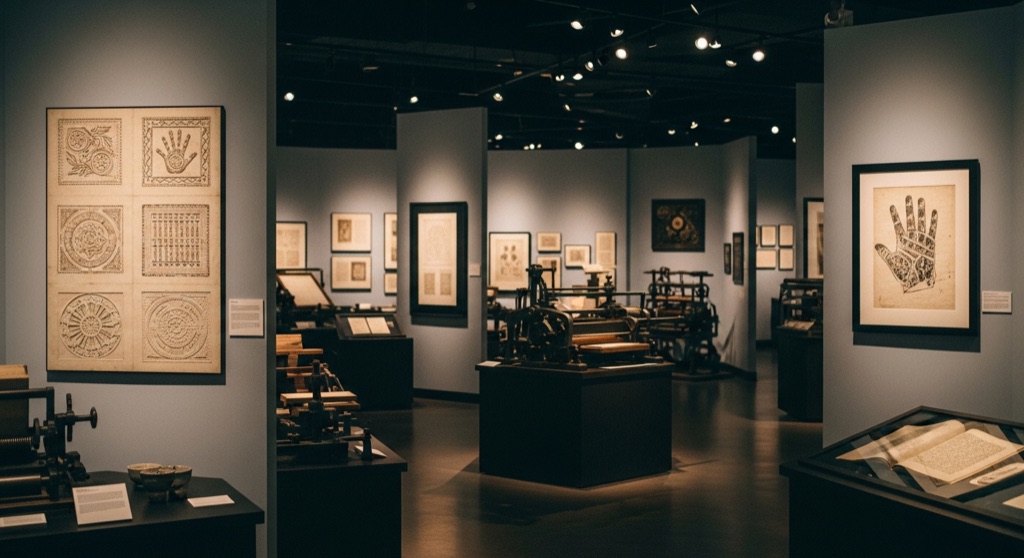
A single subject taken to its logical extreme: the museum bills itself as home to the largest collection of paper and paper-related artifacts in the world — watermarks, hand molds, 19th-century papermaking machines, and manuscripts — stashed inside Georgia Tech's Paper Tricentennial Building, which most students walk past without a second glance.
→ Three at a time, never the same twice — explore weird Atlanta
The story
In 1911, Ohio graphic designer Dard Hunter got hooked on historical hand papermaking in London and began obsessively gathering watermarks, hand molds, and obscure manuscripts from around the globe. He opened the original Dard Hunter Paper Museum at MIT in 1939, but the setup had one fundamental flaw: almost nobody went to see it.
That kicked off a decades-long migration. In 1954, the collection was packed up and moved to the Institute of Paper Chemistry in Appleton, Wisconsin. Then, in 1989, when the institute relocated to Atlanta as the Institute of Paper Science and Technology, thousands of watermarks and historic tools traveled south along with it. The museum was later renamed for Robert C. Williams, former CEO of James River Paper Company.
Today, you'll find the collection stashed inside Georgia Tech's Paper Tricentennial Building, sitting right under the noses of engineering students who walk past daily without a clue. The permanent holdings span over 10,000 artifacts—including 2nd-century papyrus, an 1100s Koran, and 19th-century industrial machinery—making it the largest collection of paper artifacts on the planet.
What it's like
You will pull into the small visitor lot on 10th Street NW, pay $2 an hour on the ParkMobile app, and walk past quiet lab halls straight into an uncrowded sanctuary. You often get the entire gallery to yourself on weekday mornings, wandering between 19th-century papermaking equipment, rare Italian watermarks, and rotating contemporary paper art displays. Look out for local road construction along 10th Street, and don't expect weekend access since the building locks up outside standard university work hours.
The move: Work through the permanent exhibit on the science and history of papermaking together, then spend the rest of the visit in the rotating paper-art gallery before grabbing coffee on campus. Free admission, an hour is enough.
- 📍 Georgia Tech / West Midtown, Atlanta
- 💸 $
- ⚡ Up for anything
- 🌗 Indoors
Where: 500 10th Street NW, Atlanta, GA 30318
Hours: Added 2026-07-19 — confirm current hours before you go.
Pair it with
- The Goat Farm Arts Center — Pair a quiet, hyper-focused look at paper history with an industrial 19th-century mill complex filled with working artists' studios less than a mile down the road.
- Goat n Hammer — Trade the delicate craft of hand papermaking for heavy metal and fire at a working blacksmithing forge inside the nearby Goat Farm.
- Center for Puppetry Arts — Continue your deep dive into niche physical craft traditions by heading just over a mile up into Midtown to inspect the world's largest collection of Jim Henson Muppets.
- Trap Music Museum — Follow up a hyper-niche academic exhibit on watermarks and pulp with Atlanta's immersive homage to trap music origins under a mile away.
More weird in Atlanta

Good to know
How much does it cost to visit?
Self-guided admission to the museum is completely free.
What are the museum's hours?
The museum is open Monday through Friday from 9:00 am to 5:00 pm. It is closed on weekends and all Georgia Tech campus holidays.
Where do I park when visiting?
There is a visitor parking lot directly in front of the museum at 500 10th Street NW. You can pay using the ParkMobile app at a rate of $2 per hour plus a transaction fee.
How long should I plan to stay?
Most visitors spend between 45 minutes and an hour exploring the permanent history exhibits and rotating paper-art gallery.
Plan a visit & invite your people →
Further reading: paper.gatech.edu · Wikipedia · Atlas Obscura · Reddit
last checked: 2026-07-19