Entry No. 12 — the Washington, D.C. file — filed under: streetcars
National Capital Trolley Museum
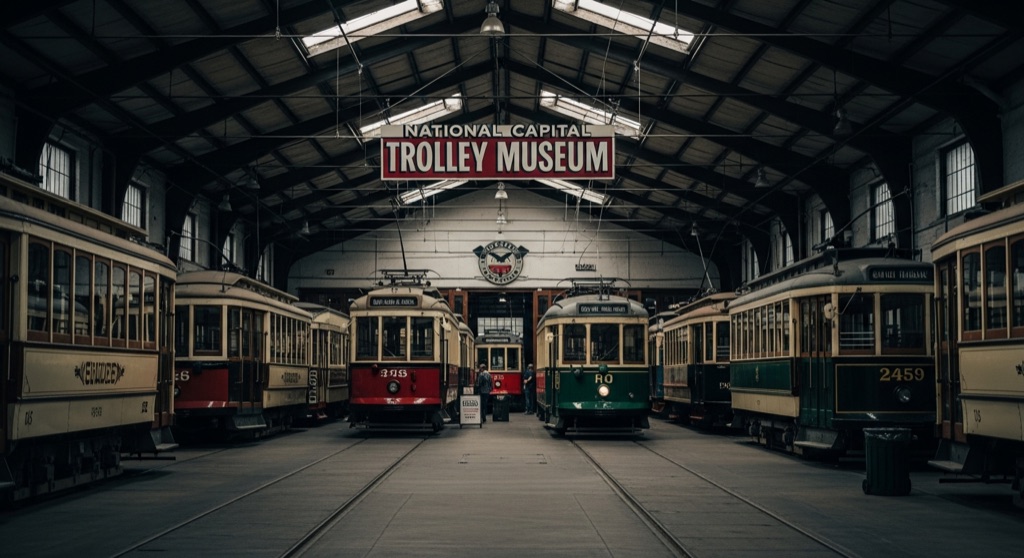
The largest surviving collection of Washington DC streetcars anywhere is parked here alongside trams shipped in from Berlin, Vienna, and Toronto — and instead of sitting behind glass, several are kept running, carrying visitors down the museum's own mile-long demonstration line through the woods.
→ Three more hands-on workshops & classes in Washington, D.C. — never the same twice
The story
Washington, DC once moved on steel rails and overhead electric lines long before motorbuses and private automobiles dominated the city's avenues. When the capital's original streetcar system was phased out in the mid-20th century, transit enthusiasts stepped in to rescue the hardware. Tucked away on Bonifant Road in Colesville, Maryland, the effort yielded the largest surviving fleet of DC streetcars anywhere, parked alongside imported historic trams from Berlin, Vienna, and Toronto.
Rather than locking these machines away in static glass cases, the museum keeps several of them operational. Visitors can step aboard vintage rolling stock—ranging from late-19th-century wooden streetcars to mid-century PCC streamliners—and ride down a mile-long demonstration track cut into the surrounding woods. Inside the car barn, you can walk right up to the steel hulls to compare local Washington transit design with European streetcar engineering.
The Visitor Center houses transit history exhibits alongside an O-scale model layout depicting Washington streets in the 1930s. The miniature streetscape illustrates how electric railway networks dictated the region's urban development before the tracks were torn up and paved over.
What it's like
You will pull into 1313 Bonifant Road in Colesville, where the museum sits tucked into park woodland. Expect the distinct sound of overhead trolley wires sparking and iron wheels rumbling as historic streetcars prepare for runs down the demonstration line. Take a ride through the trees, head into the car barn to inspect the un-restored and restored fleets side by side, and check out the 1930s DC model layout in the main building. Operating schedules can fluctuate seasonally, so verify opening hours before making the trip.
The move: Buy tickets for a ride on a pre-1900 wooden streetcar or a PCC streamliner down the demonstration line, then wander the car barn comparing DC's old fleet to the imported European and Canadian trams before checking the O-scale model of 1930s DC streets in the Visitor Center.
- 📍 Colesville, MD
- 💸 $
- ⚡ Up for anything
- 🌗 Indoors
Where: 1313 Bonifant Road, Colesville, MD 20905
Hours: Added 2026-07-19 — confirm current hours before you go.
⚠ Seasonal or scheduled — always check before you go.
Pair it with
- Glen Echo Glassworks — Glen Echo Park was originally built as a trolley-era amusement park at the end of a DC streetcar line, making it a direct historical companion to the museum.
- National Museum of Health and Medicine — Located six miles south in Silver Spring, this facility houses historic medical artifacts that offer an odd, somber counterpoint to transit history.
- Simpsonville Mill Ruins — Follow up your transit tour with a walk through 18th-century stone mill ruins located less than ten miles northeast.
More weird in Washington, D.C.
Good to know
Can you ride the streetcars at the museum?
Yes, visitors can ride operational historic streetcars down the museum's mile-long demonstration track through the woods.
Where is the museum located?
It is located at 1313 Bonifant Road in Colesville, Maryland.
What vehicles are included in the collection?
The collection includes historic Washington, DC streetcars ranging from pre-1900 wooden cars to PCC streamliners, along with international streetcars from Berlin, Vienna, and Toronto.
What is inside the Visitor Center?
The Visitor Center holds transit history displays and an O-scale model depicting Washington, DC streetcar routes during the 1930s.
Plan a visit & invite your people →
Further reading: Wikipedia · montgomeryparks.org · Official site
last checked: 2026-07-19