Entry No. 39 — the Savannah file — filed under: haunted
Saint Helena Parish Chapel of Ease Ruins
Constructed in 1740 using tabby—a mixture of oyster shells, lime, and sand—this Anglican chapel served planters who lived too far from the main parish church in Beaufort. It was abandoned during the Civil War when Union forces occupied the island, and was later gutted by a forest fire in 1886. Today, the hauntingly beautiful tabby walls, arched doorways, and an adjacent historic cemetery—including the legendary Fripp family mausoleum—remain standing.
→ Three at a time, never the same twice — explore weird Savannah
The story
In 1740, wealth on St. Helena Island meant sea island cotton, indigo, and a grueling multi-hour commute to Beaufort every Sunday just to attend Anglican service. To solve the trek, local planters built a 'chapel of ease'—a satellite sanctuary constructed from tabby, the Lowcountry's distinct concrete mixture of burnt oyster shells, lime, sand, and water. When Union forces occupied the island during the Civil War, the planters fled and never returned to reclaim their pews. In 1886, a forest fire gutted whatever wooden roof and interior floorboards remained, leaving only the skeletal walls behind.
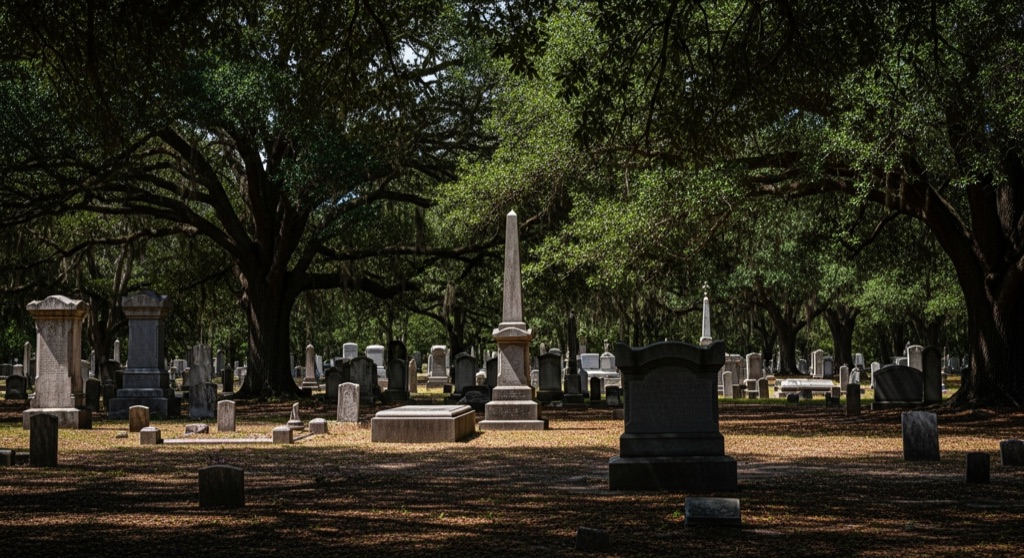
Look closely at the hollowed-out arched doorways and window openings today, and you'll see thousands of whole and crushed oyster shells embedded directly in the concrete mortar. Beside the sanctuary shell lies an adjacent cemetery shaded by live oaks, holding generations of colonial families and the legendary Fripp family mausoleum. Local folklore often focuses on the vault, claiming that after the Civil War it was repeatedly bricked shut, only for visitors to find the stone entrance mysteriously unsealed time after time.
Because the site rests unguarded along Lands End Road, there are no docents ushering you through or velvet ropes keeping you at arm's length. It remains a raw, open-air remnant of colonial planter wealth, slave labor, and antebellum collapse, standing quietly under a canopy of Spanish moss.
What it's like
Expect an unattended, uncrowded historic site right along the road with zero admission fees or physical barriers stopping you from walking directly inside the roofless sanctuary shell. You can step straight through the tabby arches and wander freely among the moss-draped gravestones in the graveyard. Bring bug spray if you visit during warm months or close to dusk, and double-check site access before driving out.
The move: Stroll through the moss-draped live oaks to photograph the historic tabby ruins and explore the quiet, centuries-old cemetery together.
📍 Before you go The ruins are a publicly accessible historic site listed on the National Register of Historic Places, with no admission fees or physical barriers preventing visitors from walking around the grounds.
- 📍 St Helena Island
- 💸 Free
- ⚡ Low-key
- 🌗 Outdoors
Where: St Helena Island, SC 29920, USA
Hours: Added 2026-07-20 — confirm current access before you go.
Pair it with
- Old Sheldon Church Ruins — Pair this with another mid-18th-century parish ruin 20 miles inland to compare coastal oyster-shell tabby against classical red brick columns.
- Stoney Baynard Ruins — Head south to Hilton Head Island to see how antebellum planters used the same tabby concrete material to construct plantation mansions.
- Highway 21 Drive-In — Trade daytime colonial ruins for a night at Beaufort's operating 1970s three-screen drive-in theater just ten miles away.
More weird in Savannah


Good to know
Do you need tickets or a reservation to visit?
No, the chapel ruins are a publicly accessible historic site listed on the National Register of Historic Places, free to visit without tickets or physical barriers.
What is tabby made of?
Tabby is a historical coastal building material made by mixing burned oyster shells, lime, sand, and water, which dries into a thick, stone-like shell concrete.
Why was the chapel destroyed?
The church was abandoned when Union troops occupied St. Helena Island during the Civil War, and a forest fire in 1886 completely destroyed its interior wood frame and roof.
Where are the ruins located?
The ruins sit along Lands End Road on St. Helena Island, South Carolina, roughly ten miles east of downtown Beaufort.
Plan a visit & invite your people →
Further reading: Wikipedia · scpictureproject.org · Facebook
last checked: 2026-07-20