Entry No. 35 — the Santa Barbara file — filed under: mission cemetery
Old Mission Santa Barbara Cemetery & Mausoleum
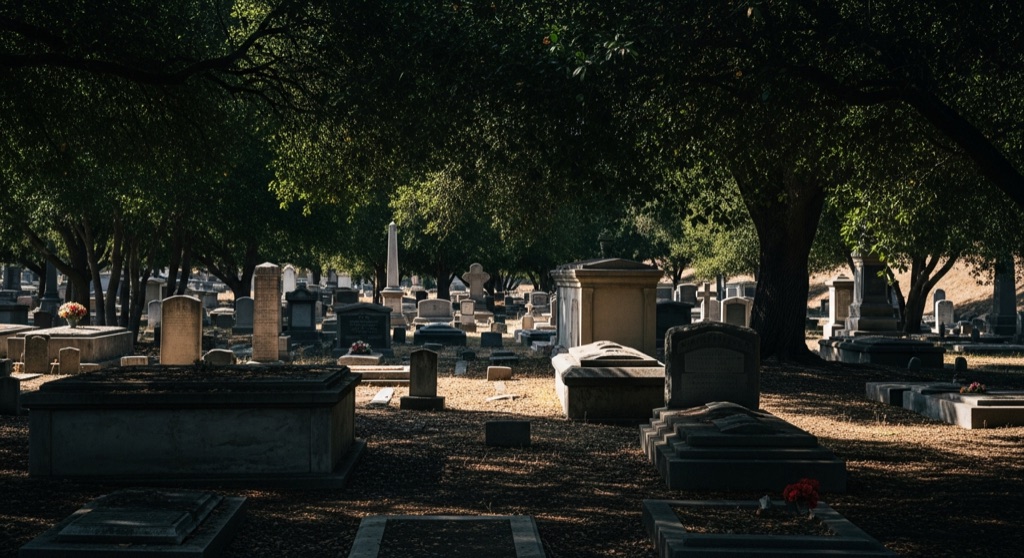
Behind the postcard facade of the "Queen of the Missions" is a walled cemetery holding more than 4,000 Chumash dead from disease and mission-era hardship — almost all in unmarked ground — while the tombstones and mausoleums that visitors photograph belong almost entirely to non-Native settlers. It's a blunt, visible record of whose deaths the historical record chose to name.
→ Three at a time, never the same twice — explore weird Santa Barbara
The story
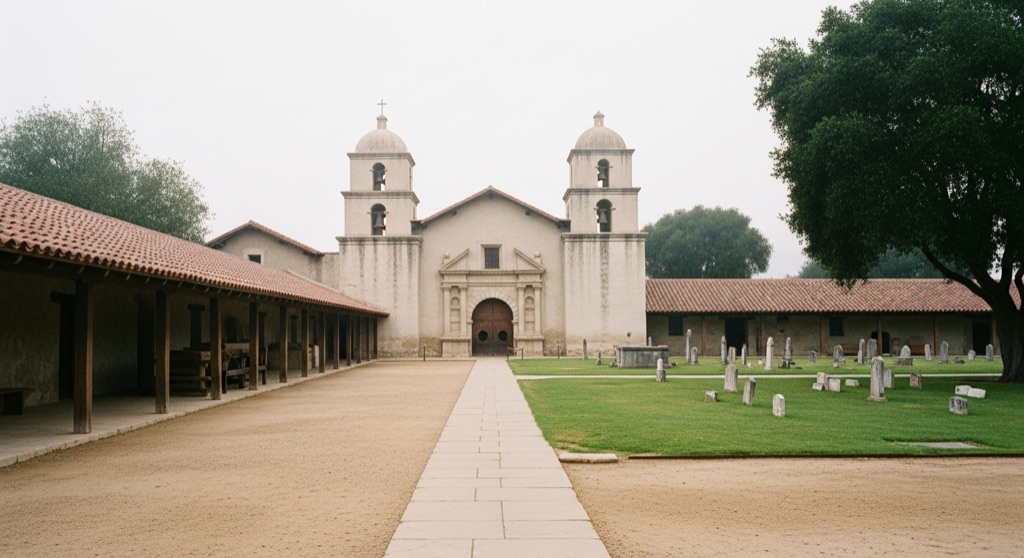
Most visitors pull up to 2201 Laguna Street to photograph the stone facade of the "Queen of the Missions" framed against the Pacific. What you miss from the parking lot is the quiet, heavy math waiting behind the cemetery wall. Established in 1789, this enclosed courtyard holds the remains of more than 4,000 Chumash people who died from introduced European diseases and the brutal demands of mission-era labor.
Walk past the manicured greenery toward the historic mausoleum—a stone structure built in 1820 that required seismic retrofitting to keep its walls standing—and the divide becomes stark. The carved headstones, family vaults, and polished marble plaques belong almost exclusively to Franciscan missionaries and early non-Native California settlers. The thousands of Chumash dead lie in dense, completely unmarked ground right beside them.
It is an accidentally honest monument to historical bias. You aren't just visiting an early California landmark; you are standing in a physical record of whose deaths were deemed worth carving into granite and whose were left in the soil without a name.
What it's like
Buy a self-guided tour ticket at the museum entrance, bypass the gift shop, and head directly out into the walled cemetery courtyard. It is a deceptively calm, sun-baked spot, but reading the names on the 1820 mausoleum against the vast, blank lawn beside it shifts the mood fast. Confirm operating hours before heading up Laguna Street into Mission Canyon.
The move: Buy the self-guided tour ticket, skip the gift shop, and walk the cemetery wall reading the mausoleum names against the blank lawn beside them — then talk about which 4,000 stories never got carved into stone.
- 📍 Mission Canyon / Upper State
- 💸 $$
- ⚡ Up for anything
- 🌗 Indoors
Where: 2201 Laguna Street, Santa Barbara, CA 93105
Hours: Added 2026-07-20 — confirm current hours before you go.
⚠ Seasonal or scheduled — always check before you go.
Pair it with
- Palmer Observatory (Santa Barbara Museum of Natural History) — Just 0.2 miles up Mission Canyon, pair the somber historical weight of the cemetery with a look at the stars through a 20-inch research telescope.
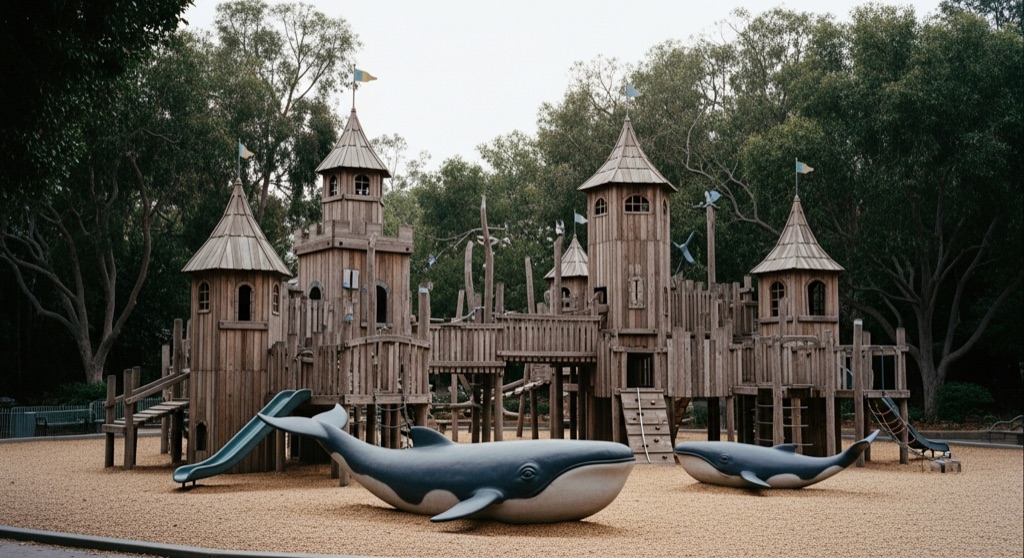
- Kids' World, Alameda Park — Contrast the quiet, heavy, unrecorded history at the mission with a 10,000-square-foot wooden castle built by hundreds of local volunteers down in Alameda Park.
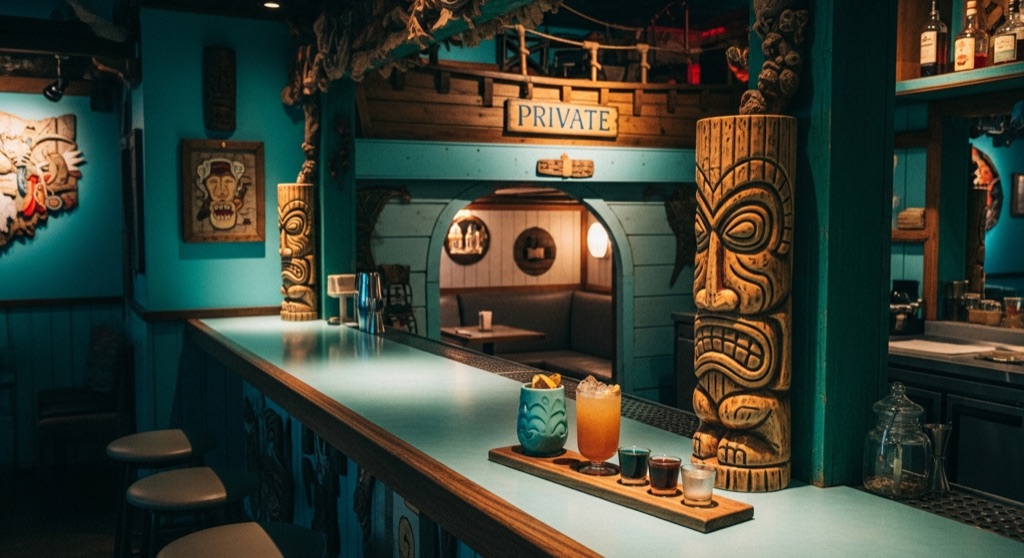
- Arlington Theatre — the indoor starry ceiling — Move from genuine 18th-century mission stone to a 1931 movie palace that built a fake, idealised Spanish village inside a darkened theater.
- Spiritualist Church of the Comforter — A short trip downtown connects the silent, unnamed graves of the mission to Santa Barbara's long history of Spiritualism and speaking to the dead.
More weird in Santa Barbara
Good to know
How many people are buried in the cemetery?
More than 4,000 Chumash individuals lie in unmarked ground, alongside a much smaller number of named Franciscan missionaries and early non-Native settlers.
When was the cemetery established?
Burials on the mission grounds began in 1789, shortly after Mission Santa Barbara was founded.
What is the stone mausoleum on the grounds?
Built in 1820, the historic mausoleum contains tombs for mission friars and prominent early Santa Barbara family members.
How do you access the cemetery?
Entry to the historic cemetery and mausoleum grounds is included with a self-guided mission tour ticket purchased at the main entrance.
Plan a visit & invite your people →
Further reading: Wikipedia · Official site · travelswithmaitaitom.com · schipperconstruction.com
last checked: 2026-07-20