Entry No. 41 — the San Antonio file — filed under: ruins
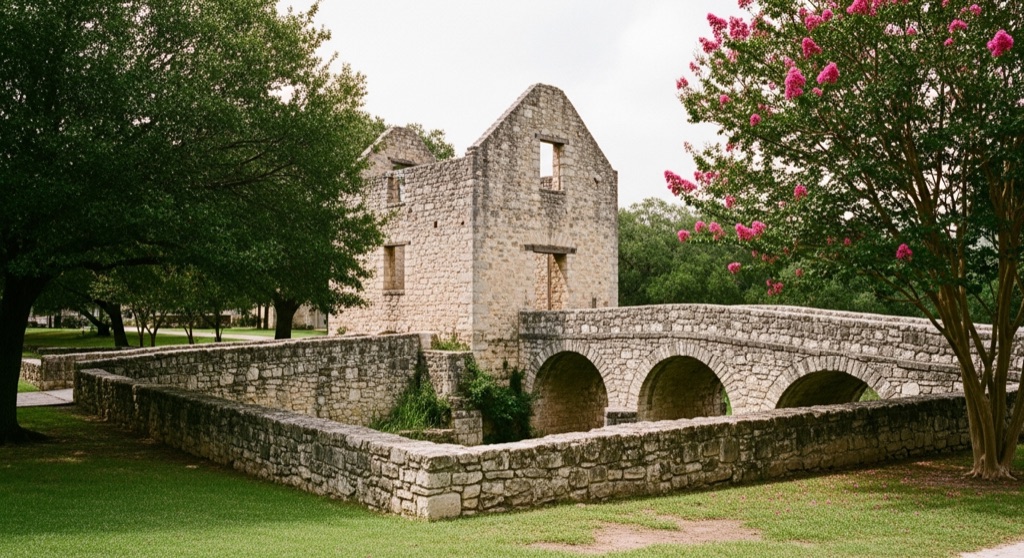
Ruins of St. Dominic Catholic Church
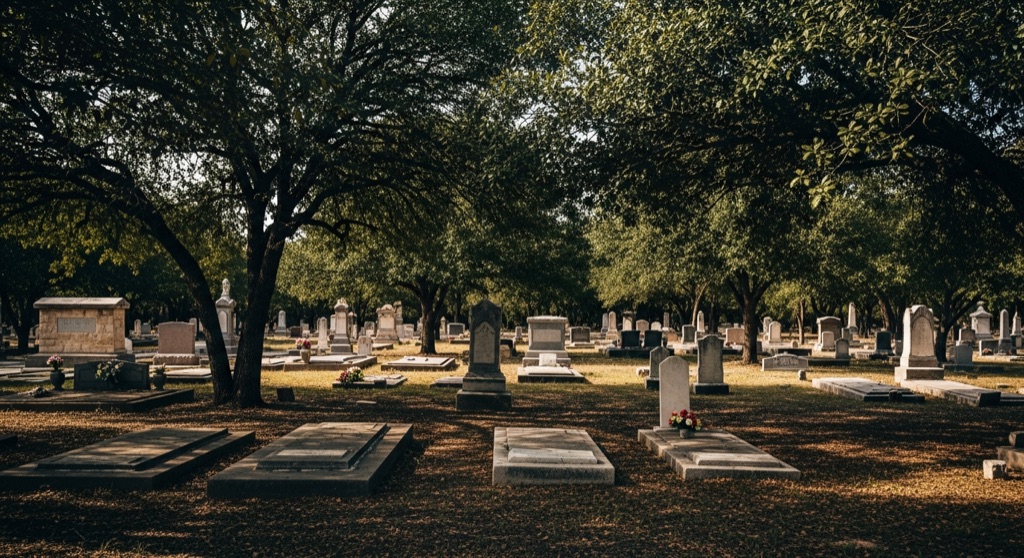
Established in 1847 by Alsatian pioneers, this sandstone and limestone church was completed in 1854 but tragically gutted by a fire in 1912. Following the disaster, the congregation relocated to New D'Hanis, leaving the elegant arched ruins to be reclaimed by nature. Today, the skeletal stone walls stand adjacent to the historic Old D'Hanis Cemetery, which contains graves of early settlers dating back to the mid-19th century.
→ Three at a time, never the same twice — explore weird San Antonio
The story
Pull off County Road 5226 outside Hondo and you'll find what happens when a town simply packs up and leaves. In 1847, Alsatian pioneers settled Old D'Hanis and spent seven years cutting local sandstone and limestone to build St. Dominic Catholic Church, finally completing it in 1854. For nearly six decades it served as the anchor for the frontier settlement, until a 1912 fire gutted the timber roof and interior, leaving only the heavy stone shell standing.
Rather than rebuild the charred structure, the congregation shifted its center of gravity down the road to New D'Hanis along the railroad. Nature immediately took over the site. Today, mesquite trees and thick vines wrap around the skeletal arches and open-air nave. Immediately adjacent lies the Old D'Hanis Cemetery, where hand-carved headstones dating to the mid-19th century still bear inscriptions chiseled in German.
What it's like
This is an un-pampered rural historic site off a quiet gravel-and-asphalt road with no ticket booth, docents, or gift shops. You cannot walk inside the church interior itself—the fragile stone walls are fenced off for safety—but you get clear, unobstructed views of the open-air sandstone arches from outside the barrier. Plan to spend about thirty minutes here walking through the pioneer graveyard, reading the faded German epitaphs, and taking in the quiet brush country surrounding the ruins.
The move: Stroll through the peaceful historic cemetery to admire the hand-carved, German-inscribed headstones, and capture photographs of the striking, vine-covered sandstone arches from a safe distance.
📍 Before you go The ruins and the adjacent Old D'Hanis Cemetery are part of a registered historic district that is open to the public, though visitors should remain outside the fragile, fenced-off portions of the stone structure for safety.
- 📍 Hondo
- 💸 Free
- ⚡ Low-key
- 🌗 Outdoors
Where: 440 Co Rd 5226, Hondo, TX 78861, USA
Hours: Added 2026-07-20 — confirm current access before you go.
Pair it with
- Frontier Times Museum — Pair an excursion to Old D'Hanis with a drive north to Bandera's 1930s cabinet-of-curiosities museum for a full day of raw pioneer history.
- Donkey Lady Bridge — Match the haunting fire-gutted stone church with another obscure local legend tied to fire and abandoned infrastructure on the edge of Bexar County.
- Lona China Cemetery (the 'Chinese Graveyard') — Follow up the German pioneer headstones of Old D'Hanis with a visit to another isolated, story-rich burial ground tucked into the South Side countryside.
More weird in San Antonio

Good to know
Where is the church located and how do I park?
The site is located at 440 County Road 5226 near Hondo and Old D'Hanis. Park carefully along the shoulder of the county road, making sure not to block local traffic.
Can you go inside the stone ruins?
No. The interior is fenced off to protect visitors from loose masonry and to keep the fragile sandstone arches stable.
Is there an admission fee or set schedule?
It is free to visit as part of a registered historic district. Plan your visit for daylight hours, as there is no artificial lighting at the site.
Why are the headstones written in German?
The original 1840s settlers of Old D'Hanis were Alsatian immigrants from the borderlands between France and Germany who brought their native language and masonry traditions to South Texas.
Plan a visit & invite your people →
Further reading: Atlas Obscura · austinchronicle.com · thetexasiantravels.wordpress.com
last checked: 2026-07-20