Entry No. 39 — the Salt Lake City file — filed under: ruins
Wasatch Mine
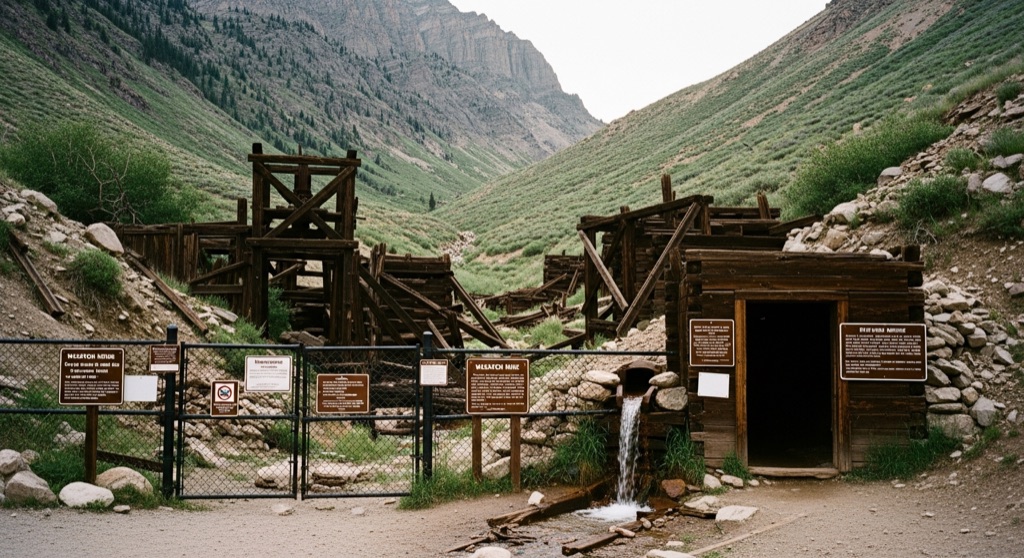
Located along the Mineral Fork Trail in Big Cottonwood Canyon, the Wasatch Mine is a historic late 19th-century gold and silver mine that operated until the 1940s. Today, hikers can find the gated mine adit, wooden structural ruins, and a rust-colored stream trickling from the entrance. The site offers a glimpse into the canyon's rich mining era, set against a dramatic mountain backdrop.
→ Three more abandoned & forgotten places in Salt Lake City — never the same twice
The story
High up Big Cottonwood Canyon at 8,661 feet elevation, late 19th-century prospectors shoved a trail up Mineral Fork to chase gold and silver veins into the granite. What they built became the Wasatch Mine—also known in old regional claim records as the Wasatch Gold Mine. Operations sputtered along in fits and starts through the turn of the century and into the 1940s before the powder smoke cleared and the miners finally walked away for good.
What remains isn't a state park exhibit with velvet ropes or laminated plaques. Nature has been chewing on the wooden structural framing for nearly a century, leaving rotting timber ruins collapsed against the scree. The mine entrance itself—the portal adit—is sealed off with heavy steel bars, but it still leaks a steady, rust-colored trickle of water that bleeds down the rock face, serving as a blunt physical receipt of Utah's hardrock mining era.
What it's like
Getting here requires grinding up the Mineral Fork Trail, an unpaved historic mining road that gains serious elevation into the Uintah-Wasatch-Cache National Forest. The reward at the end of the climb is stark: collapsed wooden timber framing, iron scrap, and the gated portal breathing cool air out of the mountain. You won't be getting inside the tunnel—the gate is solid and closed for obvious collapse and air-quality hazards—but you can look straight down the shaft. Start early in the morning to beat both the mountain heat and trail traffic, and don't even think about drinking the orange-tinted mine runoff.
The move: Hike the scenic Mineral Fork Trail together to locate the gated mine entrance, taking photos of the historic wooden ruins and enjoying the panoramic mountain views.
📍 Before you go The mine is located on public land within the Uintah-Wasatch-Cache National Forest and is accessible via the Mineral Fork Trail, but the mine entrance itself is securely gated for safety.
- 📍 Salt Lake City
- 💸 Free
- ⚡ Low-key
- 🌗 Outdoors
Where: 23253000010000, Salt Lake City, UT 84121, USA
Hours: Added 2026-07-20 — confirm current access before you go.
Pair it with
- Maxfield Mine — Stay on the canyon's silver trail by visiting another major 19th-century Big Cottonwood mining site just a few miles down the road.
- Mule Hollow Mine — Pair this hike with another side-canyon trek to search out late-19th-century mining relics tucked off Big Cottonwood Canyon.
- Silver Fork Lodge & Restaurant — Refuel after the steep climb up to 8,660 feet with sourdough pancakes at a historic 1947 canyon lodge further up the road.
More weird in Salt Lake City
Good to know
How do you reach the mine ruins?
You hike in via the Mineral Fork Trailhead in Big Cottonwood Canyon, following the rough old trail alignment up into the national forest.
Can you enter the mine tunnel?
No. The main adit entrance is securely gated with heavy steel bars to prevent trespassing and unsafe entry into hazardous underground workings.
What was produced at the Wasatch Mine?
It was primarily a gold and silver operation, active from the late 1800s until operations ceased in the 1940s.
What elevation is the mine site?
The mine ruins sit high on the mountain at 8,661 feet above sea level.
Plan a visit & invite your people →
Further reading: roadtripryan.com · utah.com · westernmininghistory.com · Reddit
last checked: 2026-07-20