Entry No. 12 — the Pittsburgh file — filed under: relics
St. Anthony's Chapel
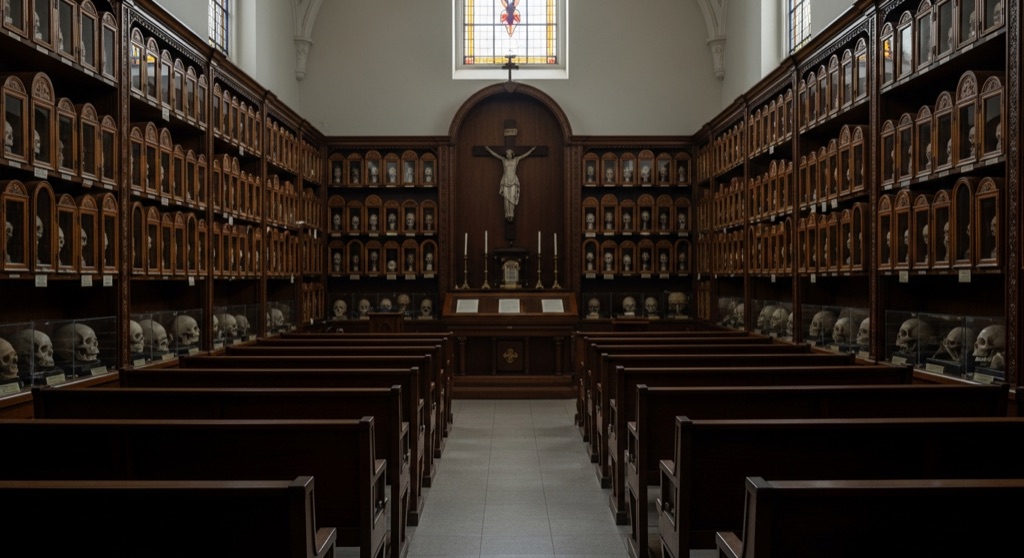
This unassuming neighborhood chapel houses over 5,000 officially certified Catholic relics, including skulls of martyrs, teeth, bones, and a thorn from the crown of thorns [1.3.4]. It is the largest collection of Christian relics in the world outside of the Vatican.
→ Three more oddity shops & curiosities in Pittsburgh — never the same twice
The story
Look at this brick neighborhood church in Troy Hill from the street, and you would mistake it for any standard 19th-century parish tucked onto a quiet Pittsburgh bluff. But step inside and look past the pews. You are standing in front of more than 5,000 officially certified Catholic relics—skulls of martyrs, teeth, bone splinters, and a thorn reputedly pulled from the Crown of Thorns. Outside the consecrated walls of the Vatican, no single sanctuary in the world holds more holy remains than this quiet chapel on Harpster Street.
The stash was assembled by Father Suitbert G. Mollinger, a physician-turned-priest with deep pockets and a relentless acquisition habit. During the political upheavals of 19th-century Europe, state forces were dismantling monasteries and discarding sacred artifacts. Mollinger used his personal wealth to buy up private collections and rescue thousands of reliquaries from Europe, shipping them directly to his parish on a Pittsburgh hill. By the time he died in 1892, he had housed them in hand-carved walnut altars that line the chapel walls, creating a gilded bone library that feels less like a neighborhood parish and more like a secret Vatican repository dropped into working-class PA.
What it's like
Walking into the chapel is quiet, heavy, and surreal. Wall-to-wall walnut cases cover the sanctuary, holding thousands of tiny bone splinters mounted on velvet alongside Latin hand-lettered labels, with full skulls resting behind glass. It is solemn and remarkably dense. Take your time scanning the reliquaries, then cross Harpster Street to the small museum detailing Father Mollinger's life to see how one eccentric priest orchestrated this massive holy rescue operation.
The move: Walk through the quiet sanctuary to marvel at the thousands of ornate walnut reliquaries, then cross the street to visit the small museum dedicated to Father Mollinger, the eccentric priest who amassed this collection.
- 📍 Troy Hill
- 💸 $$
- ⚡ Up for anything
- 🌗 Indoors
Where: 1700 Harpster St, Pittsburgh, PA 15212
Hours: Added 2026-07-21 — confirm current hours before you go.
Pair it with
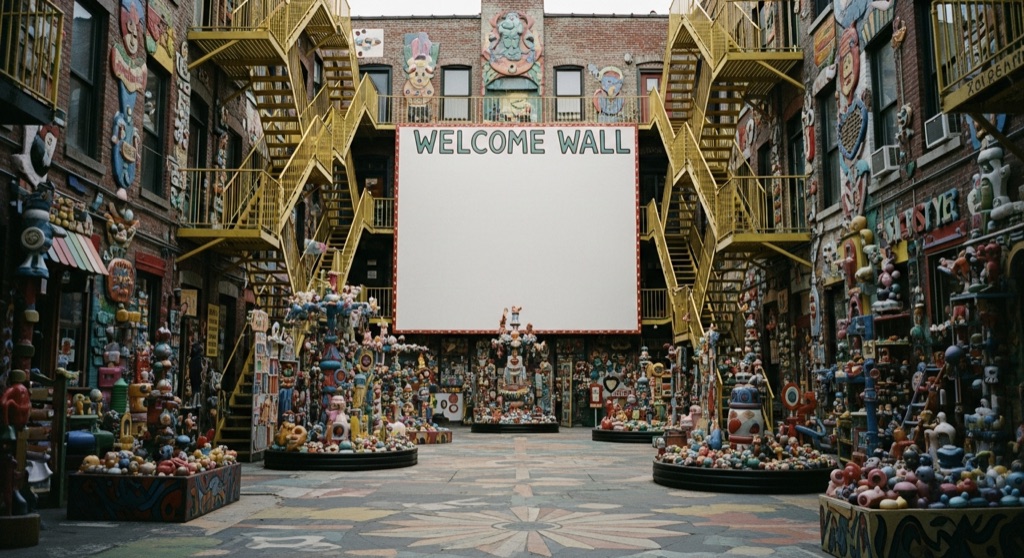
- Randyland — Balance the quiet, solemn weight of thousands of sacred bones with a visit to this blindingly bright, psychedelic folk-art sanctuary just down the hill.
- Photo Antiquities Museum of Photographic History — Stick with 19th-century preservation obsessions by heading to Northside to tour thousands of early historical cameras and daguerreotypes.
- Center for PostNatural History — Follow up an intense collection of preserved holy remains with a storefront museum focused on human-engineered and modified organisms.
- Victory Float Lounge — Decompress after taking in thousands of ornate reliquaries by slipping into complete sensory deprivation inside a custom float room in Lawrenceville.
More weird in Pittsburgh
Good to know
How many relics are inside St. Anthony's Chapel?
The chapel houses over 5,000 certified Catholic relics, making it the largest collection of sacred remains outside of the Vatican.
What kinds of relics are on display?
The collection includes skulls of martyrs, teeth, bone fragments of saints, and a thorn documented as coming from the Crown of Thorns.
Who collected all of these artifacts?
Father Suitbert G. Mollinger, a wealthy doctor and priest, used his personal fortune to buy and rescue relics across Europe before his death in 1892.
Is there anything to see besides the main chapel?
Yes, directly across the street sits a small museum dedicated to Father Mollinger's life and the history of his collection.
Plan a visit & invite your people →
Further reading: Official site · Atlas Obscura · smithsonianmag.com · pghshrines.org
last checked: 2026-07-21